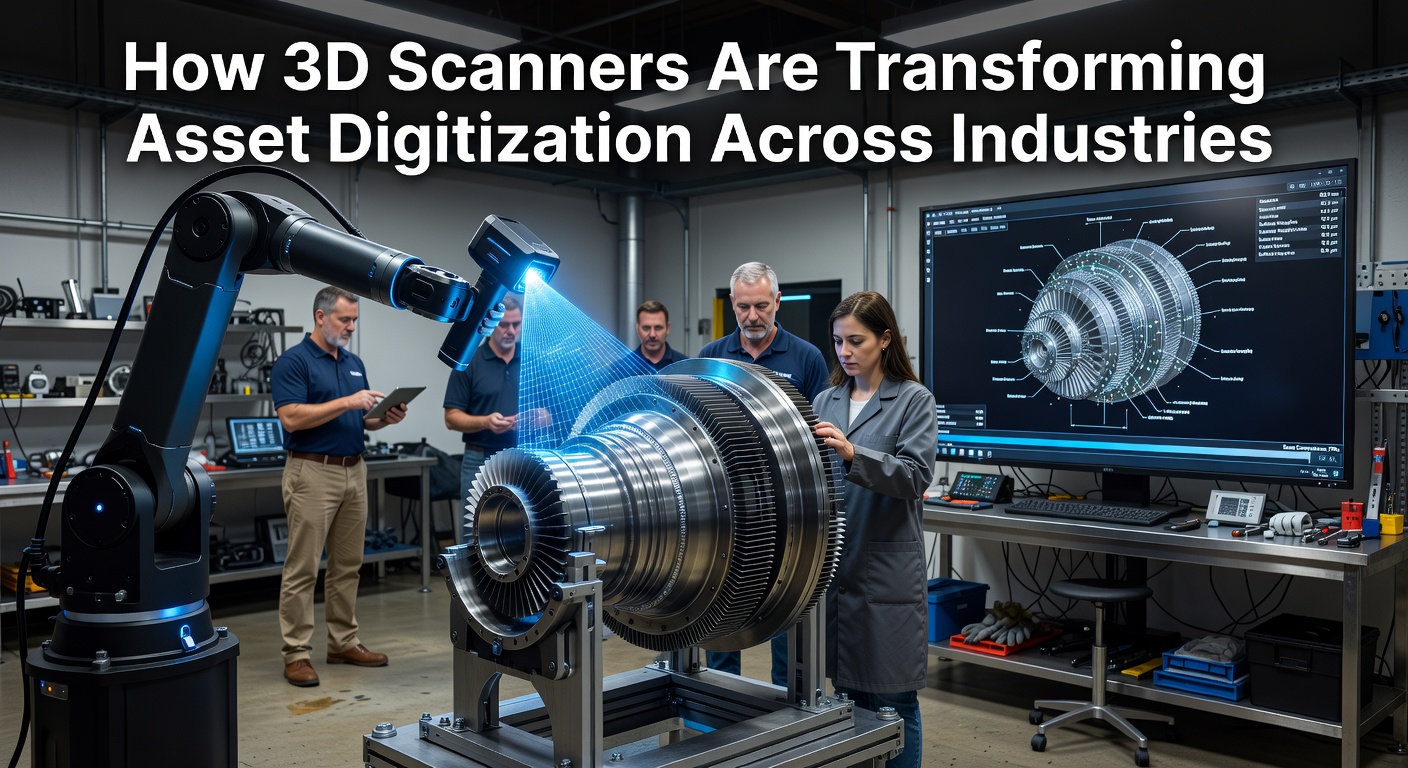
How 3D Scanners Are Transforming Asset Digitization Across Industries
In today’s fast-moving digital world, businesses are relying more than ever on accurate, high-resolution data to stay efficient, cut costs, and streamline operations. One technology leading this shift is the 3D scanner.
By capturing precise measurements and detailed geometry of physical objects, 3D scanner make it possible to build digital twins, improve design workflows, and preserve valuable assets. From factories to hospitals and cultural heritage sites, digitizing the physical world has become less of a “nice-to-have” and more of a necessity.
That said, many organizations still struggle with traditional measurement methods, manual tools, inconsistent documentation, and human error still creep in more often than people like to admit. This is exactly where modern 3D scanning steps in and changes the game.
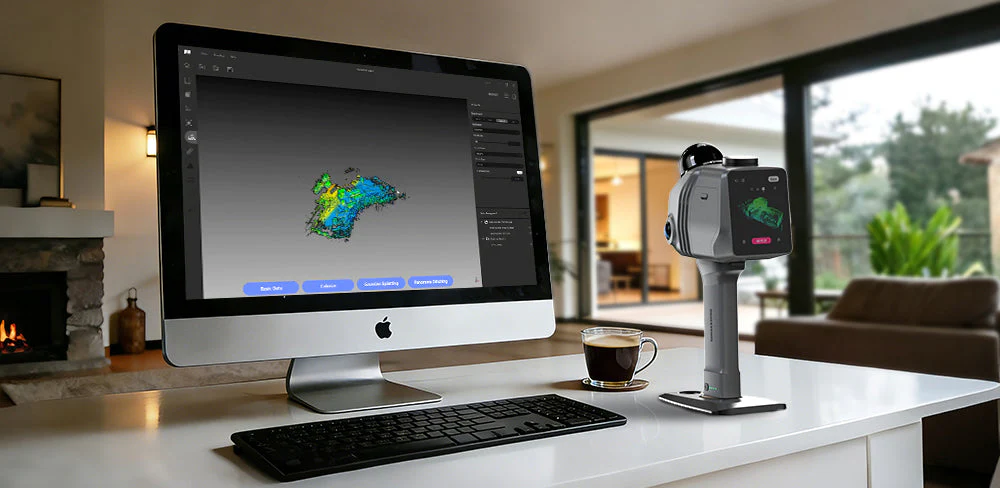
Why Asset Digitization Matters
Improving Efficiency and Accuracy
When physical assets are digitized properly, everything becomes easier to manage, analyze, and reuse. Instead of relying on 2D images or manual measurements (which can be hit-or-miss), a 3D scanner captures every curve, edge, and surface detail.
This leads to:
Fewer errors in production and design
Faster decision-making
Better-quality documentation
Reduced rework and waste
For example:
In manufacturing, scanned parts can be turned into precise CAD models in a fraction of the time.
In healthcare, digital anatomical models help professionals plan procedures with much higher accuracy.
Preserving Valuable Assets
For many industries, preservation isn’t optional, it’s critical.
Museums, engineering firms, and construction teams increasingly rely on 3D scanning to create long-term digital archives of physical objects such as:
Historical artifacts
Industrial equipment
Buildings and infrastructure
These digital replicas are incredibly useful because they:
Act as backups in case of damage or loss
Allow remote collaboration between teams
Enable analysis without physically touching fragile items
Help preserve cultural and historical value for future generations
Key Industries Benefiting from 3D Scanning Technology
Manufacturing and Product Development
In manufacturing, 3D scanning has become a practical tool for improving both speed and precision.
It helps teams:
Reverse-engineer existing parts
Verify measurements with high accuracy
Detect defects earlier in production
Speed up CAD modeling and revisions
In many cases, it can significantly reduce development cycles compared to traditional methods.
Architecture, Engineering, and Construction
In construction and engineering, accuracy isn’t just important, it’s everything.
3D scanners allow teams to capture:
Entire building interiors
Structural layouts
Site terrain and environments
This data is then converted into detailed digital models that support:
Virtual walkthroughs
Clash detection in design planning
Renovation and expansion projects
Healthcare and Medical Applications
Healthcare is one of the most impactful areas for 3D scanning.
It is commonly used for:
Custom dental molds
Patient-specific implants
Anatomical modeling for surgeries
Key benefits include:
Higher precision in treatment planning
Better patient comfort and outcomes
Improved remote consultation capabilities
In short, it helps medical professionals deliver more personalized care with greater confidence.
Cultural Heritage and Preservation
Museums and cultural institutions are using 3D scanning to protect history in a very practical way.
High-resolution scans capture even the smallest details of:
Ancient artifacts
Sculptures
Historical landmarks
These digital models:
Preserve fragile items from degradation
Make collections accessible online
Support research without physical handling
It’s a quiet but powerful way of keeping history alive.
Choosing the Right 3D Scanner
Picking the right scanner depends heavily on your use cases; brands like 3DMakerPro offer reliable 3d scanners. There’s no one-size-fits-all option.
Here are a few key factors to consider:
Resolution and accuracy – Critical for engineering and medical work
Object size – Small parts vs. large environments require different setups
Portability – Important for fieldwork or on-site scanning
Software compatibility – Should integrate smoothly with CAD or BIM tools
The right choice usually comes down to balancing precision, flexibility, and workflow needs.
Practical Tips for Effective 3D Scanning
Getting great results isn’t just about the device, it’s also about how you use it.
A few practical tips:
Prep the object properly – Clean surfaces and reduce reflectivity
Use even lighting – Harsh shadows can distort data
Scan from multiple angles – Helps capture full geometry
Calibrate regularly – Keeps accuracy consistent
Clean up scans in post-processing – Remove noise and refine meshes
These small habits can make a noticeable difference in scan quality.
Real-World Impact and ROI
Companies adopting 3D scanning often see real, measurable improvements.
Examples include:
A manufacturing team is reducing prototyping time by 25%
A construction project avoiding major rework costs through early scanning
A medical lab improving surgical precision with patient-specific models
In practical terms, this means:
Lower costs
Faster workflows
Better outcomes
Fewer surprises during execution
The Future of Asset Digitization
3D scanning is still evolving, and things are moving fast.
Some upcoming trends include:
AI-assisted scanning for faster processing
AR/VR integration for immersive model interaction
Automated scanning systems for continuous monitoring
Cloud-based collaboration for real-time access to digital assets
As these technologies mature, it is likely to see even tighter integration into everyday industrial workflows.
Conclusion
3D scanners are reshaping how industries capture, preserve, and work with physical assets. Whether it’s manufacturing, healthcare, construction, or cultural preservation, the advantages are hard to ignore: greater accuracy, improved efficiency, and fewer costly mistakes.
What used to feel like advanced tech is now becoming a practical everyday tool. And honestly, the world is only scratching the surface of what’s possible.
The shift toward digital asset creation isn’t something on the horizon anymore, it’s already here, and it’s steadily changing how modern industries operate.