How to Pass CCNA Faster: Study Strategies That Actually Work
Passing the CCNA is often seen as a rite of passage in the networking world. It is the moment where theory meets reality. However, many people find themselves stuck in a loop of endless reading without actually making progress. If you want to earn your certification without spending six months buried in a textbook, you need a different approach. Speed is not about rushing. It is about efficiency and focusing on the right things at the right time.
Build a Solid Foundation Early
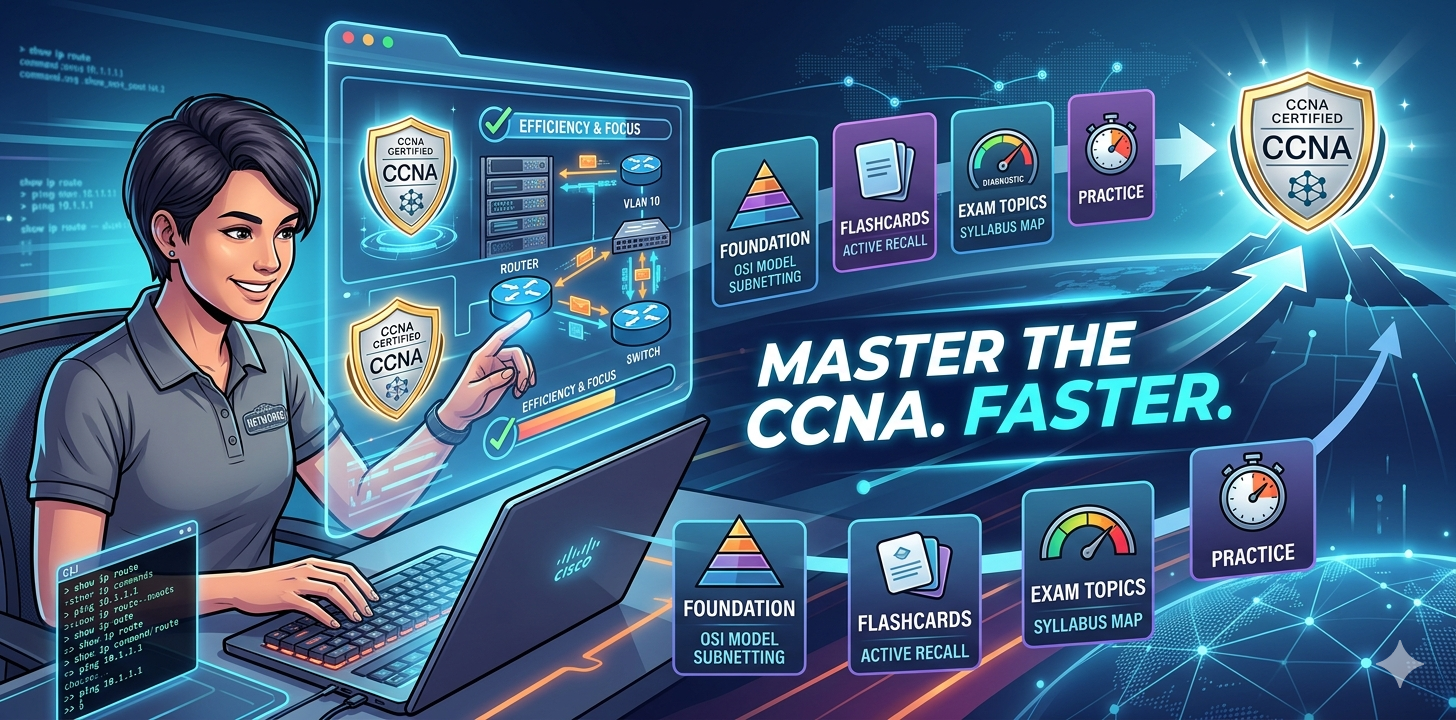
The biggest mistake students make is diving into complex configurations before they understand how data actually moves. You cannot master routing and switching if you are still confused about the OSI model or IP addressing. Spend your first week mastering subnets. It should become second nature. If you have to stop and think for three minutes to calculate a CIDR notation, you will lose precious time during the exam.
Once you have the basics down, you can move faster. The exam covers a wide range of topics from automation to security. You do not need to be an expert in everything, but you must have a working knowledge of how these pieces fit together. Treat the syllabus like a map. Mark off what you know and spend more time on the areas where you feel lost.
Hands On Labs Are Not Optional
You can read about a command for an hour and still forget it by the next morning. But if you type that command into a console and see the interface go from down to up, you will remember it. Use a simulator or an emulator to build networks from scratch. Do not just follow lab guides blindly. Try to break things. Delete a static route and see what happens to the traffic flow.
This is where the real learning happens. The CCNA exam tests your ability to troubleshoot. If you have only ever seen a “perfect” network in a book, you will struggle when the exam presents you with a configuration error. Speed comes from muscle memory. When you know the CLI commands by heart, you save mental energy for the harder logic questions.
The Power of Active Recall
Reading a chapter over and over is a passive way to study. It gives you a false sense of security. You feel like you know the material because it looks familiar, but you cannot recall it from memory. To pass faster, you must use active recall. After finishing a section, close the book and write down everything you remember.
A great way to do this is through spaced repetition with flashcards because this method ensures you are reviewing the most difficult concepts more frequently while pushing the easier ones further out. It prevents the “forgetting curve” from wiping out your progress. By spending thirty minutes a day on cards, you keep the information fresh without needing to pull all nighters.
Focus on Exam Topics
The official exam topics list is your best friend. Every question on the test is mapped to that list. Many study guides include extra information that is interesting but not necessary for the certification. If your goal is to pass quickly, stick to what is required. If a topic is worth twenty percent of the exam, give it twenty percent of your time.
Do not get bogged down in the history of networking. Focus on modern standards. Understand how wireless controllers work and get comfortable with basic JSON and Python scripts. Networking is changing, and the exam reflects that.
Practice Under Pressure
In the final two weeks of your preparation, you should take practice exams. This is not just to test your knowledge but to test your stamina. Sitting for a long exam is tiring. You need to learn how to manage your time so you do not get stuck on one difficult simulation for twenty minutes.
Analyze your results carefully. If you keep missing questions on OSPF, go back to the labs. Use the practice tests as a diagnostic tool rather than a final hurdle. When you are consistently scoring high, you are ready.