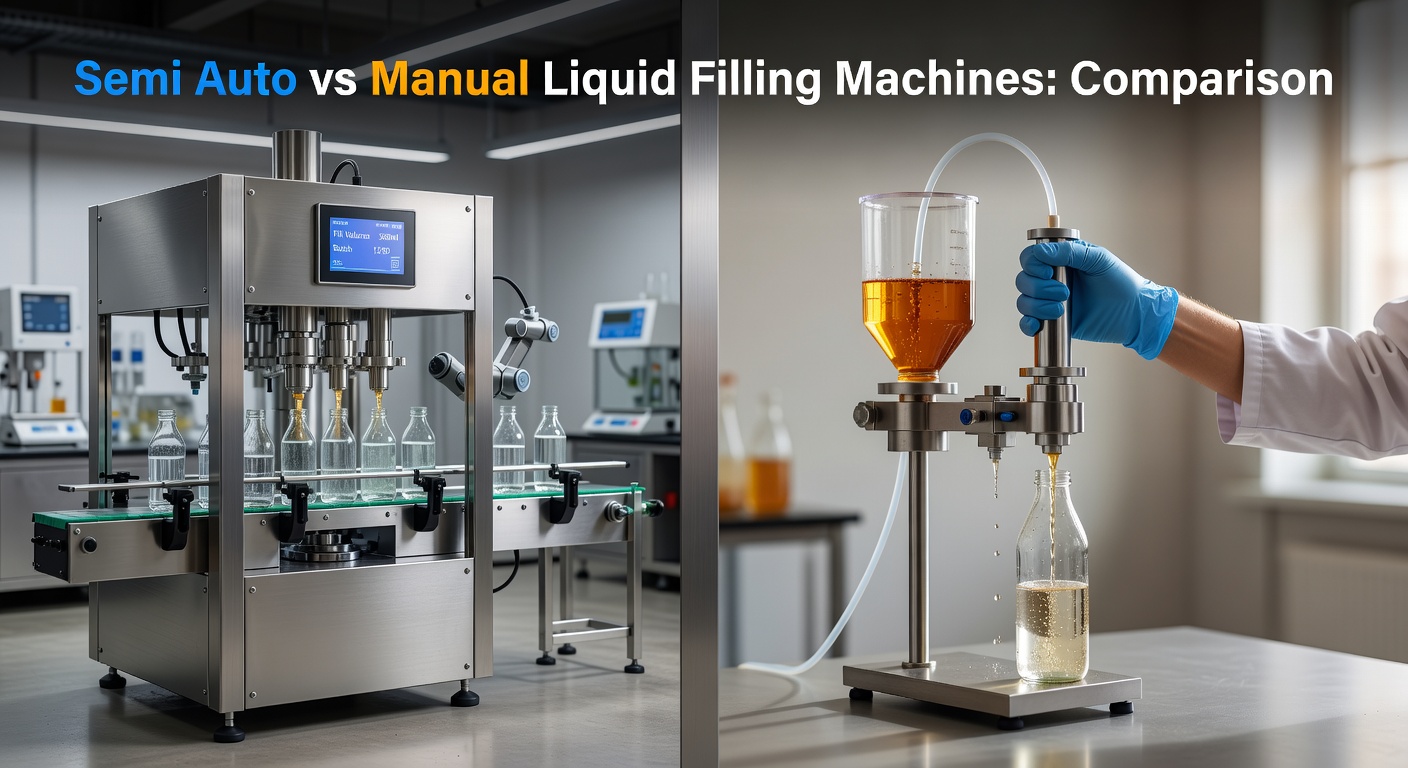
Semi Auto vs Manual Liquid Filling Machines: Comparison
Choosing between a semi auto and manual liquid filling machine directly impacts production efficiency, labor requirements, and long-term scalability for industrial operations. Both systems serve different operational needs across food production, chemical processing, pharmaceuticals, and general industrial packaging environments in the United States.
In addition, Technopack provides in-stock equipment designed to support a wide range of throughput requirements, from small batch manual setups to scalable semi auto liquid filling in industrial production systems. The right choice depends on production volume, labor availability, and how your packaging line is expected to evolve over time.
Ultimately, system selection should align with both current output requirements and future expansion planning.
Assessing Production Volume and Scalability
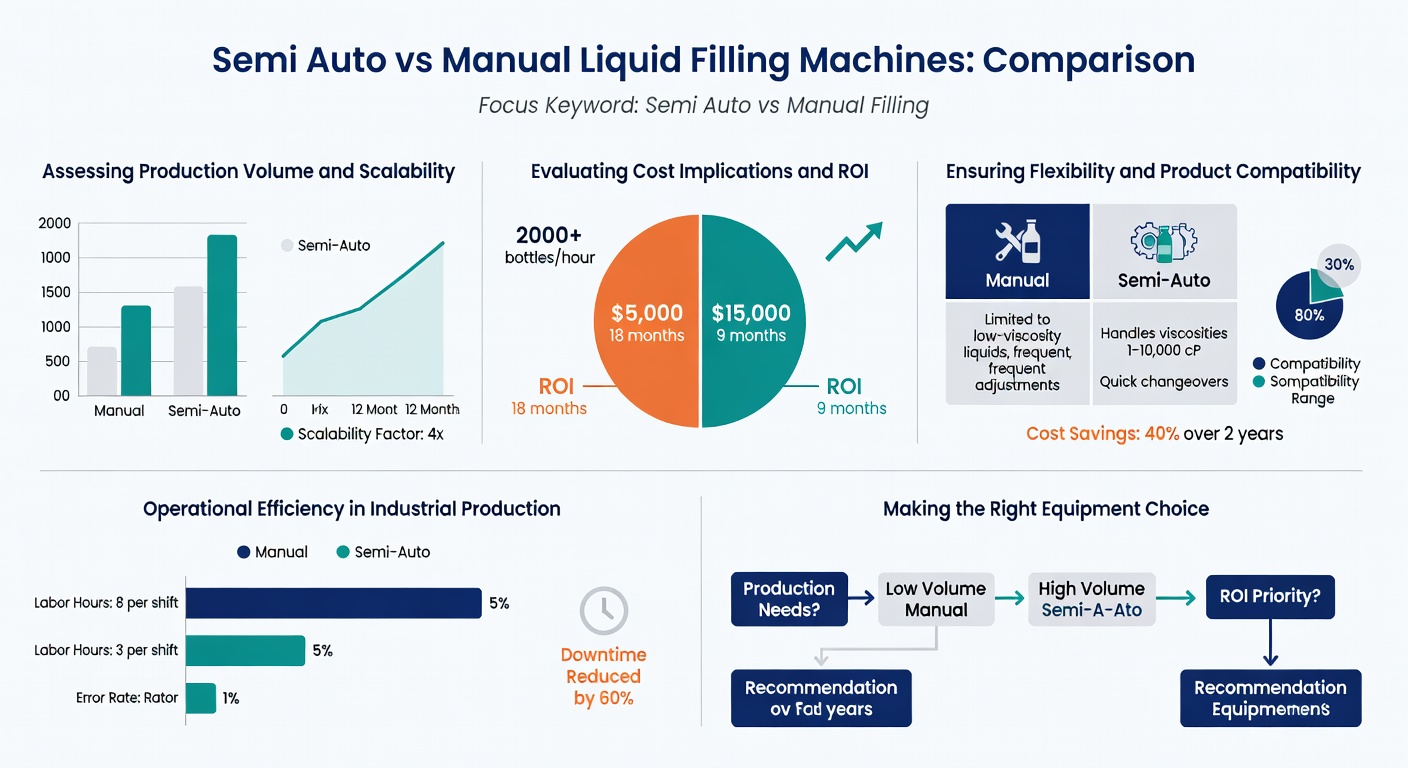
Production volume is one of the most important factors when comparing manual and semi-automatic filling systems. Differences in speed, labor intensity, and scalability significantly affect operational efficiency.
- Output Capacity Differences
Semi-automatic liquid filling machines typically reach up to 1,500 bottles per hour depending on operator skill, product viscosity, and container format. Manual systems generally remain below 300 units per hour because each cycle depends entirely on operator handling. - Labor Dependency
Manual filling systems require continuous operator involvement at every stage of the filling cycle. This limits consistency during long shifts and increases fatigue-related variability. A semi auto liquid filling machine reduces repetitive manual actions by automating dispensing while maintaining operator control over setup and adjustments. - Scalability and Expansion Capability
Semi-automatic systems support future growth through modular enhancements such as multi-nozzle configurations or integration with conveyor machine systems. This allows facilities to increase throughput without replacing core equipment. Manual systems, by comparison, do not scale efficiently and are typically limited to small batch operations.
Evaluating Cost Implications and ROI
Cost structure plays a central role in equipment selection. While manual systems offer lower initial investment, semi-automatic machines provide stronger long-term operational efficiency.
Manual fillers generally start at lower purchase prices but require significantly more labor input. Semi-automatic systems typically range higher in upfront cost but deliver improved throughput and reduced operator fatigue.
Key financial considerations include:
- Initial equipment investment versus long-term labor savings
- Throughput differences affecting production capacity per shift
- Maintenance costs and downtime exposure
- Product waste reduction through improved fill accuracy
- Operational consistency across multiple shifts
Semi-automatic systems also reduce variability in fill volume, improving batch consistency and lowering product giveaway. This directly improves material efficiency and cost control in high-volume production environments.
Additionally, unplanned downtime has measurable cost impact in industrial settings. Reliable equipment reduces interruptions and helps maintain predictable production schedules, which is critical for meeting delivery timelines and maintaining operational stability.
Ensuring Flexibility and Product Compatibility
Flexibility is a key advantage of semi auto liquid filling machine systems, especially in facilities managing multiple SKUs or frequent product changes. These systems support quick adjustments in volume settings, container formats, and product types.
Typical operational benefits include:
- Fast changeovers between product lines
- Compatibility with a wide range of viscosities
- Adjustable fill settings for different container sizes
- Reduced setup time between production runs
- Adaptability for seasonal or short-run production batches
Semi-automatic systems are particularly effective in environments where production requirements change frequently. Operators can switch configurations in under 30 minutes in many setups, reducing downtime between batches.
In addition, compact machine footprints allow integration into existing production floors without requiring major layout changes. This makes them suitable for facilities with limited space but variable production demands.
Operational Efficiency in Industrial Production
In semi auto liquid filling in industrial production, efficiency is measured not only by speed but also by consistency, repeatability, and integration with the broader packaging line. Semi-automatic systems provide controlled dispensing while maintaining flexibility for operator input.
Manual systems, while lower in cost, often introduce variability due to operator fatigue and inconsistent handling. This can result in uneven fill levels, increased waste, and reduced batch consistency.
Semi-automatic machines reduce these risks by standardizing the filling process while still allowing operator oversight. This balance is particularly important in regulated industries where fill accuracy and traceability are required.
Integration with conveyor machine systems further enhances operational flow by reducing manual handling between stages. This improves alignment between filling, sealing, and labeling processes, creating a more stable production environment.
Making the Right Equipment Choice
Selecting between manual and semi-automatic liquid filling systems depends on production goals, labor availability, and growth expectations.
Semi-automatic systems are best suited for:
- Medium to high-volume production environments
- Facilities requiring consistent fill accuracy
- Operations with multiple product types or SKUs
- Businesses planning to scale production over time
Manual systems are better suited for:
- Very small batch production
- Low-frequency or specialty product runs
- Operations with minimal capital investment requirements
Technopack supports both equipment categories, offering in-stock Industrial Equipment designed for immediate deployment and integration into broader packaging workflows.
By aligning equipment selection with production requirements, facilities can improve efficiency, reduce labor strain, and maintain consistent output across industrial packaging operations.