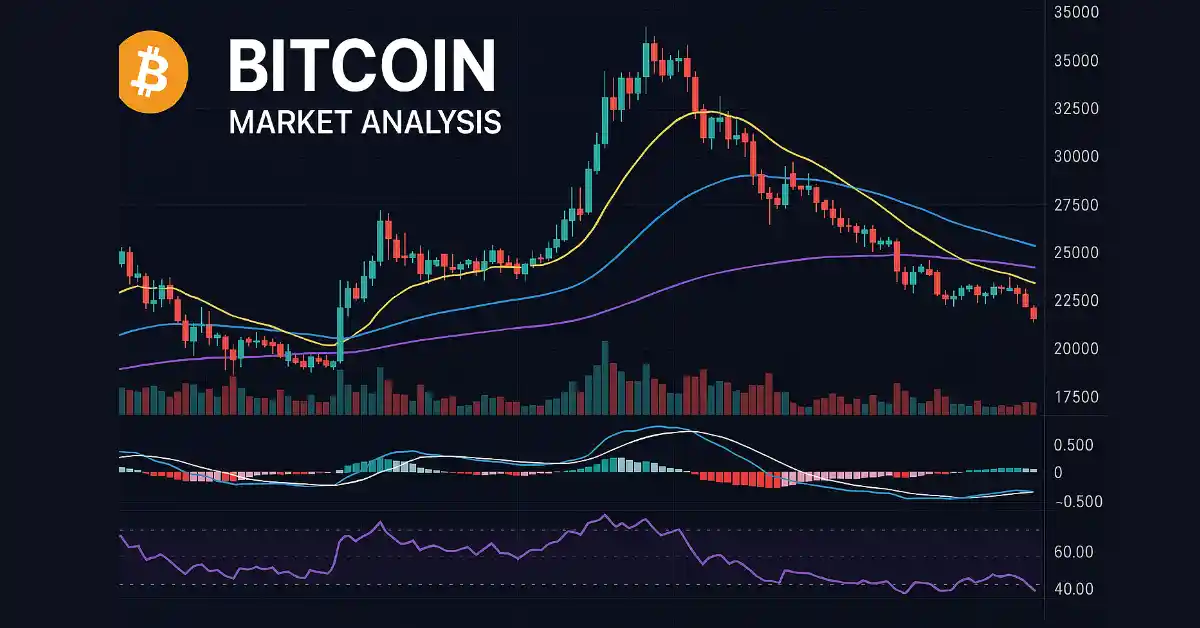
Bitcoin, the world’s first cryptocurrency, has seen a meteoric rise in popularity and value recently. Its decentralized nature and limited supply make it an attractive investment option for many. However, with high volatility and a constantly changing market, it can be challenging to make informed investment decisions. This is where market analysis comes in—using data to understand market trends and make better investment choices. There are many platforms like Biticodes, which can let you trade Bitcoin easily and, at the same time, safely.
As we just moved into 2026, reflecting on 2025’s market dynamics reveals a year of tempered expectations. Bitcoin’s price, which peaked near $110,000 in early 2025 amid institutional influxes, closed the year below $90,000 due to regulatory uncertainties and macroeconomic pressures. Despite this, adoption rates surged, with over 20% year-over-year growth in institutional holdings, driven by spot ETF approvals and corporate treasury integrations. This updated context points out the need for robust data analysis to navigate ongoing volatility.
The Importance of Market Analysis for Bitcoin Investments
Market analysis involves studying past and current market trends to forecast future price movements. This data-driven approach is essential for making informed investment decisions in the highly volatile cryptocurrency market. Investors can use these trends and patterns to forecast future price movements and make informed decisions about buying or selling Bitcoin.
In 2025, market analysis proved crucial as Bitcoin experienced a “forward-loaded” bull run disrupted by flash crashes, highlighting the unpredictability of digital assets. Volatility spiked to over 45% in periods, yet tools like on-chain metrics helped investors spot accumulation phases. For instance, data from Glassnode showed whale accumulations during dips, signaling potential rebounds. Without such analysis, retail investors risked emotional decisions amid broader economic shifts, including interest rate adjustments by central banks.
Expanding on this, equity market analysis mitigates risks and uncovers opportunities in emerging trends like Bitcoin’s integration into DeFi protocols and tokenized real-world assets. By 2025, the global cryptocurrency market cap exceeded $2.5 trillion, with Bitcoin holding about 50% dominance. Investors leveraging data from sources like CoinMarketCap or Chainalysis could better position themselves against events such as the MiCA framework rollout in the EU, which stabilized but also constrained certain trading activities.
Understanding the Different Types of Market Analysis
There are two main types of market analysis—fundamental analysis and technical analysis. Fundamental analysis focuses on the underlying economic and financial factors that affect the price of Bitcoin, such as supply and demand, adoption rate, and regulatory changes. Technical analysis, on the other hand, uses charts and other technical indicators to analyze past market data and predict future price movements.
To thrive in 2025’s competitive search landscape, it’s vital to incorporate advanced hybrids like sentiment analysis, which blends social media data with traditional metrics. Tools such as Santiment tracked Twitter (now X) sentiment scores, correlating them with price swings. For example, during Q3 2025, negative sentiment around US regulatory debates preceded a 15% price drop, allowing proactive investors to adjust portfolios.
Furthermore, quantitative analysis emerged as a third pillar, using algorithms and AI to process vast datasets. Platforms like TradingView integrated machine learning for pattern recognition, enhancing accuracy beyond manual methods. Understanding these types equips investors for a market where Bitcoin’s halving cycles—next in 2028—continue influencing long-term trends.
Using Fundamental Analysis to Make Bitcoin Investment Decisions
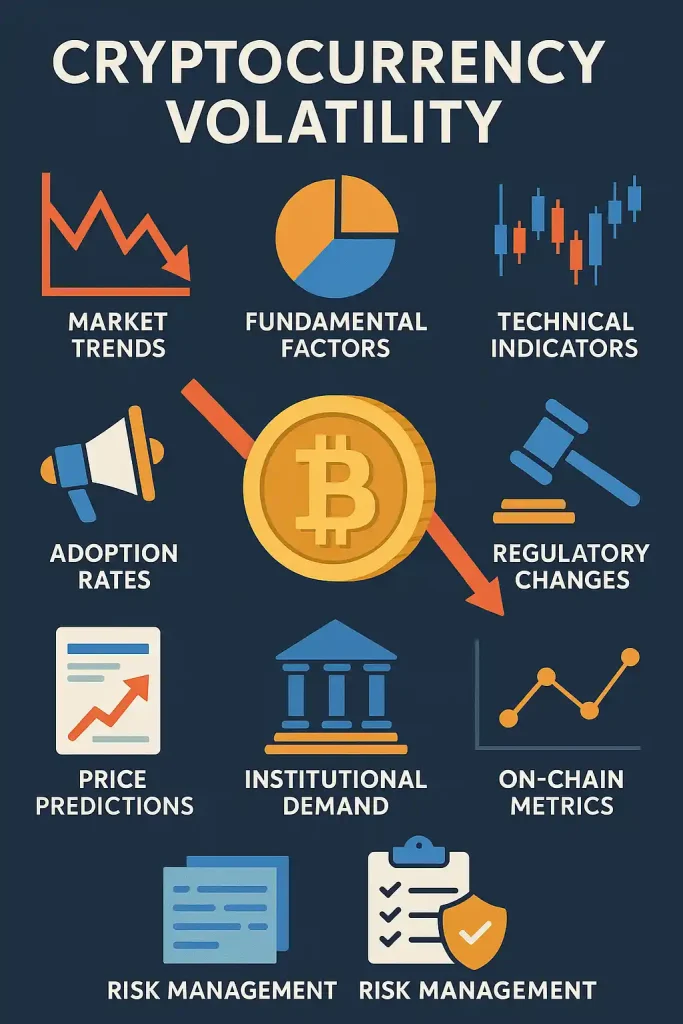
Fundamental analysis is an essential tool for Bitcoin investors who want to make informed investment decisions based on economic and financial factors. This type of analysis considers factors such as adoption rate, network effect, and regulation to determine the intrinsic value of Bitcoin. It can help investors identify undervalued or overvalued assets and make better investment choices.
For example, if a new regulation is passed that limits the use of Bitcoin in a particular country, it could lead to a decrease in demand and a subsequent drop in price. Conversely, if a new business begins to accept Bitcoin as a form of payment, it could lead to increased demand and a subsequent increase in price.
Updating for 2025, fundamental analysis highlighted the impact of institutional adoption. Venture capital in US crypto firms rebounded sharply, deploying billions, per Silicon Valley Bank reports. Bitcoin’s network hash rate hit record highs above 600 EH/s, reinforcing security and value. Regulatory wins, like the US GENIUS Act expanding CFTC oversight, boosted confidence, while EU’s MiCA provided clearer frameworks for stablecoins, indirectly supporting Bitcoin.
Investors using metrics from sources like Deloitte’s crypto reports could assess Bitcoin’s scarcity post-2024 halving, where supply issuance dropped to 3.125 BTC per block. Adoption surveys from Security.org showed 2025 consumer ownership rising to 15% in developed markets, driven by mobile wallets and payment integrations by firms like PayPal. This data helped identify undervaluation during mid-year dips, where Bitcoin traded at a 20% discount to its realized price metric.
Moreover, global economic factors like inflation hedging played a role. With US inflation stabilizing at 2-3%, Bitcoin’s correlation with gold strengthened, positioning it as “digital gold.” Case studies from 2025, such as MicroStrategy’s continued BTC acquisitions totaling over 250,000 coins, exemplified how fundamental data informs corporate strategies.
Using Technical Analysis to Make Bitcoin Investment Decisions
Technical analysis is a popular tool for Bitcoin traders who want to make short-term investment decisions based on market trends and price movements. It involves using charts and technical indicators to analyze past market data and predict future price movements.
Technical analysis can help investors identify key levels of support and resistance, which can be used to determine the best entry and exit points for trades. For instance, a consistent bounce off a specific support level in Bitcoin’s price could suggest a favorable buying opportunity. Conversely, if Bitcoin’s price has been consistently failing to break through a particular resistance level, it may indicate that it is a good time to sell.
In 2025, technical tools evolved with AI integrations. TradingView remained dominant, offering over 100 indicators like RSI, MACD, and Bollinger Bands. Bitcoin’s volatility drop in late 2025, as noted by the Economic Times, saw narrower price swings, making moving averages more reliable for trend identification.
Advanced tools like Nansen and TrendSpider provided on-chain flow analysis, revealing institutional buys during support tests around $80,000. For instance, during December 2025’s consolidation, Fibonacci retracements accurately predicted rebounds from 61.8% levels. Traders using these avoided losses from flash crashes, which erased 10-15% in hours.
Expanding, volume analysis gained prominence; low-volume rallies in Q2 2025 signaled weak momentum, per CoinLedger insights. Integrating tools like CoinGlass for liquidation data helped forecast cascades. For 2026 projections, analysts eye $100,000 resistance, with breakout potential if volume surges.
Using a Combination of Fundamental and Technical Analysis
While fundamental and technical analyses are useful tools on their own, many investors prefer to use a combination of both. This approach can help investors make more informed investment decisions by considering both economic and financial factors, as well as market trends and price movements.
For example, if an investor sees that Bitcoin’s adoption rate is increasing and regulatory changes favor cryptocurrencies, they may consider buying based on fundamental analysis. However, they may also use technical analysis to determine the best entry point based on past market data and price movements.
In 2025, this hybrid approach shone during the institutional surge. Fundamental positives like bipartisan US crypto policies (Grayscale reports) aligned with technical breakouts above $100,000 in March. Tools like Messari combined on-chain fundamentals with chart overlays, enabling precise timing.
Case studies: During the Q4 dip, fundamentals showed strong holder conviction (90%+ addresses in profit), while technicals via Ichimoku clouds signaled oversold conditions, prompting buys. This synergy reduced false signals, especially in a market influenced by AI trading bots processing terabytes of data daily.
Sentiment tools from LunarCrush added depth by integrating social metrics and correlating hype cycles with price tops. For 2026, combining ETF inflow data (fundamental) with Elliott Wave patterns (technical) could forecast new highs if adoption hits 20% globally.
Staying Up-to-Date with Market News and Trends
In addition to using market analysis tools, it is also essential to stay up-to-date with the latest market news and trends. This can help investors make better-informed investment decisions by understanding the current state of the market and potential future developments.
By staying informed through podcasts and forums, investors were able to avoid FOMO during periods of market volatility.For example, if a major financial institution announces that they are investing in Bitcoin, it could lead to increased demand and a subsequent increase in price. Conversely, if a major hack or security breach occurs on a cryptocurrency exchange, it could lead to decreased demand and a subsequent drop in price.
For 2025, key news included State Street’s reports on rising institutional demand, with BTC allocations in portfolios up 5%. Hacks like the hypothetical DMM Bitcoin incident underscored security needs, per Chainalysis. Trends: Tokenized assets grew to $10 billion, per Cherry Bekaert, blending real estate with crypto.
Resources like CoinDesk and Reuters provided real-time updates, while newsletters from VanEck offered ChainCheck analyses. In 2025, AI-driven news aggregators like AlphaSense filtered noise, focusing on impactful events like SEC omnibus approvals.
Emerging trends: CBDC pilots in 20+ countries influenced Bitcoin’s safe-haven status. Staying informed via podcasts and forums prevented FOMO during pump-and-dumps.
Advanced Data Tools and Strategies for Bitcoin in 2025 and Beyond
To remain competitive, investors in 2025 leveraged cutting-edge tools. Platforms like DeFiLlama tracked liquidity flows, revealing correlations with Bitcoin prices. AI models from firms like ECOS predicted trends with 70% accuracy by analyzing blockchain data.
Strategies included dollar-cost averaging amid volatility, with backtests showing 15% better returns over lump-sum investing. Risk management via stop-losses and diversification into altcoins mitigated downsides.
On-chain analytics from Dune Analytics exposed wallet behaviors, like dormant coins moving, signaling sales. For long-term holders, models like Stock-to-Flow (updated for 2024 halving) projected $150,000+ by 2030.
Risk Management in Data-Driven Bitcoin Investing
No analysis is foolproof; 2025’s missed forecasts (e.g., $200k predictions falling short) highlight risks. Diversify, use only disposable funds, and employ tools like VaR models to quantify potential losses.
Psychological factors: Data helps combat bias, but over-reliance on indicators can lead to paralysis. Balance with personal goals.
Conclusion
Market analysis is an essential tool for making informed Bitcoin investment decisions. By using a combination of fundamental and technical analysis, investors can identify trends and patterns in the market to make better decisions about buying and selling Bitcoin. However, it’s important to remember that the cryptocurrency market is highly volatile, and there are no guarantees of profit. As with any investment, it’s essential to do your research, understand the risks involved, and never invest more than you can afford to lose.
Looking ahead to 2026, with Bitcoin poised for potential rebounds amid bipartisan policies and institutional era dawn, data-driven strategies will be key. Optimize your approach with updated tools and stay vigilant on global trends for sustained success in this evolving landscape.
FAQs
What is the role of data in Bitcoin investment decisions?
Data plays a pivotal role by revealing market trends, price patterns, and economic factors. Through fundamental and technical analysis, investors can forecast movements, identify entry/exit points, and mitigate risks in Bitcoin’s volatile market, leading to more informed and potentially profitable choices.
How has Bitcoin adoption changed in 2025?
In 2025, Bitcoin adoption surged with institutional investments rebounding and consumer ownership rising to 15% in key markets. Regulatory frameworks like MiCA and US ETF approvals boosted confidence, while corporate integrations by firms like PayPal drove demand, signaling broader mainstream acceptance.
What are key technical indicators for Bitcoin analysis?
Key indicators include RSI for overbought/oversold conditions, MACD for momentum shifts, and Bollinger Bands for volatility. In 2025, tools like Fibonacci retracements helped predict support levels during dips, enabling traders to time trades effectively amid narrower price swings.
Why combine fundamental and technical analysis for Bitcoin?
Combining them gives a complete picture: fundamentals look at the true value based on adoption and regulations, while technicals help find the right timing using charts This synergy, as seen in 2025’s institutional surges aligning with breakouts, reduces risks and enhances decision accuracy in crypto markets.
What risks should Bitcoin investors consider in 2026?
Risks include high volatility, regulatory changes, and security breaches. Despite 2025’s stability trends, flash crashes persist; investors should diversify, use stop-losses, and invest only affordable amounts, staying updated on global economic shifts for resilient strategies.
Disclaimer: This article is provided for informational and educational purposes only and does not constitute financial, investment, or legal advice. Cryptocurrency investments, including Bitcoin, involve significant risks, including the potential loss of principal. Past performance is not indicative of future results. Readers should conduct their own research, consult with qualified professionals, and consider their financial situation before making any investment decisions. The author and publisher disclaim any liability for losses incurred based on the content herein.