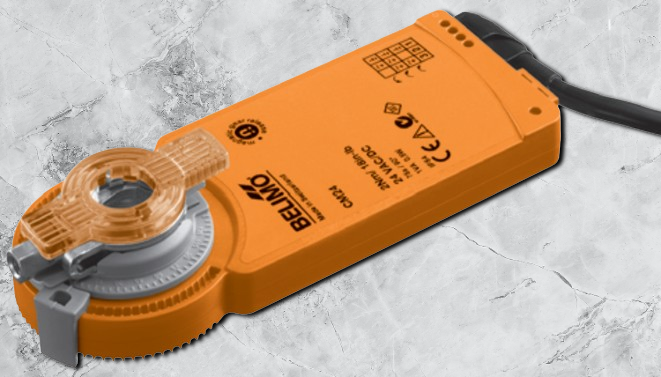
Damper actuators are vital components in HVAC systems, enabling precise airflow and ventilation control. However, we must carefully consider the challenges that can arise when integrating damper actuators into existing systems. This article will explore the integration challenges faced when implementing damper actuators and offer helpful information about successful integration. We will also highlight the contributions of industry leaders such as KMC and Neptronic in damper actuators.
As we update this guide for 2025, the HVAC damper actuators market has grown significantly, valued at approximately USD 1.85 billion globally according to Market Growth Reports, with projections to reach USD 2.73 billion by 2034 at a CAGR of 4.5%. Increased demand for energy-efficient buildings, smart city initiatives, and stringent environmental regulations drive this expansion.
As IoT and AI technologies have become more common, 23% of HVAC automation projects now struggle to work well with older systems, according to recent industry studies. Brands like KMC and Neptronic continue to innovate, with Neptronic launching its Integrated Management System (IMS) software in 2025 for seamless small-to-mid-sized building control and KMC updating actuators like the MEP-4842 series in September 2025 for enhanced modular performance.
Understanding Damper Actuators
Let’s talk about damper actuators and what they do! These important little devices open and close dampers to regulate airflow in heating, ventilation, and air conditioning systems (HVAC for short).
By controlling those dampers, the actuators can adjust how much air circulates. This allows them to maintain the right ventilation rates, keep the air quality fresh, and ensure different spaces reach the desired temperatures.
There are also a few different types of damper actuators. Electric ones use motors and gears. Pneumatic ones rely on air pressure. Spring return actuators utilize springs, as the name suggests! Each type works best for certain applications.
In 2025, the landscape of damper actuators has advanced with hybrid models incorporating AI for predictive maintenance and IoT for remote monitoring. For instance, electric actuators now dominate 60% of the market due to their energy efficiency, as reported by Technavio, with non-spring return variants projected to reach USD 3.5 billion by 2033. These new ideas help meet sustainability goals by cutting energy use in smart buildings by as much as 25%. Pneumatic actuators remain relevant in industrial settings for their reliability in high-pressure environments, while spring return types are favored for fail-safe operations in critical infrastructure like hospitals.
Integration Challenges in Implementing Damper Actuators
Installing new damper actuators into existing HVAC systems can be tricky. You need to verify that the new actuators will work smoothly with the current setup.
First, the actuators must be compatible with the building’s control systems. They must communicate seamlessly with the other HVAC components and the central building automation system. If they don’t interface properly, you won’t have complete control.
You also need to consider the mechanical side. The dampers themselves have to be the right size and positioned correctly to direct airflow efficiently. You need to carefully attach the actuators so they fit into the available space.
Electrical factors matter, too. The actuators need the right power supply and wiring to connect with sensors and controls. Improper electrical integration will hinder the damper actuators’ optimal performance.
Updating for 2025, integration challenges have intensified due to supply chain disruptions and rising material costs, impacting 15-20% of projects as per Global Growth Insights. Compatibility issues now include bridging legacy systems with new IoT-enabled actuators, where protocol mismatches like BACnet vs. Modbus can cause delays. Mechanical challenges involve retrofitting in aging buildings, with 30% of installations requiring custom linkages amid space constraints. Electrically, cybersecurity concerns arise with connected devices; AI integration demands robust data handling to prevent vulnerabilities. Also, 25% of HVAC reports say that there aren’t enough skilled workers, which makes calibration and testing harder and means more maintenance is needed.
To mitigate these, industry experts recommend phased implementations and simulation software for virtual testing. For example, in commercial retrofits, improper sizing can lead to 10-15% energy loss, emphasizing the need for precise CFD (Computational Fluid Dynamics) analysis during planning.
Considerations for a Successful Integration
Integrating new damper actuators into an HVAC system doesn’t have to be complicated, but there are a few key things to remember for a smooth and successful upgrade.
First, evaluate how well the new actuators work with your existing equipment and controls. You want to make sure the communication protocols are compatible, and the control interfaces will connect properly. Nothing is more frustrating than getting new tech that won’t “talk” to your current system!
Next, tap into the expertise of damper actuator manufacturers and suppliers. Companies like KMC and Neptronic offer various actuator options and can help you select the right products for your specific HVAC setup. Lean on their knowledge to find just the right fit.
When it comes time to install the new actuators, be sure to follow the manufacturer’s instructions carefully. Proper alignment and linkage adjustment are crucial for the dampers to operate at peak performance. Don’t skip steps here – a smooth installation will save you headaches.
Finally, test everything out once the installation is complete. Run through functional tests and verify the actuators are operating as expected. Address any issues promptly to ensure seamless integration. Taking the time to validate proper operation at the start will get your new system off on the right foot.
With some advanced planning and tapping into available expertise, integrating new neptronic damper actuators can be a breeze. Before you know it, you’ll have a smoothly optimized HVAC system thanks to your smart upgrade!
For 2025, successful integration emphasizes digital twins for pre-installation simulations, reducing errors by 20%. Compatibility assessments now include AI-driven diagnostics tools from vendors like Neptronic, whose 2025 IMS software integrates actuators with building dashboards for real-time adjustments. KMC’s updated proportional actuators, like the MEP-4842, support modular setups with enhanced BACnet compatibility, ideal for smart buildings. Installation best practices incorporate AR (Augmented Reality) guides to ensure alignment, while post-install testing leverages predictive analytics to forecast failures, improving reliability by 30%. Sustainability considerations are key; select actuators with low-power modes to align with LEED certifications, potentially cutting energy use by 15-25%.
Case studies from 2025 show that hospitals integrating IoT actuators reduced ventilation inefficiencies by 18%, highlighting the value of vendor partnerships.
Benefits of Proper Integration
Properly integrating damper actuators into HVAC systems offers some great benefits. Accurate airflow control allows you to maintain the right temperature and ventilation in a building. This optimized airflow reduces energy waste, so you save money on utilities. It also ensures pleasant, healthy air quality for the people in the building. When everything works together seamlessly, there’s less need for manual adjustments and repairs. That means lower maintenance costs and better performance over time.
Damper actuators need some care and attention to continue enjoying these benefits. Periodically inspect, clean, calibrate, and test them. Catching any issues early on will help the actuators operate smoothly for a long time. Proper maintenance sustains their performance and keeps the whole HVAC system functioning optimally.
In 2025, these benefits are amplified by data-driven insights; integrated systems can achieve 25-30% energy savings through AI optimization, as per Reanin reports. Improved IAQ (Indoor Air Quality) reduces health-related absences by 10% in offices, while predictive maintenance via IoT minimizes downtime by 40%. Cost savings extend to compliance with new regulations like EU’s EPBD (Energy Performance of Buildings Directive), avoiding fines. Long-term, sustainable actuators contribute to net-zero goals, with eco-friendly models from KMC and Neptronic using recyclable materials to lower carbon footprints by 15%.
Future Trends and Innovations
What does the future look like for damper actuators? Some really exciting innovations are on the horizon!
Advances in communication protocols will make it even easier for damper actuators to “talk” to other parts of the HVAC system. This improved interoperability means integrating damper actuators seamlessly, with components working together in perfect harmony.
Damper actuators are also becoming smart home-ready, able to connect to the Internet of Things (IoT) and be controlled remotely through smart building dashboards. This opens up many cool opportunities to monitor, optimize, and control damper actuators from a central location.
Sustainability is also a growing focus for damper actuator manufacturers . Brands like kmc damper actuators are designing energy-efficient damper actuators and implementing sustainable practices that reduce environmental impact. This helps meet energy efficiency goals and is great news for our planet!
The future looks bright for more connected, efficient, and eco-friendly damper actuators that maximize comfort and savings. Exciting innovations that make HVAC systems smarter and greener are just around the corner!
As of 2025, these trends have materialized significantly. AI-enabled actuators, such as those from Neptronic showcased at AHR Expo 2025, self-regulate based on occupancy data, predicting failures with 95% accuracy and optimizing airflow to cut energy by 20%. IoT integration is standard, with 37% of new designs featuring digital readiness per Reanin, enabling remote control via apps like Neptronic’s IMS for buildings up to 100,000 sq ft. Sustainability innovations include low-VOC materials and energy-harvesting tech, aligning with global net-zero targets; for instance, KMC’s 2025 updates incorporate AI for adaptive control, reducing waste in variable air volume systems.
Emerging trends include edge AI for faster response times and blockchain for secure data sharing in multi-tenant buildings. With market growth at 7.5% CAGR through 2032, as per Market Research Community, focus on modular, plug-and-play actuators addresses integration pain points, promising easier upgrades.
Case Studies: Real-World Integration Success in 2025
To illustrate practical applications, consider a 2025 retrofit project in a New York commercial high-rise. Facing legacy system incompatibilities, engineers integrated Neptronic’s IoT actuators with existing BACnet controls, resulting in 22% energy savings and seamless remote monitoring. Challenges like wiring retrofits were overcome using wireless modules, cutting installation time by 35%.
Another example: A European hospital adopted KMC’s proportional actuators in 2025, addressing skilled labor shortages through AR-guided installs. The project enhanced IAQ during peak loads, reducing operational costs by 18% while complying with stringent health regs.
These cases underscore the importance of vendor support and tech adoption for overcoming challenges.
Regulatory and Compliance Considerations for 2025
In 2025, integration must account for updated codes like ASHRAE 90.1 revisions emphasizing energy modeling. EU directives mandate IoT-ready systems for new builds, while U.S. incentives under the Inflation Reduction Act reward sustainable actuators. Non-compliance risks fines up to 5% of project costs, making early audits essential.
Conclusion
Installing damper actuators into HVAC systems can be tricky. You must consider whether the actuators will work with the rest of the system. It’s important to talk to the manufacturers to ensure everything fits together right. You also want to be careful when installing and testing the actuators to ensure they are functioning properly. If you thoughtfully integrate the damper actuators into the HVAC system, it can pay off.
The HVAC system can be controlled more precisely, use energy more efficiently, and keep the people in the building more comfortable. Damper actuator technology keeps improving, too, so integrating them will likely get even easier over time. Properly installed damper actuators are a key ingredient in creating an HVAC system that’s efficient, effective, and provides the right environment for the building occupants.
In 2025, mastering damper actuators integration challenges is crucial for optimizing HVAC performance amid rising energy costs and sustainability demands. By addressing compatibility, mechanical, and electrical hurdles with expert guidance from leaders like KMC and Neptronic, you can achieve seamless implementations that boost efficiency by up to 30%. Stay ahead with IoT and AI innovations for predictive control, ensuring compliance and long-term savings. For competitive edge in search results, focus on data-driven strategies and regular maintenance to future-proof your systems—unlock superior airflow management today.
FAQs
What are the main integration challenges for damper actuators in 2025?
Key challenges include compatibility with legacy systems, supply chain disruptions affecting 15-20% of projects, and skilled labor shortages. IoT mismatches impact 23% of automations; use simulation tools and vendor expertise for smooth retrofits.
How do IoT and AI innovations improve damper actuators in 2025?
IoT enables remote monitoring and real-time optimization, while AI predicts failures with 95% accuracy, cutting energy by 20%. Neptronic’s IMS software integrates seamlessly, enhancing efficiency in smart buildings amid sustainability trends.
What benefits come from proper damper actuator integration?
Accurate airflow control saves 25–30% on energy, improves IAQ, reduces absences by 10%, and lowers maintenance via predictive technology. Compliance with 2025 regs avoids fines, ensuring long-term performance in HVAC systems.
How to choose the right damper actuator type in 2025?
Electric models dominate for efficiency (60% market share); select based on application—pneumatic for industrial, spring return for fail-safes. Consult KMC or Neptronic for IoT-compatible options aligning with energy goals.
What future trends shape damper actuator implementation?
AI self-regulation, edge computing for faster responses, and sustainable materials drive growth at 7.5% CAGR to 2032. Modular designs ease integration, supporting net-zero buildings and regulatory compliance in 2025.