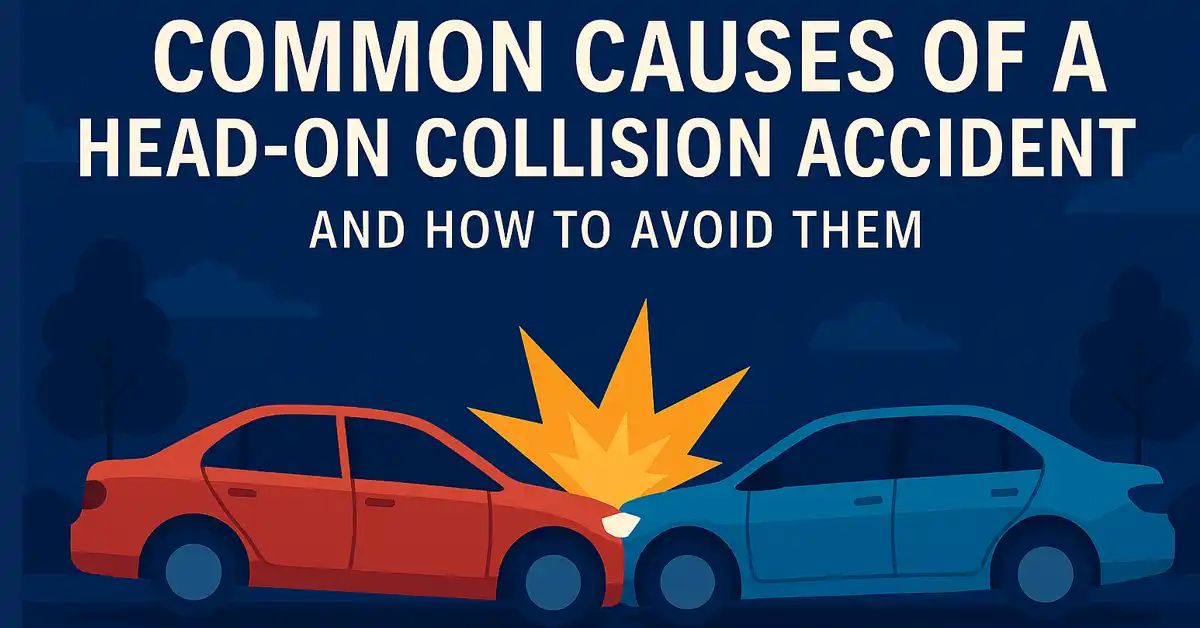
A head on collision accident is among the most severe and often fatal types of road accidents. Many things can lead to these accidents, like not paying attention while driving or going too fast. Preliminary NSC data for September 2025 shows 3,470 fatalities (a 13% decrease from 2024 but still high), and head-on crashes remain a top killer, accounting for 10.1% of U.S. fatal crashes despite making up only 2% of total incidents.
NHTSA reports around 4,000 annual head-on deaths, often on undivided highways where wrong-way driving (60% impaired) or drifting leads to devastating impacts. Understanding the causes of distracted driving, which resulted in 3,275 fatalities in 2023 and is rising due to technology, is key to preventing crashes in 2025. AEB in 94% of new vehicles cuts forward crashes by 50%, while wrong-way detection (e.g., Nevada’s 80% effective LED systems) curbs entries. This guide explores causes and tips, updated with 2025 stats for safer roads.
It’s crucial to know why these crashes happen so we can avoid them. We will talk about the common reasons behind these accidents and offer tips on staying safe. By understanding and acting, we can make the roads safer for everyone. Keep reading.
Distracted Driving
Distracted driving is a leading cause of head on collisions. When drivers divert their attention from the road to text or make phone calls, accidents can happen. Stay focused on your surroundings to reduce the risk significantly. In 2025, NHTSA data shows distracted driving causes 9% of fatal crashes (up from 8% in 2023), with cell phones involved in 2.5% of drivers at any moment—equating to 373,000 distracted U.S. motorists simultaneously. Visual distractions like texting increase crash risk 23-fold, often leading to lane departures and head-on impacts on two-lane roads.
To prevent this, practice safe habits behind the wheel. Keep your phone out of reach while driving. If you need to use it, pull over safely first. Emerging 2025 solutions include hands-free mandates in 48 states and apps like LifeSaver blocking texts (reducing incidents by 20% in pilots). Drivers should enable Do Not Disturb modes or use voice assistants for navigation.
Distracted Driving Stats and Trends 2025
- Fatalities: 3,275 in 2023 (latest full); projected 3,000+ for 2025.
- High-Risk Groups: Teens (42% text while driving); urban areas see 25% higher rates.
- Tech Impact: AEB with distraction alerts (in 70% new cars) mitigates 27% of pedestrian-related distractions.
Awareness campaigns like NHTSA’s “Put the Phone Away” aim for 10% reduction.
Speeding
Driving above the speed limit is dangerous and often leads to accidents. Excessive speed reduces reaction time and increases stopping distance. Consequently, it’s a significant contributor to head on collisions. Speeding factors into 29% of fatal crashes (NHTSA 2023), with 2025 projections showing similar trends amid rising average speeds (up 2 mph nationally). On undivided roads, speeding amplifies head-on risks, as reaction times drop from 1.5 seconds at 55 mph to under 1 second at 70 mph.
Always obey posted speed limits, as they’re designed with safety in mind. Remember that everyone shares responsibility for ensuring safe roads. Slow down and arrive alive. In 2025, automated speed enforcement (cameras in 30+ states) reduces speeding by 15-20%; adaptive cruise control in 80% new vehicles maintains safe distances.
Speeding Prevention in 2025
- Tech: Lane-keep assist prevents drifting; IIHS reports 20% fewer head-on claims.
- Tips: Use Waze for alerts; maintain a 3-second following distance.
Impaired Driving
Impaired driving due to alcohol or drugs is another significant factor in head on collisions. These substances diminish driving abilities, hindering judgment and reflexes on the road. Therefore, it is crucial to refrain from driving while under the influence. Impairment causes 32% of fatalities (13,524 in 2023), with 60% of wrong-way crashes (head-on precursors) involving BAC ≥0.08. In 2025, opioid-related impaired driving rises 10%, per CDC.
Designate a sober driver if you intend to consume alcohol, or find an alternative way home, like using a taxi service or ride-sharing app. It’s essential not only for your safety but for others on the road, too. Ignition interlocks (mandated in 40 states for DUI offenders) cut reoffenses by 67%; 2025 apps like BACtrack promote testing.
Impaired Driving Data 2025
- Wrong-Way Link: 60% impaired; detection systems (flashing lights) in 15 states reduce by 38%.
- Prevention: Rideshare surges 15% post-bar hours.
Fatigue
Fatigued driving or drowsy driving can be as dangerous as driving under the influence. It impairs judgment, slows reaction times, and increases the likelihood of drifting into oncoming traffic. Long hours behind the wheel, inadequate sleep, and driving at night can contribute to driver fatigue. Drowsy driving causes 10-20% of crashes (NHTSA estimates 91,000 annually), with head-on risks high on rural roads.
To avoid this, drivers should get an adequate amount of rest before embarking on long trips. Take regular breaks to rest and stretch, and avoid driving during late hours when fatigue is most likely to set in. Driver monitoring systems (eye-tracking in 50% new cars) alert for drowsiness, reducing incidents by 25%.
Fatigue Trends and Tips
- Stats: Peaks 2-6 AM; 17% child fatalities in impaired/fatigued crashes.
- 2025 Tech: Volvo’s Care Key limits speed for drowsy drivers.
Ignoring Traffic Laws
Ignoring traffic laws is a serious problem that can cause head on collisions. Sometimes, drivers may disregard red lights or stop signs due to their rush. This risky behavior can lead to accidents, hurting people, and causing damage. It’s vital to always follow traffic rules to keep everyone safe. Violations contribute to 10% of head-on crashes; road rage (96% witnessed in 2024) escalates 7% to confrontations.
For help after such accidents, you can visit https://stevedimopoulos.com/car-accidents . They offer great legal advice and help you through the process. Remember, following rules isn’t just about avoiding fines; it’s about keeping you and others safe on the road.
Traffic Law Adherence 2025
- Road Rage: 116 gun fatalities by Oct.; defensive driving courses cut risks 30%.
Preventing a Head on Collision Accident
Preventing a head on collision accident requires collective effort and adherence to road safety measures. By eliminating distractions, obeying speed limits, avoiding impaired driving, managing fatigue, and following traffic laws, we take significant steps towards safer roads. In 2025, ADAS like AEB and forward collision warning prevent 50% rear-end but aid head-on via braking; median barriers reduce crossovers by 40%.
Each action, no matter how small, contributes to reducing the risk of devastating accidents. It’s our responsibility as drivers to prioritize not just our safety but that of others. Together, we can diminish the incidence of head on collision accidents and ensure a safer driving environment for everyone.
Don’t let a preventable accident ruin your life—take action now and learn more about defensive driving techniques in our other blog posts.
Emerging 2025 Prevention Technologies
Advanced systems dominate: AEB (94% new vehicles) detects threats 2 seconds faster; wrong-way tech (LED bars, sirens) in 20 states stops 80% entries. Infrastructure: Cable barriers on highways cut fatalities 50%.
State-by-State Fatality Insights 2025
California: 4,428 (2022, similarly projected); Montana: 26.8/100k; Northeast: lowest (e.g., MA: 5.5/100k).
FAQs – Head On Collision Accident
What are the leading causes of head-on collisions in 2025?
Distracted driving (9% fatalities), speeding (29%), and impaired driving (32%) top the list. NHTSA reports 3,275 distracted deaths in 2023; wrong-way (60% impaired) often leads to head-on. Tech like AEB helps prevent it.
How many head-on collision fatalities occur annually in the US?
According to the NHTSA, approximately 4,000 head-on collision fatalities occur annually, accounting for 10.1% of all fatal crashes. The preliminary data from the National Safety Council for 2025 indicates that there were 3,470 fatalities in September, which represents a 13% decrease. Rural roads see most impairment in 60% of wrong-way cases.
What vehicle tech prevents head-on crashes in 2025?
AEB (94% new cars) reduces by 50%; lane-keep assist curbs are drifting. Wrong-way detection (LEDs, sirens) is 80% effective in NV. IIHS: Forward warnings save 360 lives/year.
How does impaired driving contribute to head-on accidents?
32% fatalities (13,524 in 2023); 60% wrong-way crashes involve BAC ≥0.08. Opioids are up 10% in 2025. Prevention strategies include interlocks, which reduce reoffense rates by 67%, and the promotion of sober rides.
What state has the highest head-on collision rates?
CA leads totals (4,428/2022); MT has the highest per capita (26.8/100k). Rural states are riskier without medians. Prevention: Barriers reduce 50%; enforcement is key.
Conclusion: Driving Safer in 2025—Avoid Head-On Crashes Today
Head-on collisions, though only 2% of crashes, claim 10% of fatalities—around 4,000 lives yearly. With 2025 data showing declines but persistent risks from distraction (9% fatalities), speeding (29%), and impairment (32%), prevention is vital. Embrace tech like AEB and lane assist (reducing head-on by 20-30%), designate sober drivers, and stay alert. For “head-on collision avoidance 2025” or “head-on crash stats by state,” remember: Safe habits save lives. Check NHTSA resources; consult locals for state laws. Drive defensively—your actions protect families.
Disclaimer: This article offers general information on head-on collisions and is not legal or medical advice. Statistics may vary; consult authorities like NHTSA for the latest data. Seek professional help post-accident. The author and publisher are not responsible for any actions taken based on the information provided in this content.