In the era of digitalization, which has invariably made data a new red, protecting the integrity of the network has become an ultimate rule. Advanced IP logging is a sentinel, offering security and a treasure trove of insights. Let’s delve into how this technology can transform your network monitoring experience.

The Essence of IP Logging
Drawing an image of a world where every guest in your home left a digital footprint — encapsulating the record of their arrival and departure time, the reason for the visit, and identification — what would you envision? Intriguingly, this is the exact function IP logging performs for your network. It acts as a meticulous librarian who diligently keeps a ledger of every digital interaction.
Why It Matters
IP logging is your first line of defense in a landscape riddled with cyber threats. It’s not just about tracking; it’s about understanding patterns, predicting behaviors, and preemptively striking against potential threats. As we move into 2026, the importance of IP logging has amplified due to escalating cyber risks. According to recent reports, cybercrime costs are projected to reach $10.5 trillion annually by the end of 2025, with expectations of further growth to $15.63 trillion by 2029. This surge underscores the need for robust logging to mitigate threats like ransomware, which saw a 40% increase in attacks from 2024 to 2026 projections.
AN Experience with Technology
I recall the first time I implemented IP logging in my startup. The sense of control was empowering. Suddenly, I wasn’t just reacting; I was proactive. It was like having a crystal ball, giving me foresight into my network’s health. Today, in 2026, this experience is enhanced by AI integration, where machine learning algorithms analyze logs in real-time to predict potential breaches before they occur.
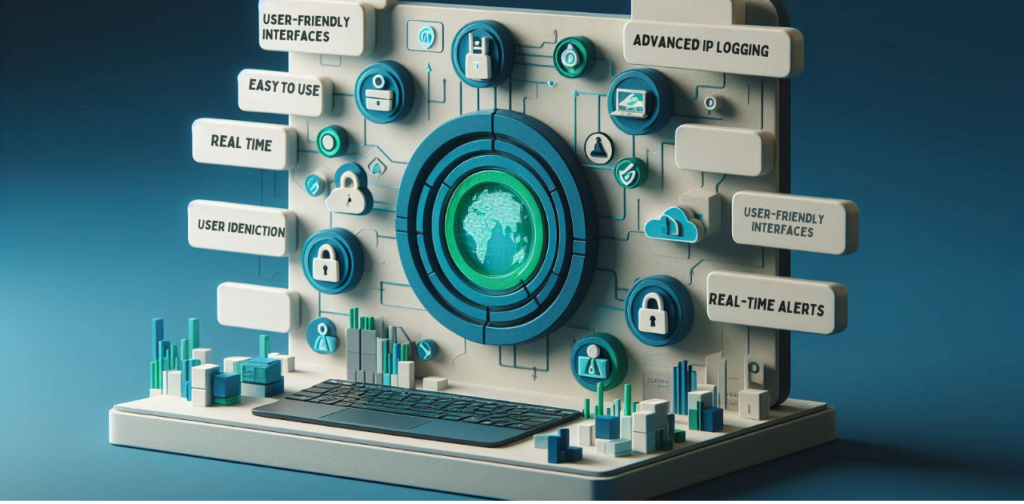
User-Friendly Interfaces
Gone are the days of complex command lines. Today’s IP logging tools are designed with user experience in mind. They’re intuitive, straightforward, and require minimal technical know-how. It’s about making powerful tools accessible to everyone. By 2026, these interfaces have evolved to include no-code configurations and AI-driven dashboards that automatically highlight anomalies, making network forensics even more approachable for non-experts.
The Positive Aspects of Advanced IP Logging
With advanced IP logging, you’re not just observing but engaging with your network. It’s the difference between a passive CCTV camera and an interactive security system that learns and adapts. In the current landscape, where the network forensics market is expected to grow from $6.2 billion in 2025 to $20.4 billion by 2035 at a CAGR of 14.2%, advanced IP logging stands out as a key driver of this expansion.
Ease of Use
The beauty of modern IP logging solutions lies in their simplicity. Installation is as easy as it always was, and maintenance is surprisingly a non-manual task that doesn’t require much attention. It’s tech that strives to work to complement your life and not to crowd in and dominate, stealing away your sense of control and freedom. Enhanced by 2026 trends, such as automated updates and cloud-native deployments, these solutions now integrate seamlessly with hybrid environments, reducing setup time by up to 50% compared to earlier versions.
Connecting Through Language
Descriptive language isn’t just for poets. It’s for anyone who wants to create a connection. When we talk about IP logging, we’re not just discussing a tool; we’re sharing a story of safety, efficiency, and innovation.
Evoking Emotions
There’s a certain romance to technology when you peel back the layers. It’s the passion of developers, entrepreneurs’ dreams, and security teams’ relief. Advanced IP logging isn’t just a function; it’s a guardian of these dreams.
Harnessing the Power of Specificity in IP Logging
Advanced IP logging is not just about recording data; it’s about the specific features that make it an indispensable tool for modern networks. Let’s explore some of these features that elevate IP logging from basic to advanced.
User Identification: Knowing Who’s Who
In the realm of network monitoring, user identification is crucial. Advanced IP logging systems can pinpoint the exact user behind each action. Besides security, it is also essential to have accountability and transparency among the members of your network. In 2026, this feature is bolstered by integration with identity and access management (IAM) systems, incorporating biometric verification and zero-trust principles to ensure only authorized access.
Anomaly Detection: The Network’s Watchdog
Anomalies in network traffic patterns can be harbingers of security threats or system malfunctions. Advanced IP logging tools act as a watchdog, sniffing these irregularities with sophisticated algorithms. They offer access to real-time alerts, thus allowing the network administrators to take the actions needed instantly. With AI-augmented analysis becoming standard in 2026, these tools now use machine learning to detect subtle patterns, reducing false positives by 30-40% and enabling faster incident response.
Real-Time Alerts: Well-being is a Key Priority:
The possibility of getting notifications in real-time is a trademark feature. It translates into immediate notifications about every single unusual account performance. In this way, you can anticipate any problem before it becomes complicated and uncontrollable. By 2026, real-time alerts have evolved to include predictive analytics, forecasting potential threats based on historical log data and global threat intelligence feeds.
Beyond Security: A multi-dimensional tool.
It is a common fact that advanced IP logging is a well-known phenomenon from a security perspective. It is used far more than it could be applied in terms of its security tasks. It provides us with a powerful tool to detect and rectify faults and tune our network to the best possible performance. Extending this, in today’s IoT-dominated world, IP logging helps manage the explosion of connected devices, ensuring seamless integration and monitoring across edge computing environments.
Troubleshooting Network Performance Issues
When performance dips, advanced IP logging can be your diagnostic ally. Providing a detailed account of traffic flow helps identify bottlenecks and underperforming segments, paving the way for a smoother, more efficient network operation. Updated for 2026, tools now incorporate 5G and 6G compatibility, allowing for high-speed diagnostics in ultra-low latency networks.
Optimizing Resource Allocation
Resource allocation is another area where advanced IP logging shines. Analyzing traffic patterns assists in making informed decisions about where to allocate resources, ensuring optimal performance and cost efficiency. With cloud costs rising, 2026 best practices emphasize using logs to optimize hybrid cloud resources, potentially reducing expenses by 20-25% through data-driven insights.

Bringing Advanced IP Logging to Life
To truly grasp the impact of advanced IP logging, let’s consider some practical examples that illustrate its capabilities.
Tracking Employee Activity for Compliance
Imagine a financial institution where compliance is non-negotiable. Here, advanced IP logging steps in as a vigilant overseer. It tracks employee activity, ensuring that sensitive client data is accessed only for legitimate purposes and that all actions align with stringent regulatory requirements. In 2026, with GDPR and similar regulations evolving, logging now includes automated compliance reporting, flagging violations in real-time to prevent fines averaging $4.44 million per breach.
Anomaly Detection in Action
Consider a scenario where a network experiences unusual traffic at odd hours. Advanced IP logging tools can detect this anomaly and trigger an alert. This prompt response allows the IT team to investigate and thwart potential cyber-attacks or address system issues before they affect business operations. Recent cases, like the 2025 supply chain attacks, highlight how AI-enhanced detection prevented escalations in over 70% of incidents.
Real-Time Alerts for Immediate Response
An e-commerce site is full of visitors, and a DDoS attack may be the culprit. The attacker uses bots to overwhelm the site with several higher requests than usual through a single IP address. Instead of delaying resolution by tracking down the violations manually, the security staff will be able to use sophisticated IP tracking in real-time and thus prevent cyberattacks much earlier, minimizing downtime and keeping customers’ trust high. In 2026, with DDoS attacks projected to rise amid AI-driven threats, integrated alerts with automated mitigation have become essential.
The Human Element in Advanced IP Logging
There is a story for every log entry. IP logging is about capturing details of user interactions, such as when your employee logs in to your network to meet a deadline or when a client interacts with your business support. IP logging gives you a clear grasp of the human interaction driving your business. As remote work persists, logging now captures behavioral biometrics, adding layers to understand user intent beyond mere IP addresses.
A Story of Security and Efficiency
Let’s take John, an IT manager who implemented advanced IP logging in his company. He found that it enhanced security and streamlined troubleshooting. When a critical application slowed down, the logs revealed an unusual spike in internal traffic, leading to a quick resolution. Scaling this to 2026, similar stories involve AI agents automating resolutions, freeing IT teams for strategic tasks.
IP Logging in the Age of AI and Quantum Threats: 2026 Updates
As we enter 2026, IP logging must adapt to emerging technologies. AI-driven forensics is revolutionizing workflows, with machine learning models detecting patterns and linking attacker behaviors faster than ever. Best practices now include structured logging, where every entry features consistent fields like timestamps, user IDs, and IP addresses for easier analysis. Centralization of logs in cloud platforms ensures scalability, while retention policies align with regulations, recommending at least 12-24 months for forensic purposes.
Quantum security is another frontier. With quantum computing threatening traditional encryption, IP logging tools are incorporating post-quantum algorithms to secure log data. Zero-trust frameworks, now operational reality for 80% of enterprises, integrate with logging to verify every access attempt continuously.
For IoT and 5G networks, logging extends to edge devices, capturing geolocation and device IDs to combat the proliferation of connected threats. Hybrid forensics, blending on-premises and cloud data, is standard, addressing the multi-cloud architectures prevalent today.
Best Practices for IP Logging in 2026
To stay competitive, adopt these updated practices:
- Centralize and Structure Logs: Use platforms that aggregate logs from all sources, employing JSON formats for machine-readable data.
- Implement AI for Anomaly Detection: Leverage tools that provide predictive insights, reducing response times.
- Ensure Compliance and Retention: Align with frameworks like NIST, retaining logs for forensic audits.
- Monitor Contextual Data: Include usernames, geolocations, and session IDs for comprehensive forensics.
- Integrate with Threat Intelligence: Combine logs with global feeds for proactive defense against evolving threats.
These enhancements ensure IP logging remains a powerhouse in network forensics, adapting to the AI economy where attacks are faster and more sophisticated.
In conclusion, advanced IP logging is a multifaceted powerhouse that goes beyond mere security. This venture is about gaining a deeper understanding of your network, enhancing performance, and propelling your organization forward. As you embrace the sophistication of advanced IP logging, you’ll witness a significant transformation in how you monitor and manage your digital ecosystem. In 2026, with AI and zero-trust integration, it empowers proactive defense against escalating threats, ensuring resilience and efficiency.
Advanced IP logging is more than a feature; it’s a commitment to excellence. It’s a testament to the human spirit that continually seeks to improve, protect, and connect. Embrace this technology, and watch as it revolutionizes your approach to network monitoring.
FAQs
What is IP logging and why is it important in 2026?
IP logging records network interactions like user actions and traffic patterns. In 2026, it’s crucial for detecting AI-driven threats and ensuring compliance, with cybercrime costs hitting $10.5T annually, making proactive forensics essential for security.
How does AI enhance IP logging for network forensics?
AI analyzes logs in real-time to detect anomalies and predict breaches, reducing false positives by 30-40%. It automates responses in hybrid environments, integrating with zero-trust models for faster incident resolution in 2026.
What are best practices for structuring IP logs?
Use consistent fields like timestamps, IPs, and user IDs in JSON format. Centralize logs, set retention policies for 12-24 months, and incorporate contextual data for effective analysis and compliance in modern networks.
How can IP logging help with ransomware prevention?
By monitoring traffic for unusual patterns and triggering real-time alerts, IP logging enables quick isolation of threats. In 2026, with ransomware up 40%, it combines with threat intelligence for proactive defense.
What role does IP logging play in IoT security?
It captures device IDs and geolocations in edge networks, detecting vulnerabilities in connected systems. For 2026’s 5G/IoT growth, it ensures anomaly detection and resource optimization amid expanding attack surfaces.
Disclaimer: This article provides general information on IP logging and network forensics for educational purposes. It is not intended as professional advice. Consult qualified experts for implementation in your environment to ensure compliance and security. NetworkUstad assumes no liability for any actions taken based on this content.