The world of blockchain and AI is merging in exciting ways, and Virtuals Protocol is at the forefront of this revolution. With the rise of AI-driven automation, businesses and individuals alike are discovering new ways to generate revenue.
One of the most promising innovations in this space is the concept of AI agents functioning as productive assets within the Virtuals Protocol ecosystem. These smart agents are not just passive tools; they actively generate profits by interacting with users, providing services, and even making VIRTUAL price predictions.
The potential of AI in blockchain ecosystems is enormous. As traditional financial models evolve, more investors and businesses are investigating how to harness the power of intelligent automation. Virtuals Protocol, with its decentralized infrastructure, provides an ideal environment for AI agents to thrive.
These agents can handle vast amounts of data, automate decision-making, and execute transactions with an efficiency that surpasses human capabilities. From trading bots predicting market trends to virtual assistants handling customer queries, AI agents are transforming how digital assets generate value.
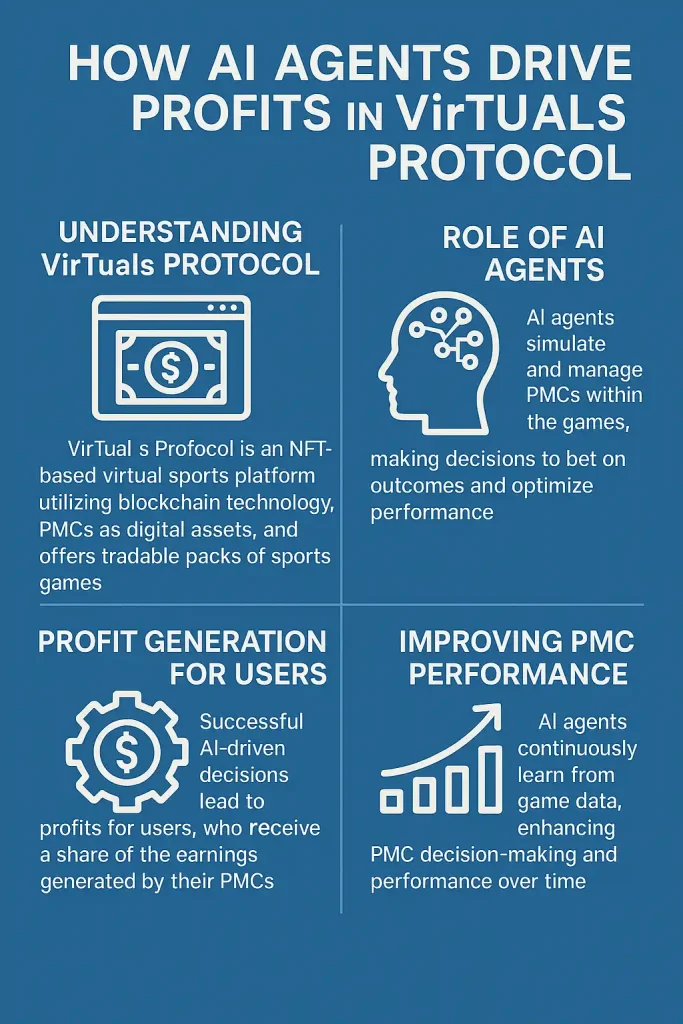
The Rise of AI Agents in Virtuals Protocol
These agents are no longer limited to simple automation tasks. They now operate as intelligent, autonomous entities capable of providing services, managing resources, and even optimizing financial strategies. In the Virtuals Protocol ecosystem, these agents function as revenue-generating assets, performing tasks that enhance user experiences and facilitate economic activity.
But how exactly do they do it? Let’s break it down into three key areas:
1. AI Agents as Service Providers
AI agents within Virtuals Protocol can offer a range of services, from customer support to personalized recommendations. Imagine a virtual assistant that helps users navigate the ecosystem, recommends profitable actions, or even executes trades on their behalf. By engaging with users, these agents can generate fees, subscriptions, or transaction-based revenue.
2. Smart Contracts and Automated Transactions
One of the most powerful aspects of AI-driven assets is their ability to interact seamlessly with smart contracts. These agents can monitor blockchain activities, execute transactions at optimal times, and even precisely manage digital assets. This automated approach reduces human error and maximizes profitability for users who rely on them for financial decision-making.
3. AI-Driven Market Analysis and Prediction
The Virtuals Protocol ecosystem also utilizes AI agents for data analysis and predictive modeling. They can analyze massive amounts of on-chain and off-chain data to reveal market trends, including price movements and trading opportunities.
These insights help users make informed decisions, enhancing the overall profitability of the ecosystem.
How AI Agents Generate Revenue
So, what are the specific ways AI agents drive profits within the Virtuals Protocol? Here are some key revenue streams:
Transaction Fees
AI agents can facilitate transactions, whether it’s trading digital assets or executing smart contract functions. In doing so, they generate small fees that accumulate over time, creating a sustainable revenue model.
Subscription-Based Services
Users who want premium AI-powered features (advanced trading algorithms, automated asset management, or personalized insights) can subscribe to paid plans. These recurring fees contribute to a steady revenue stream.
Data Monetization
AI agents process vast amounts of data and generate valuable insights. Some users and businesses may be willing to pay for this data, especially when it helps with investment decisions or business strategies.
Advertising and Partnerships
AI agents can also serve as intelligent advertising tools, promoting services or products based on user behavior. Strategic partnerships with other projects in the blockchain space can open up new monetization opportunities.
Why AI Agents Are the Future of Digital Assets
Integrating AI agents into Virtuals Protocol is a game-changer for digital asset management. Unlike traditional financial instruments that require constant human oversight, these agents work autonomously, making intelligent decisions in real-time.
Here’s why they represent the future:
- Scalability: AI agents can handle unlimited tasks simultaneously, allowing businesses to expand operations without additional human labor.
- Cost Efficiency: Automation reduces overhead costs by minimizing the need for manual intervention.
- Adaptability: Machine learning capabilities enable these agents to improve over time, leading to better decision-making and increased profitability.
- Decentralization: By operating on blockchain technology, AI agents ensure transparency, security, and censorship resistance.
Getting Started with AI Agents in Virtuals Protocol
If you’re interested in leveraging AI agents as smart assets, here’s how to get started:
- Choose Your AI Agent Type: Decide whether you need a trading bot, a virtual assistant, a content creator, or a DeFi manager.
- Set Up Automation Parameters: Define the tasks, goals, and operational guidelines for your AI agent.
- Monitor and Optimize: While these agents work autonomously, periodic monitoring helps refine their strategies and improve efficiency.
- Scale and Expand: As your AI agent generates revenue, consider reinvesting in additional agents or upgrading their capabilities.
Final Thoughts
AI agents are changing the Virtuals Protocol system by acting as smart tools that make money through user interactions, automatic transactions, and smart choices. Whether through transaction fees, subscriptions, data monetization, or partnerships, these AI-driven entities are shaping the future of digital economies.
If you’re interested in Virtuals Protocol, it’s crucial to monitor how AI agents evolve within the ecosystem. Their ability to drive profits, optimize user experiences, and create new business models makes them one of the most exciting developments in blockchain and AI integration. AI agents are leading the way towards a bright future.
FAQs
What are AI agents in Virtuals Protocol?
AI agents are autonomous entities that perform tasks like trading, analysis, and services within the blockchain ecosystem. They generate revenue through fees and subscriptions, evolving in 2025 with partnerships like xMaquina for robotics integration, boosting efficiency and user engagement.
How do AI agents generate profits in Virtuals Protocol?
Through transaction fees, subscriptions, data monetization, and advertising. In 2025, with VIRTUAL at $0.71 and a market cap of $476M, agents facilitate high-volume trades, yielding up to $30K annually per agent via automation and predictive insights.
What challenges do AI agents face in Virtuals Protocol?
The challenges faced by AI agents in the Virtuals Protocol include security risks such as the $500K exploit in 2025, regulatory compliance, scalability issues, and ethical biases. Solutions include audits, layer-2 tech, and governance, enhancing trust and adoption amid growing crypto markets.
What are the 2025 trends for AI agents in blockchain?
Hyper-automation, IoT integration, risk detection, and user-friendly interfaces. With 82% executive adoption plans, Virtuals leads in tokenizing agents, projecting a $10B+ AI crypto market by 2026 for scalable profits.
How to get started with AI agents in Virtuals Protocol?
Choose a type (e.g., trading bot), set parameters, monitor, and scale. Use the dashboard for deployment; 2025 updates include beginner tutorials and staking, enabling quick revenue from on-chain activities.
Disclaimer: This article is for informational and educational purposes only and does not constitute financial, investment, or legal advice. Cryptocurrency investments involve high risks, including loss of capital. Prices and data are subject to change; always conduct your research and consult professionals before making decisions. The author and NetworkUstad are not liable for any losses incurred.