Small businesses often reach a point where cash flow and credit access determine whether opportunities can be seized or must be delayed. Many entrepreneurs default to business credit cards as their first source of flexible financing. While credit cards have their place, they are not always the best tool for every situation. There are scenarios where a business line of credit provides more advantages, offering companies the flexibility and financial breathing room that credit cards simply cannot match. Knowing when to choose one over the other is not only about interest rates but about aligning financing with business strategy.
Business credit cards are convenient and often come with perks such as cash back or airline miles. They are simple to use and can be set up quickly, making them ideal for everyday purchases, small expenses, or emergencies. However, when businesses begin to deal with larger cash flow challenges, project-based financing, or recurring operational costs, the card’s limitations surface. The relatively high interest rates, low credit limits compared to business needs, and lack of structured repayment options can make them expensive over time.
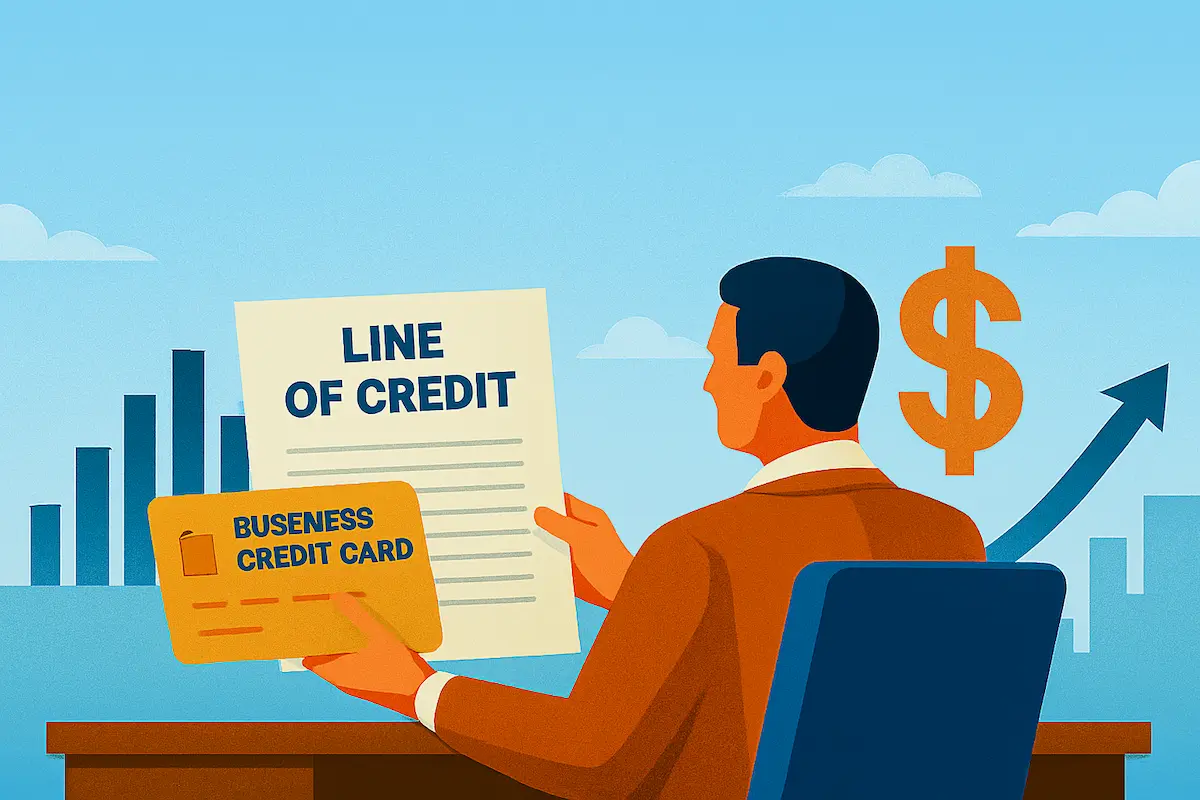
This is where a business line of credit enters the picture. A line of credit functions more like a hybrid between a loan and a credit card. The business is approved for a maximum credit amount and can draw funds as needed, repaying and borrowing again within the approved limit. Importantly, interest is only paid on the amount drawn, not the total approved limit. This structure creates a more strategic financing tool that adapts to the irregular cash demands businesses often face.
2026 Updates: Evolving Trends in Business Financing
As we move into 2026, the landscape of business financing has shifted significantly due to advancements in fintech, economic recovery post-inflationary pressures, and increased adoption of digital banking tools. According to recent reports from BAI’s 2026 Banking Outlook, 80% of financial institutions are expanding small business offerings, yet many small and medium-sized businesses (SMBs) are turning to credit cards for quick access, often at higher costs. Banks are losing ground to alternative lenders and fintech platforms, with SMBs paying 18-36% interest on credit cards compared to 6-12% on lines of credit.
In 2026, lines of credit are seeing lower average interest rates, averaging around 8-12% for qualified businesses, thanks to competitive fintech lenders like Lendio and Fundbox offering streamlined approvals. Business credit cards, while convenient, now average 20-25% APR, with some premium cards introducing complex “coupon book” rewards systems that require activation for bonuses, as noted in NerdWallet’s 2026 credit card trends analysis. Additionally, the rise of AI-driven underwriting means approvals for lines of credit can happen in days, not weeks, making them more accessible than ever.
The global business credit card market is projected to reach $52.28 billion by 2029, but lines of credit are gaining traction for their scalability. With economic uncertainties like supply chain disruptions lingering from 2025, businesses are prioritizing flexible financing that doesn’t tie up cash reserves. Crypto-integrated credit options and home equity line of credit (HELOC) cards are emerging, but for pure business needs, traditional lines of credit remain superior for larger draws.
One scenario where a line of credit becomes indispensable is managing seasonal cash flow fluctuations. Consider a landscaping company that earns the majority of its revenue in the spring and summer but still needs to cover payroll, equipment storage, and overhead costs during the winter. A credit card could cover some of these expenses, but the lower credit limits and compounding interest rates would make it unsustainable. A business line of credit, on the other hand, allows the company to draw funds during the off-season, repay once revenue picks up, and keep operations steady year-round.
Expanded Examples: Real-World Applications in 2026
Building on this, let’s dive deeper into practical examples tailored to 2026’s economic environment. For instance, e-commerce retailers facing volatile shipping costs due to global trade tensions can use a line of credit to bulk-purchase inventory during low-price windows. In 2026, with inflation stabilizing at around 2.5% as per Federal Reserve projections, these businesses can draw $50,000-100,000 at 9% interest, repaying over 6-12 months without the 25% APR trap of credit cards.
Another example involves project-based businesses such as construction contractors, marketing agencies, or event planners. These businesses often incur significant expenses upfront long before they receive client payments. A contractor may need to purchase materials, hire subcontractors, and secure permits, all before the first client payment comes in. Using a credit card for such large sums not only risks maxing out the limit but also incurs heavy interest if balances are not cleared quickly. A best business line of credit is far better suited for these gaps, ensuring that projects continue without financial bottlenecks.
In the tech startup space, common in 2026 with AI and green energy booms, a line of credit can fund prototype development or hiring surges. Unlike credit cards with limits often capped at $20,000-50,000, lines of credit can extend to $250,000 or more based on revenue, as seen in offerings from providers like Bluevine. This allows startups to scale without diluting equity through venture capital.
Lines of credit also serve businesses better when large but unexpected opportunities arise. Imagine a retailer suddenly able to purchase inventory at a steep discount from a supplier due to an overstock situation. Acting quickly could result in significant profit margins. A credit card might not provide the necessary capital, but a line of credit allows immediate access to larger sums, letting the retailer take advantage of opportunities without draining cash reserves.
Detailed Comparison: Line of Credit vs. Business Credit Card in 2026
To make the decision clearer, here’s an updated comparison based on 2026 data from sources like Forbes and WSJ:
| Feature | Business Line of Credit | Business Credit Card |
|---|---|---|
| Credit Limits | Typically $50,000-$500,000 or higher | Usually $5,000-$50,000 |
| Interest Rates | 6-12% APR (interest on drawn amount only) | 18-36% APR (on balances) |
| Repayment Terms | Flexible, draw and repay as needed | Minimum monthly payments, revolving |
| Approval Time | 1-7 days with fintech lenders | Instant to a few days |
| Fees | Draw fees (1-2%), annual fees low | Annual fees ($0-$500+), foreign transaction fees |
| Rewards/Perks | Rare, focus on flexibility | Cash back, miles, points |
| Best For | Large projects, seasonal cash flow | Daily expenses, travel rewards |
This table highlights why lines of credit are increasingly favored for growth-oriented strategies in 2026, especially with 61% of SMBs carrying revolving card balances, leading to higher debt burdens.
Comparing repayment structures also highlights the advantage of lines of credit. Credit cards typically require minimum monthly payments, but carrying balances results in high-interest accruals. For businesses making large purchases, this can create a cycle of debt that erodes profitability. Lines of credit, by contrast, often come with more manageable repayment terms. Businesses can schedule repayments in a way that matches incoming revenue, giving them room to manage debt more strategically.
There is also the matter of perception. When a business uses a line of credit, it signals to banks, vendors, and even investors that it has established financial credibility with a lender. This credibility can open doors to larger financing opportunities in the future. Overreliance on credit cards, on the other hand, can indicate weaker financial planning, especially if balances are consistently carried month to month. Vendors who see that a business uses structured financing may be more willing to extend favorable terms, reinforcing healthy cash flow.
Risk Management and Stability in Uncertain Times
Risk management is another angle where lines of credit often win out. Many credit cards come with variable interest rates that can rise unexpectedly. For businesses operating with thin margins, sudden increases in financing costs can be destabilizing. Lines of credit generally have more predictable terms, which helps with long-term planning and budgeting. This stability allows businesses to focus on growth rather than constantly adjusting for fluctuating finance charges.
In 2026, with cybersecurity threats on the rise (as per Landmark Bank’s trends report), lines of credit from established banks or credit unions offer better fraud protection through dedicated business accounts. Credit cards, while secure, can expose businesses to higher risks if used for large transactions, especially with the emergence of AI-enhanced fraud.
Still, there are cases where a credit card makes sense. For small recurring expenses, rewards programs, or when travel benefits matter, business credit cards are convenient. They also help with tracking expenses, especially for companies with multiple employees making purchases. However, once expenses grow beyond everyday transactions, or when timing mismatches between cash inflows and outflows become significant, the card’s advantages diminish.
Strategic Use: Combining Both Tools Effectively
In some cases, the smartest approach is not choosing one over the other but using both strategically. A business might use credit cards for day-to-day operational expenses while relying on a line of credit for larger projects, seasonal gaps, or unexpected opportunities. By balancing the two, businesses can optimize cash flow, control costs, and still benefit from rewards where relevant.
For example, a restaurant owner in 2026 could use a credit card for supplier purchases to earn 5% cash back on food, while drawing from a line of credit to renovate during off-peak seasons. This hybrid approach minimizes interest costs and maximizes perks.
How to Apply for a Business Line of Credit in 2026
Applying has become easier with digital platforms. Start by checking your business credit score via services like Dun & Bradstreet. Gather documents: tax returns, bank statements (showing at least $100,000 annual revenue for many lenders), and a business plan. Fintech options like Ramp or Brex offer no-personal-guarantee approvals based on revenue data. Traditional banks may require collateral but offer lower rates. Expect approvals in 24-72 hours for online lenders.
For many entrepreneurs, the turning point comes when they realize that relying solely on credit cards is holding them back. Interest charges eat into margins, credit limits are too restrictive, and repayment schedules are too rigid. A line of credit shifts the financial dynamic by offering both flexibility and scale. It gives businesses breathing room to plan, invest, and grow without being trapped in the short-term cycle of credit card balances .
Ultimately, the decision is not about convenience alone but about the financial health of the business. Credit cards are tools for immediate, small-scale needs. A business line of credit is a financial instrument for sustained operations and scalable growth. Entrepreneurs who recognize when to make the switch position themselves for resilience and opportunity, ensuring that financial tools are serving their goals rather than limiting them.
The smartest businesses do not wait until they are in financial distress to pursue a line of credit. They establish it during stable periods, using it as a safety net and a growth enabler rather than a last resort. This proactive approach ensures that when challenges or opportunities arise, they are prepared. And that preparation often separates businesses that merely survive from those that thrive.
Conclusion
In 2026, opting for a business line of credit over a credit card empowers SMBs with lower rates, higher limits, and flexible repayments for sustainable growth. Align your choice with cash flow needs to enhance financial stability and seize opportunities. Consult experts for personalized advice.
FAQs
What is the main difference between a business line of credit and a credit card?
A business line of credit offers higher limits (up to $500,000) and lower interest (6-12%) on drawn amounts only, ideal for large or seasonal needs. Credit cards provide perks like rewards but charge 18-36% on balances, suiting small daily expenses. This flexibility makes lines of credit better for strategic financing in 2026.
When should a small business switch to a line of credit?
Switch when facing cash flow gaps, large projects, or seasonal fluctuations that exceed credit card limits. In 2026, with economic volatility, lines of credit prevent high-interest debt cycles, offering predictable terms and scalability. They’re perfect if your business revenue supports draws without maxing out cards.
How do interest rates compare in 2026?
Business lines of credit average 6-12% APR, paid only on used funds, per Forbes data. Credit cards hit 18-36%, compounding on balances. This gap saves thousands for SMBs managing big expenses, especially with fintech lenders providing quick approvals and lower fees.
Can I use both a line of credit and a credit card?
Yes, combine them strategically: cards for rewards on small purchases, lines for major funding like inventory or renovations. In 2026 trends, this hybrid optimizes costs, with 61% of SMBs using cards but shifting to lines for growth to avoid debt burdens.
What are the approval requirements for a line of credit in 2026?
Requirements include $100,000+ annual revenue, good business credit, and documents like tax returns. Fintech platforms like Brex offer EIN-only approvals without personal guarantees. Traditional banks may need collateral but provide stability amid rising digital banking trends.