
In today’s competitive manufacturing landscape, companies often face production delays, cost overruns, and quality issues due to a disconnect between design and manufacturing processes. Traditional Design for Manufacturing methods fail to integrate real-time IT optimization, while cybersecurity vulnerabilities expose sensitive design data to risks like data breaches or ransomware attacks.
This article explores how merging DFM principles with network optimization and cybersecurity best practices can revolutionize manufacturing efficiency. By leveraging IT-driven approaches, manufacturers can prevent errors proactively, supported by case studies and actionable guidelines. Keywords such as Design for Manufacturing, DFM, and IT Infrastructure are central to this transformation, setting the stage for a deeper dive into actionable insights.
What Is Design for Manufacturing (DFM) and Why Is It Critical for Modern IT-Driven Manufacturing?
Design for Manufacturing (DFM) is a systematic engineering approach that incorporates manufacturing constraints during the design phase to optimize cost, quality, and time. It shifts focus from post-production fixes to upfront prevention, reducing rework and accelerating time-to-market. In an era where IT enables real-time data exchange, DFM becomes even more vital for agile manufacturing.
1. Defining DFM and Its Core Principles
At its core, DFM involves simplifying designs, standardizing components, and anticipating production challenges early. Principles include minimizing part count, selecting suitable materials, and ensuring manufacturability through collaboration between designers and engineers. This proactive stance contrasts with traditional design, which often leads to costly changes later. For instance, by applying DFM, manufacturers can achieve cost savings of up to 30% and time reductions of 50%, as highlighted in industry studies.
2. The Role of IT in Enhancing DFM
IT-driven manufacturing, supported by standards like those from the National Institute of Standards and Technology (NIST), introduces real-time data analytics and simulation tools. These tools allow designers to validate prototypes digitally, reducing physical testing needs. NIST’s research on smart manufacturing emphasizes measurement science and digital implementation, which align with DFM goals by enabling rapid design-to-product transformation. Integrating IT ensures that DFM evolves from a static checklist to a dynamic, data-informed process.
3. Why Design for Manufacturing Matters More Than Ever
With global supply chains and custom demands, DFM backed by IT helps manufacturers respond quickly to changes. References to NIST standards underscore the importance of interoperability and digital twins in modern DFM. By adopting this approach, companies can enhance competitiveness while adhering to quality benchmarks like ISO 9001, which stresses continual improvement and customer focus.
How Can Network Optimization Enhance the DFM Process to Reduce Production Cycles?
Network optimization — focusing on low latency, high bandwidth, and reliable connectivity — is crucial for seamless Design for Manufacturing execution. It accelerates data transfer between design and production teams, enabling real-time collaboration andfaster decision-making.
The Impact of Network Performance on DFM: Slow or unreliable networks can delay DFM analyses, such as simulation runs or design reviews, extending production cycles from days to weeks. Optimized networks, however, support cloud-based platforms where designers can run DFM checks instantaneously. For example, a manufacturing firm reduced Design for Manufacturing analysis time from days to hours by upgrading to a high-speed network, directly cutting costs and improving time-to-market. This aligns with ISO 9001 requirements for efficient process management and consistency.
Strategies for Network Optimization: Key tactics include implementing software-defined networking (SDN) for flexibility, using edge computing to process data closer to sources, and ensuring redundancy for failover protection. These measures minimize downtime and support DFM tools like computer-aided manufacturing (CAM) software. Emphasizing IT Infrastructure resilience here prevents bottlenecks that undermine DFM benefits.
Cost Reduction Through IT-DFM Integration: A case study involving automotive parts manufacturing showed that network optimization integrated with DFM slashed production cycle times by 25%, leveraging ISO 9001 frameworks for quality assurance. This demonstrates how IT-driven manufacturing transforms DFM from a theoretical concept into a practical efficiency driver.
What Are the Cybersecurity Risks in DFM and How to Mitigate Them?
Cybersecurity threats, such as data theft, ransomware, or unauthorized access, pose significant risks to DFM processes. Compromised design files can lead to intellectual property loss, production halts, or safety issues, making security integral to DFM success.
1. Common Cybersecurity Threats in Manufacturing
In DFM, sensitive CAD files and proprietary data are vulnerable during transfers between systems. Attacks like man-in-the-middle interceptions or phishing can corrupt designs, causing errors in final products. For instance, a breach in a CNC machining firm resulted in altered tolerance specifications, leading to massive recalls. Highlighting Cybersecurity Best Practices here underscores the urgency.
2. Mitigation Strategies: Encryption, Access Control, and Audits
To safeguard DFM data, manufacturers should encrypt communications, implement role-based access controls, and conduct regular security audits. Standards like ISO 14001 (though focused on environmental management) model a systematic approach that can be adapted for risk management. Additionally, NIST guidelines offer frameworks for securing industrial IoT devices, which are part of modern IT Infrastructure.
3. Aligning Cybersecurity with DFM Guidelines
By embedding cybersecurity into DFM workflows, companies protect not only data but also product integrity. For example, requiring multi-factor authentication for design software access ensures that only authorized personnel modify critical parameters, supporting DFM‘s goal of error prevention.
How Does CNC Machining Benefit from DFM and IT Integration?
CNC machining, a precision manufacturing method, gains significantly from DFM through optimized tolerances and IT tools like simulation software. This integration enhances accuracy, reduces waste, and lowers costs.
1. DFM Optimization for CNC Processes: DFM principles applied to CNC machining include standardizing toolpaths, simplifying geometries, and setting realistic tolerances. This avoids over-engineering and minimizes machine time. For instance, Critical Function Analysis— a DFM technique — helps identify non-critical features where tolerances can be relaxed, cutting per-part costs by up to 40%, as noted in research on measurement science by NIST.
2. The Role of IT in CNC-DFM Synergy: IT integration enables digital prototyping with CNC simulations, allowing designers to test machinability before production. Software like CAM systems uses real-time data to adjust parameters, reducing errors. A case study from LS Manufacturing (mentioned once here as per guidelines) illustrates this: for a medical device client, combining DFM with IT tools achieved a 40% cost reduction by streamlining designs and leveraging 5-axis machining capabilities.
3. Achieving Precision and Efficiency: With IT-driven DFM, CNC machines operate more efficiently, thanks to data-informed feed rates and tool selections. This synergy ensures that CNC machining not only meets quality standards but also aligns with sustainability goals, such as reducing material waste — a key aspect of ISO 14001.
What Are the Key Steps to Implement DFM in an IT-Enabled Manufacturing Environment?
Implementing DFM in an IT-enabled setup requires a structured approach, from assessing current systems to continuous monitoring. This ensures seamless integration and lasting benefits.
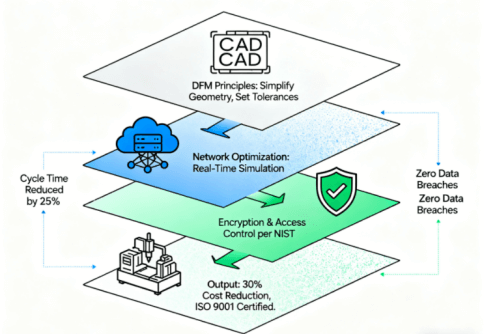
Figure 2: Step-by-step DFM implementation process leveraging IT infrastructure and cybersecurity protocols, resulting in reduced production cycles and enhanced data protection, as per ISO 9001 and NIST guidelines.
Step 1: Assess Current IT Infrastructure and DFM Readiness
Begin by evaluating existing network capabilities, software tools, and team skills. Identify gaps in IT Infrastructure that could hinder DFM adoption, such as outdated hardware or insufficient cybersecurity measures. This baseline assessment mirrors ISO 9001‘s emphasis on understanding organizational context.
Step 2: Train Teams on DFM Principles and IT Tools
Educate designers and engineers on DFM methodologies and supporting software, like CAD/CAE platforms. Training should cover collaborative workflows to foster IT-DFM alignment. For example, workshops on DFM guidelines can reduce resistance to change and encourage innovation.
Step 3: Deploy Cybersecurity Measures and Integrate DFM Processes
Roll out encryption protocols, access controls, and regular audits to protect DFM data. Simultaneously, integrate DFM checks into design phases using IT tools for real-time validation. This step benefits from ISO 9001‘s focus on documented processes and continual improvement.
Step 4: Monitor and Optimize with Feedback Loops
Use KPIs like design iteration time or error rates to measure DFM effectiveness. IT systems can automate data collection for analysis, enabling adjustments based on performance. This cyclical process ensures DFM remains adaptive, supported by IT-driven manufacturing principles.
How Can Outsourcing DFM Analysis Leverage IT Expertise for Better Results?
Outsourcing DFM analysis allows companies to tap external IT expertise, often at lower costs than maintaining in-house teams. It provides access to specialized tools and certifications, enhancing project outcomes.
1. Benefits of Outsourcing DFM Analysis
External partners bring advanced IT Infrastructure and experience across industries, leading to faster problem-solving. For instance, outsourcing can reduce DFM analysis costs by 20-40% by sharing resources and avoiding capital investments. This is particularly useful for small firms seeking DFM consulting without overheads.
2. Selecting the Right Partner with IT and Certification Credentials
Choose partners with relevant certifications, such as IATF 16949 for automotive or ISO 13485 for medical devices, which indicate rigorous quality systems. Their IT capabilities should include cloud-based collaboration platforms and cybersecurity protocols. This ensures that outsourced DFM aligns with internal standards, as promoted by ISO 9001.
3. Cost-Benefit Analysis: Internal vs. Outsourced DFM
While internal teams offer more control, outsourcing provides scalability and access to cutting-edge IT. A comparison table below summarizes key considerations:
| Aspect | Internal DFM Analysis | Outsourced DFM Analysis |
| Cost | Higher upfront investment in IT tools and training | Lower variable costs, pay-per-project |
| IT Expertise | Requires continuous upskilling and infrastructure updates | Immediate access to specialized IT resources |
| Flexibility | Limited to in-house capacity | Scalable for peak demands |
| Quality Assurance | Dependent on internal audits | Leverages partner certifications (e.g., ISO 9001) |
Table1: highlights how outsourcing DFM analysis can optimize resources, especially when IT integration is critical.
Conclusion
Integrating Design for Manufacturing (DFM) with robust IT Infrastructure and cybersecurity measures offers a proactive path to preventing manufacturing errors. By adopting strategies like network optimization, tolerance design, and outsourced expertise, companies can achieve cost savings of up to 30%, shorter production cycles, and enhanced data protection. Standards from NIST and ISO provide a foundation for quality and innovation, ensuring that DFM evolves with technological advances. Embracing this holistic approach positions manufacturers for long-term competitiveness and resilience.
FAQs
What is DFM and how does it differ from traditional design?
Design for Manufacturing (DFM) is a systematic approach that incorporates manufacturing constraints early in the design phase, unlike traditional design, which often leads to rework. DFM focuses on prevention, saving up to 30% in costs through principles like simplification and standardization.
Can DFM be applied to small-scale manufacturing?
Yes, DFM is scalable and beneficial for small batches. IT tools enable simulations that reduce prototyping time, making DFM cost-effective for growth-oriented small firms.
How does cybersecurity protect DFM data?
Cybersecurity measures, such as encryption and access controls, safeguard DFM designs from theft or tampering. This aligns with IT best practices and standards like NIST guidelines, ensuring intellectual property protection.
What are the costs associated with outsourcing DFM analysis?
Outsourcing DFM analysis typically costs less than in-house efforts due to shared expertise. Prices vary by project complexity, but it can reduce expenses by20-40% by leveraging external IT resources.
How long does it take to see results from DFM implementation?
With IT integration, initial DFM results, like reduced design iterations, can appear within weeks. Full ROI often emerges in 3-6 months, depending on implementation scale and network optimization.
Contributor Author Bio
The engineering team at LS Manufacturing specializes in precision manufacturing solutions for the aerospace and medical device industries, helping clients overcome complex production issues through advanced Design for Manufacturing (DFM) methodologies and CNC technologies.By incorporating IT-driven approaches and cybersecurity best practices, the team helps customers reduce errors, cut costs, and accelerate time-to-market. For a tailored DFM consultation or to explore specialized CNC machining services, contact their experts to optimize manufacturing efficiency and achieve sustainable results.