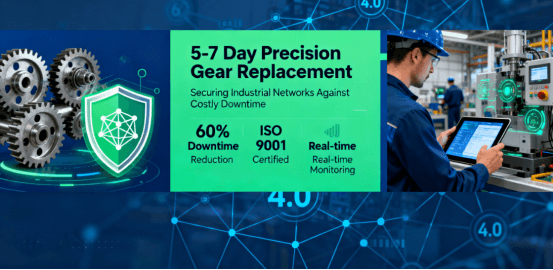
In the era of Industry 4.0, manufacturing equipment is deeply integrated with network systems, where a single component failure — such as a lathe gear — can trigger cascading disruptions. Costly downtime often exceeds thousands of dollars per hour, while simultaneous cybersecurity vulnerabilities may emerge from impaired data flows. Traditional gear replacement cycles of 4–8 weeks are untenable for modern smart factories, exacerbating risks and delaying recovery.
This article introduces a solution: 5–7 day precision gear replacement services backed by ISO-certified manufacturing. By quickly delivering high-quality gears, this method reduces downtime and keeps your data safe and your network compliant. We will explore early failure detection, technical advantages, and how to choose a reliable partner to fortify your industrial ecosystem. How Can Lathe Gear Failures Compromise Your Industrial Network Security?
Gear failures are not merely mechanical issues; they can destabilize entire industrial networks by distorting data accuracy. In connected systems, precision gears maintain stable equipment operation, which directly influences the quality of information collected by Industrial IoT (IIoT) sensors.
1. The Data Integrity Domino Effect
When a gear wears out or malfunctions, it causes abnormal vibrations and misalignments. These physical irregularities lead to inaccurate sensor readings, such as skewed torque or speed data. According to the NIST Smart Manufacturing Framework, equipment integrity is foundational to cybersecurity, as corrupted data can mask malicious activities or trigger false alarms in monitoring systems. For instance, a distorted vibration signal might overlook an unauthorized network intrusion, leaving the system exposed.
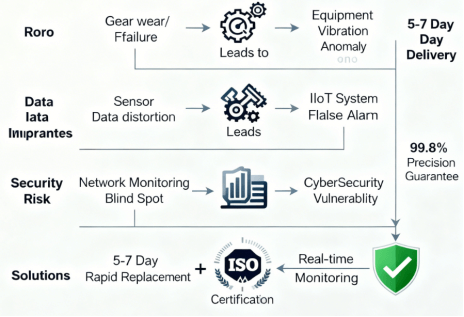
Figure 2: Caption: The domino effect of gear failure on industrial network security – from equipment vibration to data distortion and cybersecurity risks, highlighting the importance of rapid replacement solutions.
2. Precision as a Network Safeguard
High-precision gears ensure consistent performance, reducing variability in data acquisition. By adhering to tight tolerances and smooth operation, they help maintain data integrity across IIoT platforms. This reliability is critical for algorithms that rely on real-time inputs to detect anomalies and enforce security protocols. In essence, investing in precision components is a proactive measure to uphold network security.
What Are the Early Warning Signs of Impending Gear Failure in Connected Manufacturing Systems?
Proactive monitoring can identify gear issues before they escalate. Connected manufacturing systems leverage IIoT sensors to track key indicators, enabling predictive maintenance.
1. Five Key Indicators of Gear Failure
- Abnormal Noises: Grinding or clunking sounds often signal wear or misalignment.
- Increased Vibration: Gradual rises in vibration levels, detectable by accelerometers, indicate imbalance or damage.
- Temperature Spikes: Infrared sensors can spot overheating due to friction or lubrication failures.
- Precision Decline: Dimensional inaccuracies in machined parts reveal gear wear.
- Energy Consumption Anomalies: Sudden power surges suggest mechanical resistance.
2. IIoT-Enabled Detection
By integrating sensors with predictive maintenance software, manufacturers can analyze trends against benchmarks like ISO 13374-1 Condition Monitoring Standards. Early alerts allow scheduling replacements during planned maintenance windows, avoiding unplanned downtime.
Why Do Traditional 4–8 Week Replacement Cycles Pose Cybersecurity Risks?
Lengthy replacement timelines force manufacturers into risky stopgap measures, amplifying vulnerabilities.
l The Emergency Replacement Pitfall: When gears fail unexpectedly, teams may resort to non-standard or uncertified substitutes to resume operations quickly. These ad-hoc solutions can introduce malicious hardware, such as counterfeit components with embedded vulnerabilities, or disrupt network protocol consistency. For example, a non-compliant gear might alter communication timing in PROFINET systems, creating entry points for cyber attacks.
l Prolonged System Vulnerability: Extended downtime lengthens the window of exposure, where impaired equipment continues to generate unreliable data. This period allows threats to propagate undetected. Rapid, certified replacements — such as those detailed in industry guides on precision lathe gear replacement — cut this risk by ensuring timely, traceable solutions.
How Does ISO-Certified Manufacturing Ensure Both Precision and Network Compliance?
Certifications like ISO 9001, IATF 16949, and AS9100D validate a manufacturer’s ability to deliver gears that meet stringent quality and security standards.
Quality Management as a Cybersecurity Proxy: ISO-certified manufacturing enforces documented processes for material traceability, inspection, and calibration. This rigor ensures that each gear performs as specified, supporting data accuracy. For industrial networks, compliance with frameworks like NIST’s Smart Manufacturing Program demonstrates adherence to network compliance requirements, reducing audit failures.
Case Study: Integrated Assurance: A gear produced under ISO 9001:2015 requires full lifecycle documentation, from raw material sourcing to final testing. This transparency allows manufacturers to verify that components haven’t been tampered with, aligning with cybersecurity best practices for supply chain integrity.
What Technical Advantages Enable True 5–7 Day Precision Gear Delivery?
Advanced technologies compress timelines without sacrificing quality, centered on four pillars.
1. Digital Process Database
A pre-validated library of gear designs and machining parameters accelerates planning. By referencing past projects, engineers skip iterative setup steps, shaving days off lead times.
2. Dedicated 5-Axis CNC Lines
5-axis CNC machining enables complex geometries in a single setup, eliminating repositioning errors and reducing production time. This capability is ideal for gears with intricate tooth profiles, ensuring precision manufacturing within tight deadlines.
3. Parallel Quality Inspection
In-process checks using coordinate measuring machines (CMMs) run concurrently with production, rather than post-hoc. This parallel workflow avoids bottlenecks and guarantees compliance.
4. Standardized Post-Processing
Integrated heat treatment and finishing processes are optimized for speed, leveraging CNC technology to maintain consistency. Leading manufacturers excel here, combining these elements to achieve 5–7 day turnaround.
How to Evaluate Emergency Gear Suppliers for Network-Critical Manufacturing Environments?
Selecting the right partner involves a multifaceted assessment to ensure reliability and security. The following table outlines a five-dimension framework for supplier evaluation:
| Dimension | Key Criteria | Importance |
| Technical Certifications | ISO 9001, IATF 16949, AS9100D | Ensures adherence to international quality and security standards |
| Digital Manufacturing Capabilities | CAD/CAM software, IoT-enabled monitoring | Supports real-time tracking and rapid response |
| Quality Traceability Systems | Material certifications, inspection reports | Provides full documentation for compliance |
| Cybersecurity Protocol | Alignment with NIST SP 800-53 | Prevents data breaches and ensures network safety |
| Emergency Response Mechanisms | 24/7 engineering support, SLA guarantees | Enables quick resolution of critical issues |
Table 1: As a framework for systematic supplier evaluation. Each criterion can be scored on a weighted scale (e.g., 1-5) to quantify performance. The final selection should align with your project’s specific risk tolerance and technical requirements.
Strategic Partner Selection: A supplier’s ability to provide emergency manufacturing services should be proven through case studies and demonstrated expertise in end-to-end support, from design to delivery, ensuring alignment with network-critical needs.
Conclusion
In smart manufacturing, precision gears are more than mechanical parts — they are guardians of operational continuity and industrial network security. By adopting rapid, certified replacement services, manufacturers can slash downtime costs while reinforcing cybersecurity postures. The strategies outlined here — from early detection to supplier vetting — empower teams to transform vulnerability into resilience.
FAQs
What is the relationship between gear precision and industrial network security?
High-precision gears ensure stable equipment operation, which directly impacts the quality of data collected by IIoT sensors. Inaccurate data due to gear imperfections can mask security breaches or trigger false alerts. According to NIST standards, maintaining equipment integrity is fundamental to industrial cybersecurity frameworks.
How can manufacturers verify the quality of emergency replacement gears?
Reputable suppliers should provide full certification packages, including material traceability reports and inspection data. ISO 9001-certified manufacturers typically offer comprehensive documentation that validates gear performance against international standards.
What certifications are most critical for gear suppliers serving smart manufacturing environments?
Beyond basic ISO 9001, IATF 16949 demonstrates automotive-grade process control, while AS9100D indicates aerospace-level precision. These collectively ensure gear manufacturing meets the rigorous demands of modern industrial networks.
Can precision gear replacement services handle obsolete or custom-designed equipment?
Yes, advanced manufacturers use reverse engineering technologies like 3D scanning to recreate gears for discontinued equipment. This is vital for legacy systems where network integration cannot be easily modified.
How does rapid gear replacement contribute to overall manufacturing cost reduction?
While precision gears may have higher upfront costs, delivering them within 5–7 days reduces production losses that often far exceed component costs. In network-dependent environments, rapid restoration prevents cascading disruptions across supply chains.
Contributor Author Bio
LS Manufacturing assists industrial clients in mitigating downtime via its certified solutions. Specializing in emergency gear replacement, the company combines digital prototyping with sustainable practices to secure critical operations. Clients can contact the gear machining team to obtain a customized 5–7 day delivery plan.