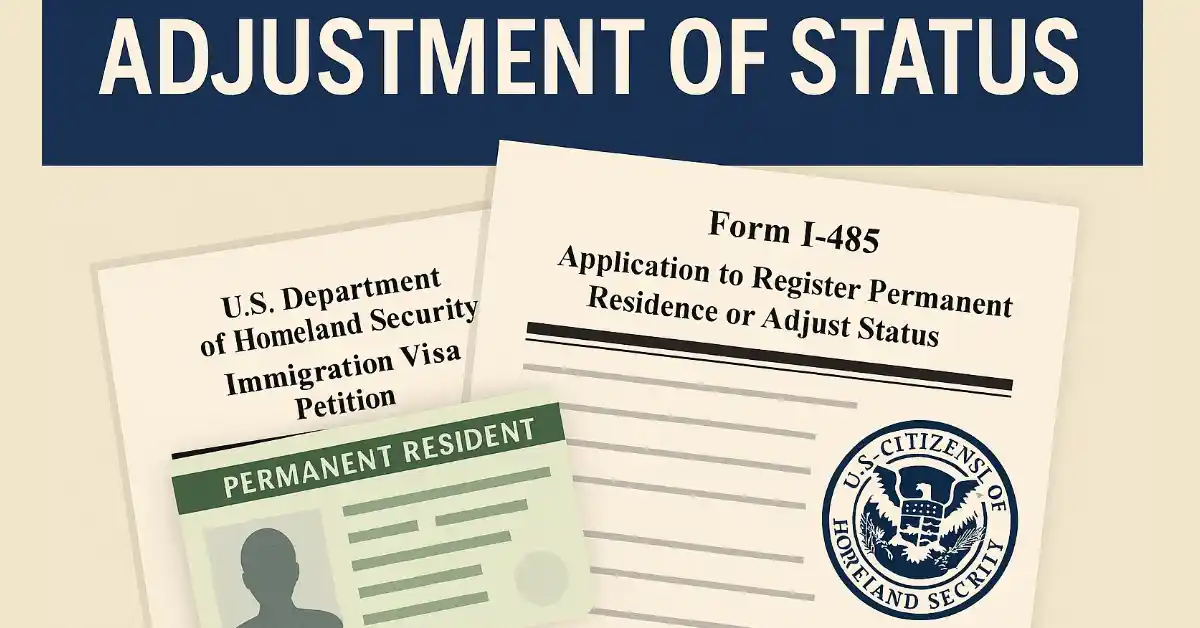
Adjustment of Status is a formal immigration procedure that allows certain noncitizens physically present in the United States to seek lawful permanent resident status. Administered by US Citizenship and Immigration Services (USCIS), this process is governed by section 245 of the Immigration and Nationality Act (INA) and related provisions in Title 8 of the Code of Federal Regulations (primarily 8 CFR Part 245) that require strict compliance. Given the legal implications involved, Adjustment of Status applications must be prepared with precision and a thorough understanding of immigration law.
Overview of the Adjustment of Status Process
The Adjustment of Status mechanism enables eligible applicants to obtain a green card without departing the United States. Rather than undergoing immigrant visa processing at a U.S. consulate abroad, qualified individuals may submit their applications domestically. This option is commonly pursued in family-based and employment-based immigration matters, as well as certain humanitarian cases.
Each application is reviewed on its individual merits, and approval depends on statutory eligibility, admissibility, and visa availability at the time of adjudication.
Statutory Eligibility and Compliance Requirements
To qualify for Adjustment of Status, applicants must generally demonstrate lawful admission or parole into the United States and immediate access to an immigrant visa. Immediate relatives of U.S. citizens often benefit from exemptions to numerical limitations, while other applicants may be subject to visa quotas and priority date delays.
Continued compliance with immigration law is essential. Factors such as unauthorized employment, overstays, or prior immigration violations can materially affect eligibility and may require additional legal analysis before an application is filed.
Filing Procedures and Evidence Submission
The application process begins with the filing of Form I-485 with USCIS, accompanied by all required supporting documentation. This documentation typically includes proof of identity, evidence supporting the underlying immigrant petition, medical examination results, and financial sponsorship documentation when applicable.
USCIS may issue Requests for Evidence or schedule an in-person interview to verify the accuracy and completeness of the application. The interview serves as a critical component of the adjudication process.
Potential Legal Issues and Case Risks
Adjustment of Status applications may encounter delays or denials due to procedural errors, insufficient documentation, or unresolved admissibility concerns. Additionally, policy changes or discretionary determinations by USCIS officers may influence case outcomes.
Because adverse decisions can carry serious immigration consequences, meticulous preparation and procedural accuracy are imperative.
Importance of Professional Legal Representation
Due to the technical and evolving nature of immigration law, professional legal guidance is strongly recommended. An experienced Adjustment of Status Attorney can evaluate eligibility, identify potential risks, and ensure that all filings comply with current USCIS standards and legal requirements.
Individuals seeking to obtain permanent residency while remaining in the United States may benefit from consulting a qualified Adjustment of Status Attorney to receive informed legal counsel and strategic guidance.
Conclusion – US immigration procedure
Adjustment of Status is a legal and organized way for people who qualify to get permanent resident status without leaving the United States. However, the process demands strict adherence to statutory requirements, careful documentation, and an informed legal approach.
With comprehensive preparation and professional guidance, applicants can navigate the Adjustment of Status process with greater confidence and legal clarity.
FAQs
What is Adjustment of Status in US immigration?
Adjustment of Status is a process allowing certain noncitizens already in the US to apply for lawful permanent resident status (green card) without leaving the country. It’s governed by INA §245 and 8 CFR Part 245, administered by USCIS, and is an alternative to consular processing abroad. It’s commonly used in family, employment, or humanitarian cases, requiring proof of eligibility and visa availability.
Who is eligible for Adjustment of Status?
Eligibility typically requires lawful admission or parole into the US and immediate availability of an immigrant visa. Immediate relatives of US citizens often face no numerical limits, but others may endure quotas and priority dates. Factors like overstays or unauthorized work can affect admissibility, necessitating careful review of immigration history and compliance.
What are the steps to file for Adjustment of Status?
Start by filing Form I-485 with USCIS, including supporting documents like identity proof, immigrant petition evidence, medical exam results, and financial sponsorship if needed. USCIS may issue a Request for Evidence or schedule an interview. The process involves individual review, and approval grants permanent residency based on merits and visa access.
What are common issues with Adjustment of Status applications?
Applications can face delays or denials due to procedural errors, incomplete documentation, unresolved admissibility issues, policy changes, or discretionary USCIS decisions. Risks include immigration consequences from violations like overstays. Professional legal help is advised to identify and mitigate these potential pitfalls for a stronger case.
Why should I consult an attorney for Adjustment of Status?
Immigration law is complex and evolving, with technical requirements that demand precision. An experienced attorney can evaluate eligibility, spot risks like prior violations, ensure compliant filing, and navigate USCIS procedures effectively. Such expertise reduces denial chances and helps achieve successful permanent residency outcomes.
Disclaimer: This article provides general information on Adjustment of Status under US immigration procedures and is not intended as legal advice. Immigration laws and policies can change, and individual cases vary. Consult a qualified immigration attorney or USCIS for personalized guidance to ensure compliance and address specific circumstances. The content is for educational purposes only, and reliance on it is at your own risk.