Bandwidth Demands Have Fundamentally Changed
The internet connection that felt blazing fast five years ago now struggles with everyday household demands. What happened? Everything became connected, streamed, and dependent on constant data flow.
Modern homes aren’t just browsing websites anymore. They’re running smart devices, streaming 4K content across multiple screens, hosting video calls, gaming competitively, and backing up terabytes to the cloud simultaneously.
This guide explores why bandwidth requirements keep escalating and what connectivity solutions actually meet tomorrow’s demands, not just today’s.
Understanding the Bandwidth Explosion
Household internet consumption has grown exponentially. The average home now uses more data in a day than previous generations consumed in months.
Video streaming alone accounts for massive bandwidth consumption. A single 4K stream requires approximately 25 Mbps of sustained throughput, and most households run multiple streams concurrently.
Work-from-home arrangements have added professional-grade demands to residential connections. Video conferencing, large file transfers, and cloud application access all compete for available bandwidth.
The Smart Home Factor
Connected devices have multiplied beyond what anyone anticipated. Smart speakers, security cameras, thermostats, appliances, and entertainment systems all maintain constant internet connections.
Each device individually consumes modest bandwidth. Collectively, dozens of devices create substantial baseline demand before any active usage begins.
The Internet of Things continues expanding. New device categories emerge regularly, each adding incremental load to home networks.
Gaming and Entertainment Evolution
Gaming has transformed from occasional downloads to continuous connectivity requirements. Modern titles download massive updates, stream assets, and require low-latency connections for competitive play.
Cloud gaming services push requirements even higher. Streaming gameplay demands consistent high-bandwidth connections without the latency spikes that ruin experiences.
Virtual and augmented reality applications represent the next consumption frontier. These immersive experiences require bandwidth levels that challenge current infrastructure.
Why Current Connections Fall Short
Many households operate on connections that seemed adequate when installed. Changing requirements have rendered these connections bottlenecks rather than enablers.
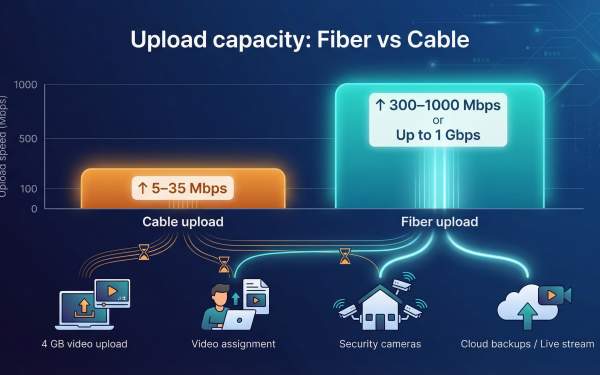
Symmetric upload speeds have become critical yet remain neglected. Video conferencing, cloud backup, and content creation all require upload bandwidth that asymmetric connections cannot provide.
Latency matters increasingly alongside raw throughput. Real-time applications from gaming to video calls demand responsive connections that deliver data without delay.
Fibre Optic Advantages
Fibre connections offer fundamental technical advantages over legacy technologies. Light-based data transmission enables speeds that copper infrastructure simply cannot match.
Latency on fibre networks typically measures in single-digit milliseconds. This responsiveness transforms user experience for interactive applications.
Fibre infrastructure scales to accommodate future speed increases. The same physical connection that delivers current speeds can support significantly faster tiers as technology advances.
Speed Tiers and Actual Requirements
Understanding real bandwidth needs helps select appropriate service tiers. Marketing claims often obscure what various speed levels actually enable.
Gigabit connections once seemed excessive for residential use. Today they represent mainstream requirements for well-connected households with multiple simultaneous users.
Forward-thinking users are now looking at next-generation speeds. Providers like M1 in Singapore now offer 10gbps broadband that delivers speeds previously available only to enterprise customers. This level of connectivity future-proofs homes against escalating demands while eliminating bandwidth as a limiting factor entirely.
Multi-gigabit connections also dramatically reduce download times for large files. Operating system updates, game installations, and media libraries that once took hours complete in minutes.
Home Network Infrastructure
External connection speed means nothing without internal infrastructure to match. Many homes bottleneck at their own routers and cabling long before ISP limitations matter.
WiFi standards have advanced significantly. WiFi 6 and emerging WiFi 7 technologies provide the wireless throughput needed to utilise high-speed connections effectively.
Ethernet remains superior for stationary devices demanding maximum performance. Wired connections eliminate wireless variability for gaming, streaming, and work applications.
Planning for Tomorrow’s Demands
Internet requirements have increased consistently for decades. Planning only for current needs guarantees future inadequacy.
8K video streaming is emerging now. The bandwidth requirements will make current 4K demands seem modest by comparison.
Holographic communication and advanced telepresence applications are in development. These technologies will demand connectivity levels that stretch even next-generation infrastructure.
The True Cost of Inadequate Connectivity
Slow internet creates costs beyond simple frustration. Productivity losses, failed video calls, and degraded experiences all carry real consequences.
Work-from-home professionals face particular impacts. Unreliable connections affect career performance and professional reputation.
Children’s education increasingly relies on reliable connectivity. Remote learning, research, and collaborative projects all require bandwidth that struggling connections cannot provide.
Evaluating Provider Options
Not all high-speed connections deliver equivalent experiences. Provider infrastructure, network congestion, and support quality all affect actual service levels.
Peak hour performance matters more than advertised maximum speeds. How connections perform when everyone is online reveals true capability.
Service level agreements indicate provider confidence. Commitments around uptime, speed delivery, and issue resolution separate premium providers from basic offerings.
Installation and Setup Considerations
Upgrading connectivity often involves more than simple modem swaps. Infrastructure requirements for next-generation speeds may necessitate installation work.
Fibre termination location within homes affects utility. Placement should enable efficient distribution to areas where connectivity matters most.
Professional installation ensures optimal configuration. The complexities of high-speed networking benefit from expert setup rather than DIY approaches.
Mesh Networks and Coverage
High-speed connections require distribution throughout entire homes. Dead zones and weak signals waste connectivity potential.
Mesh networking systems provide whole-home coverage. Multiple access points work together to blanket homes with strong, consistent signals.
Backhaul connections between mesh nodes affect performance. Wired backhaul delivers superior results compared to wireless-only mesh configurations.
Security Implications
Faster connections enable quicker threat delivery alongside legitimate content. Security measures must scale with connectivity speeds.
Router-level security features provide first-line defence. Advanced routers offer threat detection, content filtering, and intrusion prevention.
Network segmentation isolates sensitive devices. Separating IoT devices from computers containing important data limits potential breach impacts.
Quality of Service Configuration
Not all traffic deserves equal priority. Quality of service settings ensure critical applications receive needed bandwidth.
Video conferencing and gaming benefit from priority treatment. Guaranteeing these applications sufficient bandwidth prevents important activities from suffering during heavy usage.
Modern routers increasingly automate QoS management. Intelligent traffic analysis identifies application types and applies appropriate prioritisation automatically.
Monitoring and Optimisation
Understanding network performance enables informed decisions. Monitoring tools reveal actual speeds, usage patterns, and potential issues.
Speed tests provide snapshots but miss variability. Continuous monitoring captures performance across different times and conditions.
Usage analytics identify bandwidth-hungry devices and applications. This visibility enables targeted optimisation and informed upgrade decisions.
Making the Upgrade Decision
Evaluating whether current connectivity meets needs requires honest assessment. If slowdowns, buffering, or failed calls occur regularly, upgrades deserve consideration.
Consider household trajectory alongside current requirements. Growing families, increasing device counts, and evolving work arrangements all affect future needs.
Compare upgrade costs against productivity and experience impacts. The value of reliable, fast connectivity often exceeds modest monthly cost differences.
The Connectivity Foundation
Internet connections have become foundational infrastructure like electricity and water. Treating connectivity as essential rather than optional reflects modern reality.
Investing in capable connectivity pays dividends across every connected activity. Work, entertainment, education, and home management all benefit from reliable, fast internet.
The gap between adequate and exceptional connectivity continues widening. Positioning on the right side of that gap determines daily experience quality.
Taking Action
Assess your current connectivity honestly. Run speed tests, note problem patterns, and evaluate whether service meets household needs.
Research available options in your area. Provider competition increasingly offers next-generation speeds at accessible price points.
Plan infrastructure upgrades alongside service improvements. Internal network capability must match external connection potential.
Building Your Connected Future
The connected home will only become more connected. Devices, applications, and services requiring internet access will multiply.
Future-proofing connectivity investments makes strategic sense. Selecting speeds that exceed current requirements ensures relevance as demands escalate.
Your home network foundation deserves investment proportional to its importance. In an increasingly connected world, that importance continues growing.
FAQs
Why are internet connection speed requirements increasing for homes?
Modern households face a bandwidth explosion from 4K/8K streaming (25 Mbps per stream), smart IoT devices, video calls, cloud backups, and gaming. What was adequate years ago now causes bottlenecks; fiber optics and gigabit speeds offer low latency and scalability to handle multiple users and emerging tech like VR, ensuring seamless productivity and entertainment without frustration.
What internet speed is recommended for multi-device households?
For homes with concurrent streaming, gaming, and work-from-home activities, gigabit (1 Gbps) connections are mainstream, providing symmetric uploads and low latency. Multi-gigabit (e.g., 10 Gbps) future-proofs against 8K video and holographic apps, reducing file transfer times dramatically while eliminating limits—ideal for families with dozens of connected devices.
What are the advantages of fiber optic internet for speed requirements?
Fiber uses light transmission for ultra-low latency (single-digit ms), superior scalability, and consistent performance over copper. It supports multi-gigabit speeds without bottlenecks, perfect for real-time apps like gaming and calls. Upgrading ensures reliable connectivity as demands grow from smart homes and cloud services, outperforming traditional options in peak hours.
How can I optimize my home network to meet speed requirements?
Upgrade to WiFi 6/7 routers, use Ethernet for high-demand devices, implement mesh systems for full coverage, and configure QoS to prioritize gaming/streaming. Monitor usage with tools to identify hogs, secure against threats, and evaluate providers for SLAs. This internal setup matches external gigabit speeds, preventing slowdowns in multi-user environments.
When should I consider upgrading my internet connection?
If you experience buffering during streams, lag in games, slow uploads for work, or bottlenecks with IoT devices, it’s time. Assess family growth and emerging needs like 8K; costs of inadequate speed include lost productivity and poor experiences. Research fiber providers for multi-gigabit options to future-proof your home as data demands exponentially rise.