Logistics usually does its job quietly. When deliveries arrive on time and shelves stay stocked, no one gives it much thought. Packages arrive, shelves stay stocked, factories keep buzzing. This year is changing that. Suddenly, logistics is center stage. Every kind of company—factories, retailers, importers—leans hard on digital logistics now. It’s the only way to handle messy supply chains, climbing costs, and one disruption after another.
This isn’t about looking cool or chasing the latest tech. It’s survival. The old ways just don’t cut it anymore. Supply chains are too fragile now, and honestly, the days of juggling endless phone calls, messy spreadsheets, and a patchwork of disconnected tools are over. That approach doesn’t work if you want to get ahead. Companies want real-time data and total visibility—everywhere their goods travel, not just what’s happening inside their own four walls, which is what digital logistics solutions are built for.
Look at the numbers. The global digital logistics market is booming. By the end of 2025, it was worth about $41.47 billion, and it’s set to jump to $48.01 billion just a year later. That growth says a lot—businesses everywhere want more automation in their warehouses, live tracking, and smarter analytics running through their entire logistics networks. As you read this article, you will see why digital transformation isn’t optional at this point and why it separates the companies moving forward from the ones stuck in the past.
Leaving Patchwork Logistics Behind
For years, logistics felt like a DIY project. One system handled rates. Another tracked shipments. A few more stored documents. Endless emails tried to glue it all together. That patchwork approach worked when supply chains were simpler and expectations were lower. Today, it creates blind spots that businesses can’t afford.
Digital logistics flips that model. Instead of juggling one-off tools, companies build connected environments where quoting, booking, tracking, and performance analysis live side by side. The goal isn’t just speed. It’s alignment. When everyone’s looking at the same real-time data, decisions just make more sense. Less confusion, fewer things slipping by unnoticed. You really see the difference in B2B logistics—there’s more cargo moving, more people involved, and not much wiggle room for mistakes. One late delivery or a wrong price doesn’t just cause a small hiccup; it can throw off the whole operation. Digital tools bring structure to that complexity, letting teams plan with confidence instead of reacting once something breaks.
What Digital Transformation in Logistics Really Looks Like
Despite how often the phrase gets thrown around, digital transformation in logistics isn’t about replacing people with software. It’s about making better decisions faster. In 2026, pricing transparency matters. Capacity visibility matters. Performance tracking matters. Logistics teams rely less on gut instinct and more on patterns pulled from real data. Past routes, carrier reliability, transit times, and service outcomes all inform future choices.
Across the industry, 73% of logistics companies have adopted some form of digital transformation initiative. Most professionals say digital tools have made it a lot easier to see what’s happening across the supply chain. Companies aren’t just dabbling—they’re really leaning into modernization to stay ahead. What’s driving all this? Digital logistics platforms. They’re taking over from the old mess of scattered portals, endless emails, and clunky handoffs. Now, everyone works from one clear, reliable workspace.
Visibility, Automation, and the Human Factor
These days, visibility isn’t some extra perk—it’s just expected. Companies want to track shipments in real time, spot risks as they pop up, and see how every change hits their budgets and schedules. Digital logistics makes this possible by mixing live tracking with all the details that matter. Automation plays a supporting role. Rate calculations, documentation, and shipment updates don’t require constant human input anymore. Systems handle the routine tasks, cutting down on errors and freeing teams to focus on exceptions.
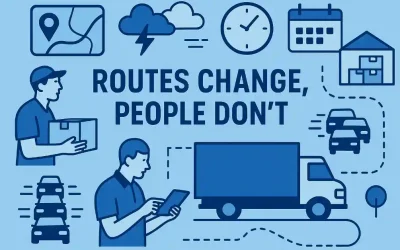
That doesn’t mean people disappear from the picture. In B2B logistics, experience still matters. Technology brings consistency and speed. People still matter. You can’t automate experience, gut instinct, or the skill to read a room. The best logistics teams in 2026 get that. They’re not picking sides—tech or people—they’re using both, together. Let the systems crunch the numbers and track the shipments. When things get tricky and you need a sharp eye or quick thinking, people jump in.
That mix really shows its worth when stuff goes sideways. These days, weather delays, surprise policy shifts, or capacity issues are an integral part of business. Instead of panicking, teams turn to their digital tools. They run through different options, figure out what works, and switch directions fast.
How Digital Logistics Changes Day-to-Day Decision Making
It’s easy to miss just how much digital logistics shifts the way people work every day. In the old days, you’d make decisions with scraps of info—never really sure if you had the full story. Now, everything’s connected. Logistics isn’t off on its own anymore; it’s right there in the middle of business decisions. Before digital systems were common, logistics decisions were often made with partial information.
Teams reacted once something broke because they didn’t have much warning. That dynamic has changed. With digital systems in place, decisions happen earlier and with better context. A delay isn’t just a notification—it immediately affects inventory projections, customer commitments, and transportation planning. Costs don’t show up weeks later; they’re visible as soon as choices are made.
Integration really matters. Transportation data doesn’t just sit on its own—it links up with procurement, inventory, and finance. Change one thing, and everything else shifts to keep up. That kind of automatic adjustment cuts down on guesswork and pulls logistics out of its old silo. Small changes pile up. You’re no longer dealing with last-minute chaos all the time. Things just flow better. When that happens, trust builds—customers notice, your partners notice, and honestly, your own team feels it too.
Digital Logistics, Growth, and Sustainability
People love to throw around the phrase “digital transformation,” like it’s just another round of software updates. Honestly, it’s much bigger than that. It changes the entire way a business grows. When logistics becomes predictable, scaling stops feeling risky. Inventory planning improves. Customer promises become easier to keep. Cost forecasting becomes far more reliable. Smaller and mid-sized companies gain the most. Not long ago, advanced logistics technology was reserved for large enterprises. Digital platforms have lowered that barrier. Now, even small businesses can grab great tools without breaking the bank. Digital transformation really leveled the playing field, letting them compete with the big guys.
There’s another side to this: sustainability. Digital logistics isn’t some magic fix for emissions, but it helps. Better routes, trucks packed just right, and fewer frantic, last-second scrambles—those things make a difference. Give it a little time, and you’ll see less waste and your service staying as strong as it did before.
Role of Platforms Like Globy in 2026 and Beyond
As logistics continues to evolve, companies want fewer tools—not more. They’re looking for systems that work together and scale alongside the business. That’s where platforms like Globy fit in. Globy puts a big focus on transparency, smarter decisions through data, and making freight tools easier to use. That’s how they push the whole logistics industry into the digital age. Companies don’t have to just scramble to fix problems anymore—they can actually plan, adapt, and get better all the time.
The road ahead? Logistics isn’t getting any simpler, but it’s definitely getting smarter. Now we’ve got predictive analytics, systems can be integrated into one power system, and automation that actually does what it’s supposed to do. So, you spend less time guessing and more time actually knowing what’s going on. Even with all this fancy tech, though, people and trust still matter. Digital logistics isn’t some far-off idea anymore—it’s just part of how things work now. It is just everyday life and the standard way business gets done. Companies that embrace it now are the ones building supply chains designed to handle whatever comes next.
FAQs
What is digital transformation in logistics?
Digital transformation in logistics involves replacing fragmented legacy tools with integrated platforms using AI, automation, and real-time data for end-to-end visibility, predictive decision-making, and efficiency. It shifts from manual processes to connected systems that reduce errors, enable proactive planning, and improve resilience against disruptions in 2026’s complex supply chains.
What are the main benefits of digital transformations in logistics?
Key benefits include enhanced real-time visibility, faster data-driven decisions, automation of routine tasks, cost savings through better forecasting, improved scalability for all business sizes, and sustainability via optimized routes and reduced waste, helping companies stay competitive and resilient.
What technologies drive digital transformation in logistics?
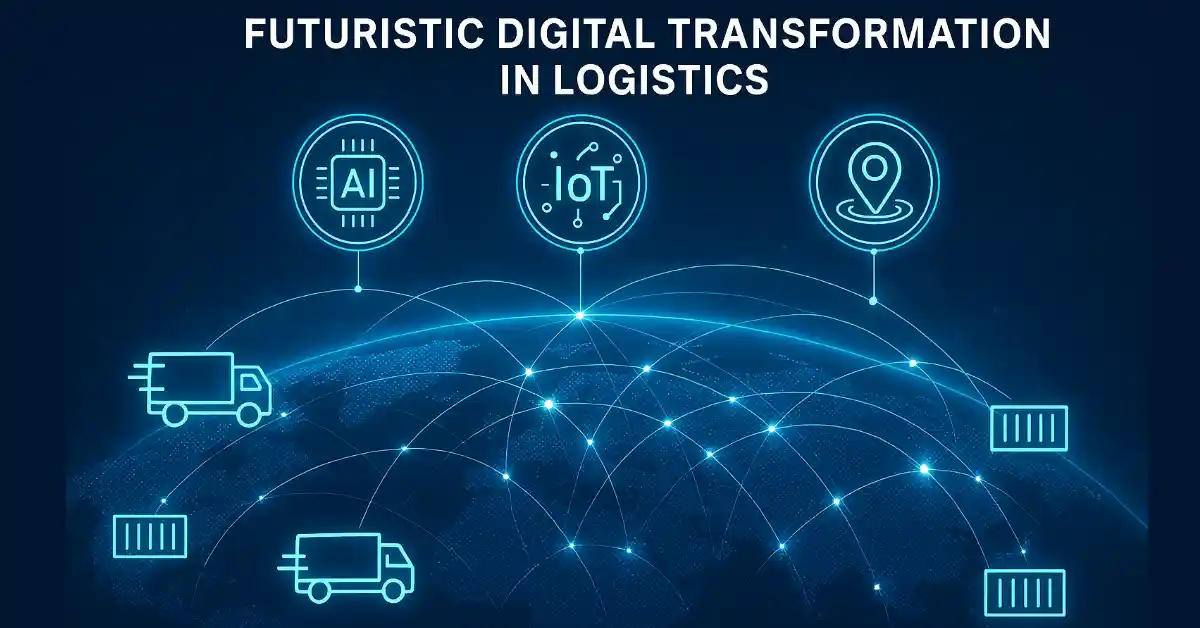
Technologies include AI for predictive analytics, IoT for live tracking, automation for warehouse and documentation tasks, and unified digital platforms for integration. These enable seamless visibility, error reduction, and quick adaptation to disruptions in modern supply chains.
What challenges does digital transformation address in logistics?
It addresses blind spots from legacy systems, manual errors, reactive decision-making, and disruption vulnerabilities by providing real-time data, automation, and integrated tools, balancing technology with human expertise for more reliable and efficient operations.