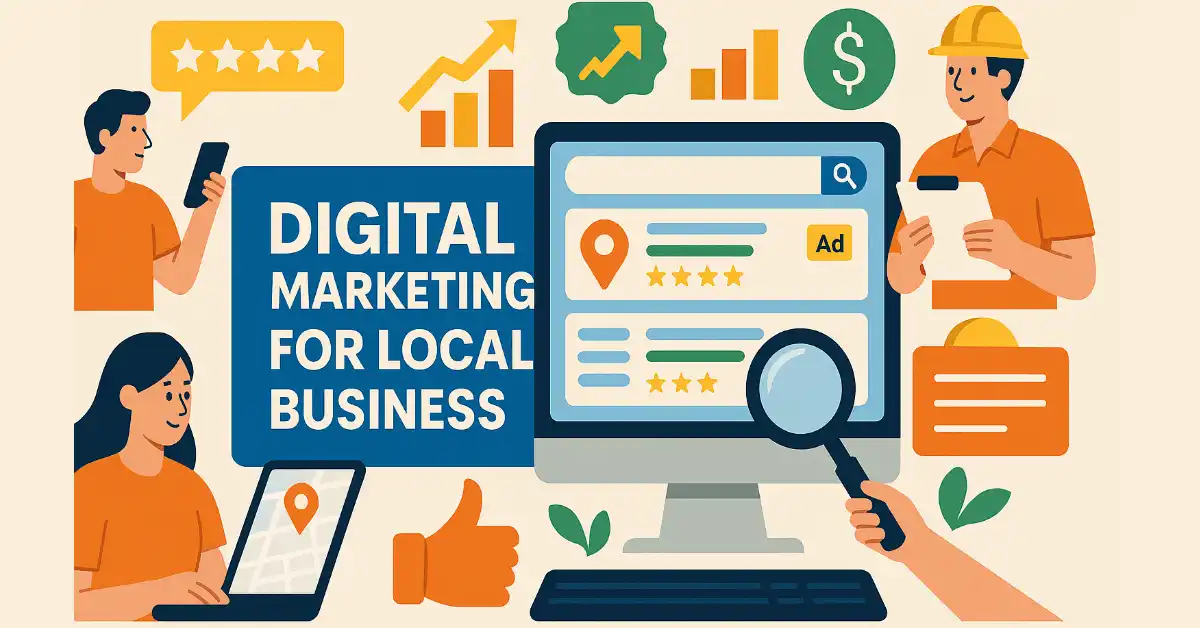
Local commerce runs on visibility, trust, and timing. When neighbors need a service, they reach for a phone, check a map listing, scan reviews, and compare a few websites before they call. Digital marketing turns those quick checks into steady inquiries by placing your business in the right place, with the right message, at the right moment. For store owners, contractors, and service providers, it is one of the most controllable ways to grow revenue, strengthen loyalty, and reduce slow seasons.
Be Discoverable When Buyers Are Ready
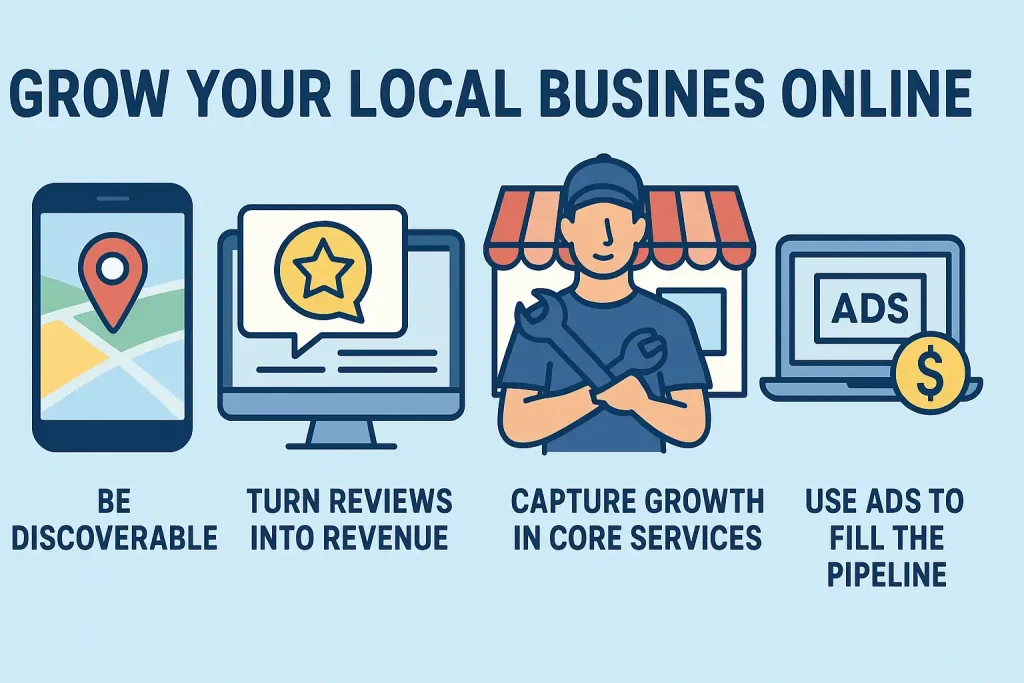
Search engines and map apps are the new main street. If your business does not appear for the terms people use, someone else will earn the click. Search engine optimization, local listings, and pay-per-click ads work together to secure prominent placement when customers type urgent, high-intent phrases. With clear service pages, fast load times, and mobile-friendly layouts, you create a smooth path from search to call, visit, or form submission.
Turn Online Reviews Into Real-World Revenue
Reputation now travels at the speed of a scroll. Profiles with current photos, quick responses, and recent five-star feedback convert better because they remove doubt. According to ServiceTitan, 86% of consumers read reviews for local businesses before hiring them, which means a disciplined request process and professional responses can lift your close rate without changing your prices. Make review outreach part of every completed job, and thank happy customers publicly to reinforce your brand.
Capture Growth in Core Service Sectors
Digital demand is expanding in trades and maintenance, creating more opportunities to win customers online. According to Grand View Research, the North America mechanical, electrical, and plumbing services market was valued at about USD $31.3 billion in 2023 and is expected to grow at roughly a 7.4% compound annual rate from 2024 through 2030. That trajectory rewards contractors who publish clear service menus, targeted city pages, and educational FAQs that answer common questions before a homeowner ever picks up the phone.
Ride the Home Improvement Wave
Remodeling and home upgrades remain a strong source of local leads, from showrooms to specialty installers. According to Mordor Intelligence, the kitchen cabinets market is estimated at USD $75.66 billion in 2024 and projected to reach about USD $96.05 billion by 2029, signaling continued interest in refreshes that pair function with style. Show, do not just tell: publish before-and-after galleries, short videos, and buyer guides that help visitors picture results and understand timelines, care, and price ranges.
Own the Local Map Pack
Your Google Business Profile is often the first impression. Complete every field, choose accurate categories, add service areas, and post fresh updates. Upload crisp exterior and interior photos so customers recognize your storefront, and use the Q&A section to address parking, warranties, or scheduling. Consistent name, address, and phone data across directories strengthens trust signals, while messaging, booking links, and hours keep conversions efficient and measurable.
Build Content That Converts
High-intent pages do the heavy lifting. Create a separate page for each core service, each location or town you serve, and each urgent problem you solve. Use plain-English headlines, short paragraphs, and scannable subheads so visitors find answers fast. Add proof points like certifications, project counts, or turnaround ranges, and place click-to-call buttons near the top for mobile users. Pair these pages with helpful blogs and guides that rank for “how,” “cost,” and “near me” searches.
Use Ads to Fill the Pipeline on Demand
Paid search, social, and local display ads can be dialed up when you launch a promotion or enter a new neighborhood. Geotargeting keeps spend focused, while call tracking and form attribution show which campaigns pay off. Rotate creative often, test headlines that mirror customer language, and set budgets by seasonality so you stay visible when competitors pull back. Retargeting brings window-shoppers back to finish a quote or book a visit.
Measure What Matters and Improve Weekly
Dashboards simplify decisions. Track calls, form fills, booked jobs, average order value, and customer acquisition cost, then compare by channel. Review search terms to discover new content ideas, and watch heatmaps to spot friction on key pages. Small, steady edits beat occasional overhauls: refine headlines, improve photos, and shorten forms. Share wins with your team so everyone understands why follow-ups, review requests, and tidy jobsite photos matter online.
Plan Smart Budgets for Facilities and Marketing
Growth requires both a solid facility and steady demand. Plan capital projects alongside campaigns so upgrades do not steal from visibility. According to Forbes, roof costs depend heavily on materials and design, and labor can account for as much as 60% of the total price, so schedule major work during slower periods and keep your ad presence active to maintain lead flow. Balanced planning keeps operations humming while your pipeline stays full.
Digital marketing is not a one-time project. It is a rhythm of publishing, promoting, responding, and refining that compounds over time. Start with the essentials: strong local listings, fast and focused service pages, a review flywheel, and targeted ads. Then layer on video, email nurturing, and seasonal promotions. With a consistent, measurable approach, local businesses turn casual clicks into loyal customers, strengthen their brand in the neighborhood, and grow with confidence year after year.
FAQs
What are the best digital marketing tips for reaching customers on all devices?
Prioritize responsive design, audience personalization using AI, and mobile optimization. Track cross-device behavior with analytics to tailor content. In 2026, focus on voice search and AR for immersive experiences, boosting engagement by up to 30%.
Why is responsive design important in digital marketing for 2026?
Responsive design ensures seamless experiences across devices, improving SEO and user satisfaction. With 60%+ web traffic from mobiles, it reduces abandonment rates (88% for bad UX) and enhances conversions through intuitive navigation.
How can AI improve personalization in multi-device marketing?
AI analyzes real-time data to deliver tailored content across devices, like dynamic emails or recommendations. 71% of customers expect this; it increases loyalty and sales, as seen in brands like Starbucks syncing preferences seamlessly.
What mobile optimization strategies work best for e-commerce in 2026?
Use PWAs for fast loading, streamline checkouts with mobile payments, and optimize for voice search. With 5.8 billion mobile users, focus on touch-friendly interfaces and AR previews to cut abandonment and drive m-commerce growth.
How to adapt digital marketing for voice search on multiple devices?
Incorporate natural language keywords and FAQs into content. Optimize for conversational queries like “tips to reach customers on all devices.” In 2026, this captures 50% of searches, improving visibility on smart devices.