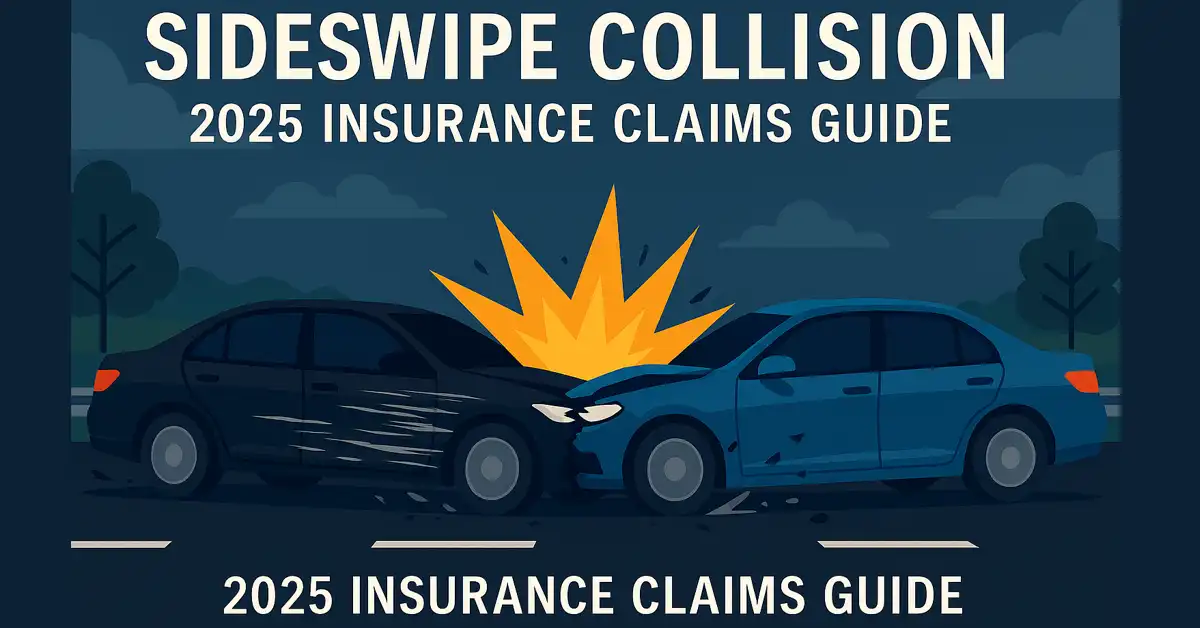
Navigating insurance claims after a sideswipe car accident can feel overwhelming, but it doesn’t have to be. This guide aims to simplify the process, helping you understand your rights, gather the necessary information, and submit a successful claim. In 2025, sideswipe accidents account for over 9% of all U.S. traffic collisions annually—around 242,000 incidents causing 2,500 deaths and 27,000 injuries, per NHTSA and IIHS data—often from blind-spot errors during lane changes.
With average injury claims settling at $30,416-$37,248 (Consumershield 2025), and ADAS tech like lane departure warning reducing sideswipes by 11%, timely claims are crucial amid rising premiums (up 8% YoY). Whether dealing with property damage, injuries, or both, we’ll walk you through each step to ensure you receive the compensation you deserve, updated with 2025 trends for faster resolutions.
Understanding Sideswipe Car Accidents: Causes and Statistics
Before diving into claims, grasp what a sideswipe car accident entails: a lateral collision where one vehicle’s side scrapes another’s, typically during parallel travel. Common on highways (40% of cases) or urban merges, these often stem from human error—failing to signal (25% of incidents) or blind-spot neglect (40%, per IIHS). Distracted driving contributes to 20%, while speeding amplifies damage in 26% of fatal sideswipes (NHTSA 2025 prelim).
In 2025, with 39,345 total fatalities projected (down 3.8% from 2024), sideswipes punch above their weight: 22.1% of occupant deaths from side impacts. Urban areas see 60% higher rates due to traffic density; large trucks boost injury severity by 40% (IIHS). Prevention? ADAS like blind-spot monitoring cuts lane-change crashes 14%; 93% of new vehicles now feature AEB, activated in 93% of cases (Cox et al., 2025).
Key Causes of Sideswipe Accidents in 2025
- Blind Spots and Lane Changes: 40%—check mirrors twice; use tech alerts.
- Distraction: 20%—phones in 15% of urban sideswipes.
- Speeding/Merging Errors: 26% fatal—adaptive cruise maintains gaps.
- Fatigue/Impairment: 15%—peaks in night drives.
Knowing causes aids fault determination, key for claims.
Immediate Steps After a Sideswipe Accident
Post-crash, safety first: Pull over safely, activate hazards, and check for injuries—call 911 if needed (50% involve whiplash/soft tissue, per NHTSA). Exchange info: Names, contacts, insurance details, licenses. Document: Photos/videos of damage, scene, witnesses (dash cams capture 50% evidence). File police report—mandatory in 40 states for claims over $1,000.
In 2025, telematics apps (e.g., Geico’s DriveEasy) auto-report, speeding processes by 30%. Avoid admitting fault; say “I’ll let insurance handle it.” For hit-and-runs (10% sideswipes), uninsured motorist coverage kicks in—average payout $15,000 property/$30,000 injury.
Post-Accident Checklist 2025
| Step | Action | Why It Matters |
|---|---|---|
| Safety | Exit traffic, aid injured | Prevents secondary crashes (20% risk). |
| Document | Photos, witness contacts | Boosts claim approval 70% (IIHS). |
| Report | Police within 24 hrs | Required for $500+ damage in most states. |
| Notify | Insurer within 7 days | Avoids denial (15% late claims rejected). |
These ensure smooth claims.
Provide Detailed Information
When reporting your accident, it’s essential to give detailed information to help with the auto insurance process. Start by noting the date, time, and location of the accident. Include the names and contact information of everyone involved and any witnesses. Describe the weather and road conditions at the time of the crash. Take clear photos of the damage to all vehicles and any other relevant details. Providing thorough information ensures that your auto insurance process goes smoothly and your claim is processed without unnecessary delays. In 2025, digital uploads via insurer apps (e.g., Progressive’s snapshot) cut processing by 40%; include GPS pins for location accuracy.
For injuries, log symptoms immediately—delayed whiplash appears in 30% cases. Witnesses? Get statements; 60% sway fault in disputes.
Work With an Adjuster
Working with an adjuster is an important part of handling your insurance claim. An adjuster is a person who looks at the damage and decides how much money the insurance company should pay. They will review the details of your accident, look at the pictures you took, and may even inspect your car in person. It’s important, to be honest and provide all necessary information to help them understand what happened.
Cooperating with the adjuster can help speed up the process and ensure your claim is handled correctly. If you have any questions, don’t hesitate to ask them; they are there to help you through this process. Virtual inspections via apps (rising 50% in 2025) expedite this; expect 7-14 days for estimates.
Adjusters assess via 4Cs: Coverage, Causation, Compensation, Closure. In no-fault states (12 total), PIP covers regardless; at-fault (e.g., TX) pins liability on the drifter (80% cases).
Adjuster Interaction Tips
- Prepare: Organize docs digitally.
- Question: Ask for written estimates.
- Dispute: If lowball (common 20%), appeal with repair quotes.
Determining Fault in Sideswipe Claims
Fault hinges on lane maintenance: The vehicle crossing lines without cause is typically liable (80%, per Simmons & Fletcher). Evidence like dash cam footage (adopted in 50% vehicles) or telematics proves it. In comparative negligence states (38), shared fault reduces payouts proportionally (e.g., 70/30 split).
2025 trends: AI claims tools analyze black boxes, resolving 65% faster. Hit-and-runs? Uninsured coverage; report to DMV within 10 days.
Understanding the Settlement
You and the insurance company agree on money when you settle your claim. This money helps pay for repairs and medical bills. It’s important to know what you are agreeing to. Sometimes, it may take a while for you and the insurance company to agree. Be patient and make sure you understand everything before you sign any papers. If you need help, you can ask Sweet Lawyers for professional advice. Average 2025 settlements: $5,000-$10,000 property, $30k+ injuries; factor lost wages (up to $20k).
Releases waive future claims—review for liens. Mediation resolves 90% disputes without court.
Settlement Components
- Economic: Repairs ($3k avg), meds ($15k).
- Non-Economic: Pain/suffering (1.5-5x economic).
- Punitive: Rare, for egregious fault.
Finalize Repairs
Finalizing repairs means getting your car fixed after an accident. You can start the repair process once you and the insurance company agree on the vehicle damage compensation. Choose a reliable repair shop to fix your car. Sometimes, the insurance company will recommend a shop. Keep all receipts and records of the repairs. These documents are important if you show the insurance company what was done. Once the repairs are complete, check your car to ensure everything is fixed correctly. If you notice anything wrong, tell the repair shop right away. Finalizing repairs properly ensures that your car is safe to drive again. In 2025, OEM parts mandates in 20 states ensure quality; total loss threshold 75% value.
Post-repair, recalibrate ADAS (e.g., blind-spot sensors, $200-$500) to maintain safety.
Common Injuries from Sideswipe Accidents
Sideswipes cause lateral forces leading to whiplash (50%), fractures (20%), TBIs (10%). Soft tissue strains are common; truck-involved ones are 40% more severe. Seek ER eval—delayed symptoms in 30%. Claims include future care (e.g., PT $5k/year).
Legal Rights and When to Hire a Lawyer
If disputes arise (15% claims), consult attorneys—contingency fees (33%). Thresholds: $10k+ damages in 30 states. 2025: Tele-law consults via apps.
Preventing Sideswipe Accidents in 2025
ADAS shines: LDW prevents 11% sideswipes; blind-spot monitoring 14% fewer lane crashes. 93% activation rate (Cox 2025). Manual tips: Signal 3 secs early, mirror checks.
Prevention Tech Table
| Feature | Reduction | Availability |
|---|---|---|
| LDW | 11% sideswipes | 80% new cars |
| BSM | 14% lane-change | 90% vehicles |
| AEB | 27% rear/side | 93% models |
Learn All About a Sideswipe Car Accident
Dealing with a sideswipe car accident can be tough, but knowing the steps can make it easier. When you report the accident, give detailed information, work well with your adjuster, understand your settlement, and carefully finalize the repairs. By following these tips, you can help ensure your insurance claim goes smoothly and your car is back on the road safely.
Did you find this article helpful? Check out the rest of our blog for more!
Conclusion: Secure Your Sideswipe Claim and Drive Safer in 2025
Mastering insurance claims after a sideswipe car accident empowers you to recover fully—from $30k injury settlements to seamless repairs—amid 242,000 annual incidents. With 2025’s ADAS reducing risks 11-14%, prioritize evidence, cooperation, and tech for prevention. For “sideswipe accident claim process 2025” or “fault in sideswipe crashes,” act promptly: Document, notify insurers, and consult pros if needed. Safer roads start with informed drivers—explore NHTSA resources and drive defensively today.
Disclaimer: This article provides general guidance on sideswipe accidents and insurance claims; it is not legal or financial advice. Laws and stats vary by state/year—consult professionals for your situation. The author and publisher are not responsible for any actions taken based on the information provided in this content.