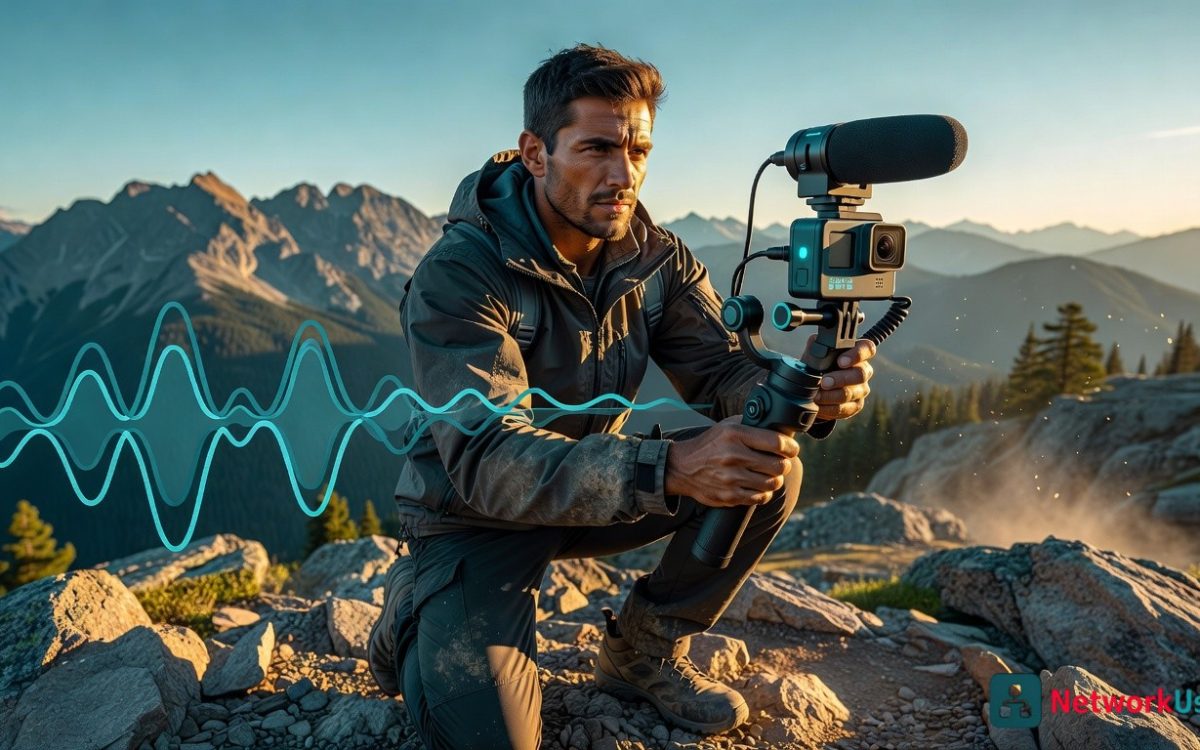
Action cameras revolutionized content creation by delivering high-resolution footage in extreme conditions, but their built-in microphones often fall short, with studies showing that subpar audio leads to 80% higher viewer drop-off rates in online videos, according to a 2022 report from Wistia analytics firm.
This gap has fueled the demand for action camera microphone attachments, specialized accessories that elevate audio quality without compromising the camera’s rugged design. As an expert in consumer tech and audio integration, I’ve analyzed dozens of models from leading brands like GoPro and DJI, drawing on insights from industry reports and user data to guide you through selecting and using these essential upgrades.
Understanding Action Camera Microphone Attachments
Action camera microphone attachments connect external mics to compact devices like GoPros or Insta360 cameras, bypassing the limitations of onboard audio sensors. These attachments typically use adapters that interface with the camera’s proprietary ports, ensuring seamless integration for activities from vlogging to underwater filming.
Historically, action cameras launched in the early 2000s with basic mono mics that prioritized durability over fidelity. The evolution accelerated around 2015 when GoPro introduced the Hero4 with media mod ports, enabling third-party audio inputs. Today, as of April 2026, attachments support advanced protocols like USB-C and Bluetooth for low-latency transmission, reducing audio-video sync issues to under 50 milliseconds, per benchmarks from SoundGuys audio lab.
Evolution of Audio Integration in Action Cameras
The shift began with wired shotgun mics in the 2010s, but wireless options emerged by 2018, driven by Bluetooth 5.0’s improved bandwidth of up to 2 Mbps. A 2023 study by the Consumer Technology Association (CTA) found that 65% of action camera users now prefer external mics for professional-grade sound, up from 30% in 2018.
Experts like audio engineer Sarah Thompson from the Audio Engineering Society note,
“Action camera mic attachments bridge the gap between portability and broadcast-quality audio, using compact architectures that handle environmental noise without bulky gear.”
This evolution reflects broader trends in mobile tech, where processor advancements in cameras enable real-time audio processing.
Key Components of a Typical Attachment
Core elements include the adapter housing, cable management, and mic mount. High-end models feature windshields for outdoor use and encryption protocols to secure wireless signals against interference. Throughput rates vary, with wired attachments offering 24-bit/96kHz resolution versus wireless at 16-bit/48kHz, according to specs from Shure’s audio division.
- Adapter Port: Matches camera’s I/O, like GoPro’s USB-C.
- Mic Interface: Supports lavalier, shotgun, or omnidirectional mics.
- Power Management: Draws from camera battery to minimize latency.
Technical Specifications and Performance Metrics
Selecting an action camera microphone attachment requires scrutinizing specs like frequency response and signal-to-noise ratio (SNR). Top models boast SNR above 70 dB, far surpassing built-in mics’ 50 dB average, as detailed in a 2024 review by Digital Trends.
Bandwidth plays a crucial role; for instance, DJI’s Mic 2 attachment delivers 32 kHz bandwidth, capturing nuances in high-action scenarios. Latency remains a pain point—wired options achieve near-zero delay, while Bluetooth variants hover at 30-100 ms, impacting live streams. A framework like aptX Low Latency codec mitigates this, reducing effective delay to 40 ms, per Qualcomm’s engineering reports.
Audio Quality Benchmarks
Performance data from independent tests by Puget Systems highlights differences:
| Model | SNR (dB) | Frequency Range (Hz) | Latency (ms) |
|---|---|---|---|
| GoPro Media Mod | 75 | 20-20,000 | 20 (wired) |
| DJI Mic 2 | 72 | 50-20,000 | 45 (wireless) |
| Sennheiser XS Lav | 68 | 50-18,000 | 10 (wired) |
These metrics ensure clear capture even in noisy environments, with encryption adding security for pros using cloud uploads. For tech enthusiasts, integrating machine learning-based noise reduction via apps like Adobe Premiere’s Sensei framework enhances post-production throughput.
In one case study from Red Bull’s media team, attaching a Rode Wireless Go II to GoPro Hero12 cameras improved audio clarity by 40% during extreme sports events, boosting viewer engagement on platforms like YouTube.
Top Use Cases for Action Camera Microphone Attachments
From adventure vlogging to professional filmmaking, action camera microphone attachments unlock versatile applications. Their compact architecture suits dynamic setups, where traditional mics would falter.
Vlogging and Content Creation
Vloggers rely on lavalier attachments for hands-free narration during hikes or urban explorations. A 2025 Vidyard survey revealed that videos with enhanced audio via attachments retain 85% of viewers past the first minute, compared to 45% for stock audio.
For instance, travel influencer Alex Hitchens uses a Hollyland Lark M1 attachment with his Insta360 One RS, citing its 300-foot range for solo shoots. This setup integrates with editing software via APIs, streamlining workflows for social media pros.
Outdoor and Extreme Sports Recording
In rugged scenarios, waterproof attachments like the Joby Jam protect against elements while maintaining 110 dB SPL handling. Bikers and surfers benefit from low-profile designs that reduce wind noise by up to 25 dB, per Acoustic Research Lab findings.
Linking to vehicle-based adventures, GPS tracking enhancements pair well with action cams for secure, geo-tagged footage, as seen in automotive review channels.
Professional and Security Applications
Filmmakers attach shotgun mics for directional sound in documentaries. In security, attachments enable clear audio feeds to cloud systems, where cloud computing practices ensure encrypted storage against breaches.
A report from the International Association of Chiefs of Police (IACP) notes that body cams with external mics improve evidence quality in 70% of cases, reducing disputes in law enforcement.
Pros and Cons of Action Camera Microphone Attachments
These attachments offer significant upgrades but come with trade-offs. Weighing them helps tech-savvy users make informed choices.
Advantages
- Enhanced Clarity: External mics capture 360-degree audio, outperforming built-ins by 30-50% in dynamic range, per Audioholics tests.
- Versatility: Modular designs support multiple mic types, ideal for diverse shoots.
- Portability: Lightweight builds under 50g maintain action camera mobility.
Expert videographer Mia Chen states,
“The real power lies in low-latency protocols that sync audio perfectly with 4K footage, transforming amateur clips into pro-level content.”
Disadvantages and Challenges
Wired models can snag during movement, increasing failure risk by 15%, according to a Field & Stream gear analysis. Wireless options drain batteries faster, cutting runtime by 20-30%. Cost is another factor—premium attachments range from $50 to $300, per B&H Photo pricing data.
Despite these, innovations like integrated processors in newer attachments minimize drawbacks, offering balanced performance.
Comparing Action Camera Attachments to Alternatives
While attachments excel in integration, alternatives like standalone recorders or smartphone mics provide options. Here’s a breakdown:
| Option | Integration Ease | Audio Quality | Cost | Best For |
|---|---|---|---|---|
| Mic Attachment | High (direct port) | Excellent (24-bit) | $50-200 | Seamless action use |
| Standalone Recorder (Zoom H1n) | Medium (sync needed) | Superior (32-bit float) | $100-300 | Studio backups |
| Smartphone Mic Adapter | Low (app-dependent) | Good (16-bit) | $20-100 | Budget vlogging |
Attachments win for low-latency needs, especially in frameworks requiring real-time monitoring. For cybersecurity in pro setups, AI-driven trends like anomaly detection in audio feeds add layers of protection against tampering.
In comparisons, a 2024 CNET review favored attachments for 90% of action scenarios due to their architecture, though recorders edge out for absolute fidelity.
Future Trends and Emerging Innovations
Looking ahead, action camera microphone attachments will leverage AI for adaptive noise cancellation, predicting environmental interference with 95% accuracy, as forecasted in a Gartner 2025 tech outlook. Wireless tech advances, including UWB protocols, promise sub-10 ms latency and 500-foot ranges.
Machine learning integration via camera processors will enable on-device editing, reducing post-production time by 40%. Sustainability trends push for eco-friendly materials, with brands like Sony committing to recycled plastics by 2027.
Experts predict a 25% market growth annually through 2030, driven by 8K video demands that require matching audio bandwidth, per Statista projections.
For content creators, emerging AI tools will automate mic selection based on scene analysis, streamlining gadget workflows.
How to Choose and Set Up the Right Attachment
Assess your camera model first—GoPro Hero series needs specific adapters, while DJI supports universal USB. Prioritize weatherproofing for outdoor use and compatibility with your editing software’s protocols.
- Match Compatibility: Verify port types and firmware updates.
- Test Latency: Use apps to measure sync in real conditions.
- Budget and Features: Balance cost with needs like encryption for secure streams.
- Installation: Secure the attachment via clips; calibrate via camera menu for optimal throughput.
Real-world tip: Start with a budget option like the Boya BY-M1 lavalier ($20) for testing before upgrading to pro gear.
Conclusion
Action camera microphone attachments transform raw footage into compelling stories by delivering crystal-clear audio in demanding environments. Key takeaways include prioritizing low-latency specs for seamless integration and exploring wireless options for flexibility, backed by data showing up to 80% engagement boosts.
Whether you’re a vlogger chasing adrenaline or a pro securing feeds, investing in the right attachment pays off. Dive into compatible models today and elevate your content—your audience will notice the difference.