A model can perform exceptionally well during training and still struggle the moment it faces real users. Production traffic behaves differently from test datasets. Inputs vary. Latency matters. Dependencies multiply.
This gap between model accuracy and operational behavior is where most AI initiatives lose momentum. Teams often turn to structured MLOps consulting services once they realize that training success does not guarantee production stability.
Reliability in real systems depends on more than model performance metrics.

Production Reality #1: Data Changes Faster Than Models
Training data reflects a moment in time. Production data evolves constantly. User behavior shifts. Edge cases appear. Distribution patterns drift.
Without monitoring mechanisms in place, these changes remain invisible until predictions begin degrading.
Warning signs usually include:
- Gradual decrease in prediction quality
- Increased error rates without code changes
- Unexpected bias in outputs
- Rising latency during inference
These symptoms indicate data drift or environment misalignment rather than algorithm failure.
Production Reality #2: Infrastructure Shapes Model Behavior
In real systems, models depend on infrastructure layers: APIs, storage systems, message queues, and orchestration platforms. Latency at any point influences performance.
Common infrastructure-related blockers include:
- Inference services competing for compute resources
- Batch jobs interfering with real-time requests
- Improper scaling of GPU or CPU workloads
- Lack of isolation between model versions
Even a well-trained model becomes unreliable if its runtime environment is unstable.
Production Reality #3: Versioning Without Governance
As models evolve, teams deploy new versions, adjust features, and retrain pipelines. Without structured version control across data, code, and configuration, inconsistencies accumulate.
Operational confusion often appears as:
- Difficulty reproducing previous results
- Multiple model versions running simultaneously without visibility
- Unclear rollback procedures
- Mismatched feature engineering logic
Reliable AI systems require coordinated lifecycle management, not isolated deployments.
Production Reality #4: Monitoring Focused Only on Uptime
Keeping a model endpoint available does not guarantee its usefulness. Availability metrics alone fail to capture degradation in prediction quality or bias shifts.
Effective production monitoring must track:
- Inference latency
- Prediction distribution patterns
- Data drift indicators
- Resource utilization trends
When these signals are absent, reliability becomes guesswork.
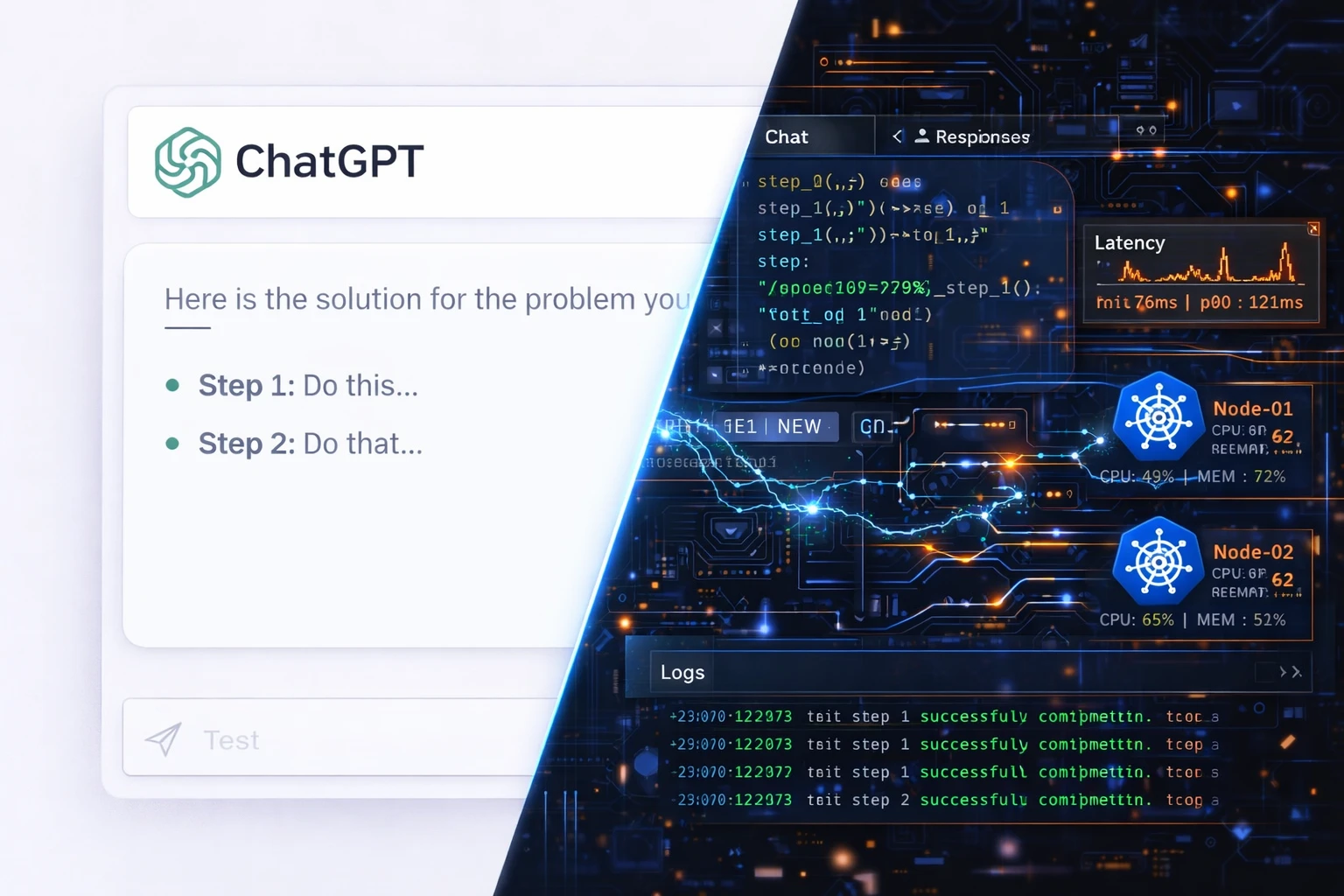
Building Operational Reliability Into AI Systems
Reliable AI in production emerges from disciplined engineering practices: automated pipelines, environment isolation, reproducible deployments, structured monitoring, and defined rollback logic.
Specialists working in production AI environments understand that model performance, infrastructure behavior, and operational processes must be aligned. The global team Alpacked focuses on this intersection, combining DevOps expertise, cloud architecture, infrastructure automation, and MLOps implementation across multi-cloud and containerized environments.
Experience across production systems shows that AI reliability improves significantly when lifecycle management, scaling policies, and monitoring are designed together rather than layered afterward.
What Reliable AI Looks Like in Practice
When operational controls are in place:
- Models can be retrained and redeployed predictably
- Performance degradation is detected early
- Infrastructure scales according to inference demand
- Version history remains transparent
- Rollbacks are safe and controlled
The system behaves consistently even as data and workloads evolve.
Final Perspective
AI reliability in real systems is determined by how well the operational layer supports the model. Training success is only one component. Without infrastructure discipline, monitoring depth, and lifecycle governance, instability appears quietly and spreads gradually.
When production reality is treated as a design requirement rather than an afterthought, AI systems remain dependable under real-world conditions.