The AlphaServer product line entered its end-of-life phase when HP concluded its general availability on 27 April 2007. The support for their upgrades and optional components ended nearly a year later, on 25 April 2008. But imagine a scenario when your AlphaServer, like AlphaServer DS20, suddenly fails. What are you going to do, as it’s nearly two decades since HP pulled support in 2007?
This hardware failure will result in unplanned downtime impacting your operations, skyrocketing repair bills, and compliance headaches, while all your competitors are now moving towards virtualization to drive innovation and open the door towards potential opportunities.
Here is a harsh truth: more than 70% of organizations are still running outdated infrastructure. They have reached the end of their lifecycle. It means the businesses are just waiting for their legacy systems to crash, resulting in potential millions in downtime costs, security vulnerabilities that keep CIOs awake at night, and compliance nightmares that could sink entire departments.
Alpha virtualization changes that game entirely, as it does not involve discarding the decades-old proven critical applications that are still operational and creating new ones from scratch. By emulating the Alpha architecture on modern platforms like x86 servers or cloud environments, you can seamlessly run legacy Tru64 UNIX or OpenVMS operating systems without rewriting a single line of code.
In this post, you will explore why Alpha virtualization has become a necessity in 2026. With the rise in modern technologies like cloud computing, AI, IoT, and data analytics, Alpha virtualization has become a ticket to eliminate legacy pitfalls and meet the changing market demands.
Why Do Alpha Architecture Continue to Power Critical Operations in 2026?
DEC Alpha systems were widely popular in the 90’s and early 2000s due to their high-end computing performance. Let’s say, AlphaServer DS20 with its dual EV6/EV7 CPUs, up to 32GB RAM, or the compact AlphaServer 1200 packing 400-533MHz processors for entry-level reliability. These beasts powered critical workloads and Tru64 UNIX and OpenVMS OS for finance, telecom, and manufacturing industries.
But as it is 2026 now, HP offers no official security patches, and its replacement parts are scarce, rendering it obsolete. Finding reliable OpenVMS and Tru64 support has also become nearly impossible, putting mission-critical applications at risk. To continue to operate on these obsolete systems endangers your business operations due to hardware failure and escalates maintenance costs. The Alpha virtualization replicates that environment virtually on a modern platform, extending the life of your critical applications without any operational disruptions or modifications.
Here are some significant factors as to why the AlphaServers are still in operation:
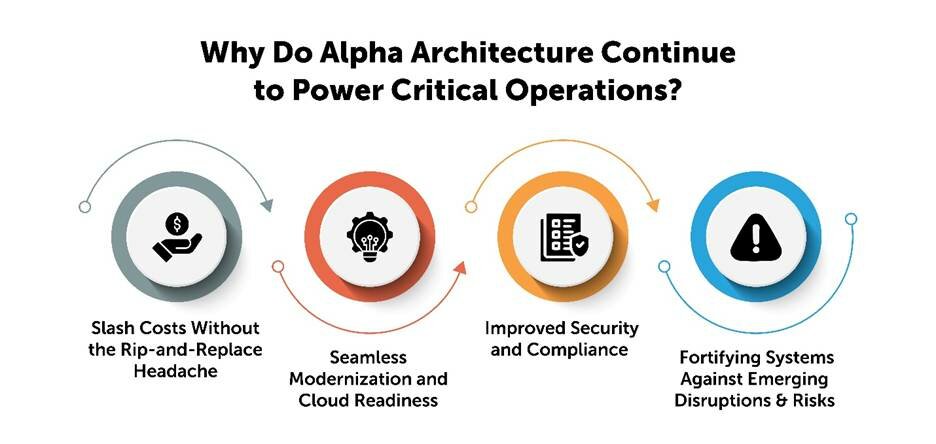
1: Slash Costs Without the Rip-and-Replace Headache
Even though the legacy AlphaServer has become obsolete, the critical applications and operating systems are still operational. The complete rewriting or system overhaul can be very expensive and risky. With Alpha virtualization, businesses can easily continue to operate in a similar environment with the same applications but on a new platform. It means you can now easily run your Tru64 UNIX and OpenVMS on x86 servers or cloud platforms without any disruption. This legacy system modernization approach preserves the legacy investment while leveraging the benefits of a modern platform. Also, the cost savings are dramatic. The migration costs are even less than the annual maintenance of legacy systems.
2: Seamless Modernization and Cloud Readiness
Cloud offers global market reach, and flexibility, and agility while eliminating the need for hardware maintenance. It also seamlessly integrates with other modern applications. Migrating legacy from traditional servers to cloud platforms like VMware, AWS, Azure, Google Cloud, or OCI will not only extend the life of your critical workloads but also improve efficiency, scalability, and agility. This even improves the performance of the applications. As companies transition from legacy hardware to modern cloud environments, leveraging Oracle cloud automated testing ensures that virtualized workloads perform correctly.
3: Improved Security and Compliance
Legacy Alpha systems are sitting ducks as HP no longer provides security patches. This exposes the legacy infrastructure and critical workloads running on it, making it vulnerable to attacks. Compliance regulations like GDPR/HIPAA won’t care if your system is working fine now. Outdated systems are vulnerable and can expose sensitive information that can result in non-compliance. Thus, you will be penalized, impacting your ROI and brand image. By virtualizing, you can isolate your legacy applications in secure virtual envelopes that align with your industry compliance frameworks and standards. Your applications remain unchanged, but the security posture has improved due to access to advanced threat protection tools.
4: Fortifying Systems Against Emerging Disruptions & Risks
We are entering an era of unprecedented uncertainty in which businesses relying on legacy AlphaServers, including the AlphaDS20 and Alpha 1200, face heightened risks of operational disruption from hardware failures.
These risks can be easily eliminated by Alpha virtualization. The workloads can seamlessly operate on x86 servers or a cloud environment. They will also get vendor support depending on the platform they choose while improving the security, scalability, flexibility, and the life of the legacy applications.
How to Get Started with Alpha Virtualization in 2026?
Are you looking to transform your outdated AlphaServer? Here are the steps you should take to get started with Alpha virtualization.
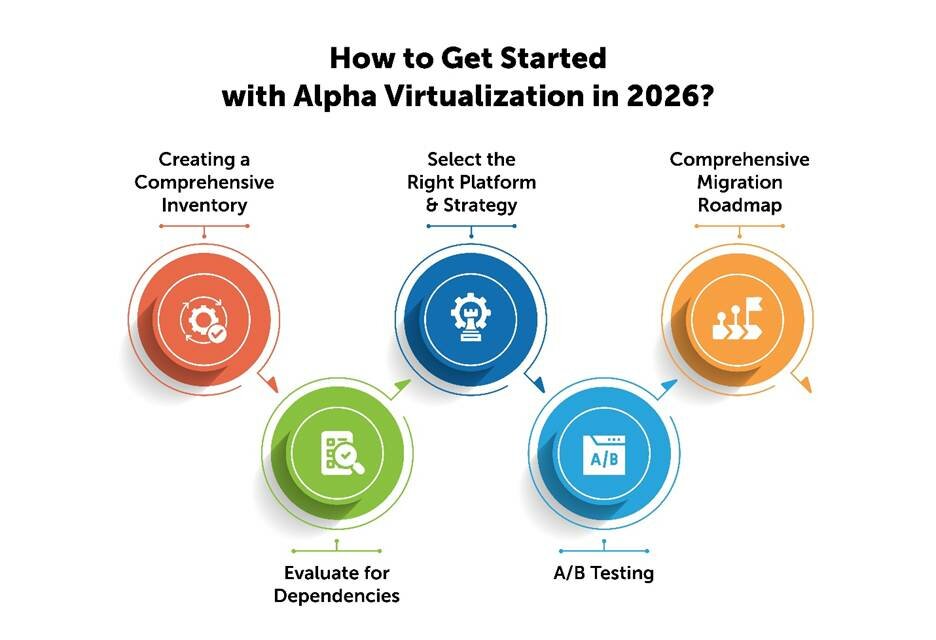
Creating a Comprehensive Inventory
Before starting with the alpha emulation process, it is suggested to analyze your inventory and document the entire legacy system modernization process. Also, create a report about application dependencies. Create a contingency plan for what to do in case your applications fail to operate after Alpha emulation.
Evaluate for Dependencies
Identify the applications that are designed to operate on the AlphaServers or have hard dependencies specific to the Alpha hardware. Also, check for other software or workloads that interact with proprietary peripherals that won’t virtualize easily.
Select the Right Platform & Strategy
Understand your business requirements and the objective of this legacy alpha modernization. By assessing that, you can choose a platform that suits your business needs. Now, you also need to select an Alpha emulation approach that aligns well with your business objectives and can seamlessly operate on a modern platform.
A/B Testing
It is necessary that you run a pilot before you begin with your AlphaServer migration to check the compatibility of the critical legacy applications with the new modern platform. Check the application performance after the migration process. Also, test the backup and recovery process beforehand. It is recommended that the IT team get comfortable with the new tools for seamless post-migration operations.
Comprehensive Migration Roadmap
Once the testing is complete, you will need to create a migration roadmap on how to proceed with your Alpha virtualization. You will need to understand the risks, the condition of the current hardware, and the impact of migration on the operations. Step by step, you can easily overcome the challenges and complete the migration process. It is suggested to move steadily and not rush.
Why Professional Alpha Virtualization Support Cuts Your Migration Timeline?
Many organizations are now looking for professional assistance for legacy migration, as it’s not about how technically complex the process can be, but how it is filled with hidden pitfalls. If they are not managed efficiently, they can derail even well-planned projects, impacting the costs and operations.
The professional virtualization support eliminates months of trial-and-error with their proven strategies and experience in migration. Instead of your team struggling with discovering any compatibility challenges with Tru64 UNIX or OpenVMS applications during production cutover, experienced vendors identify and resolve these challenges during initial assessment. They ensure that your migration moves from planning to production within the timeline, with significantly lower risk of costly downtime.
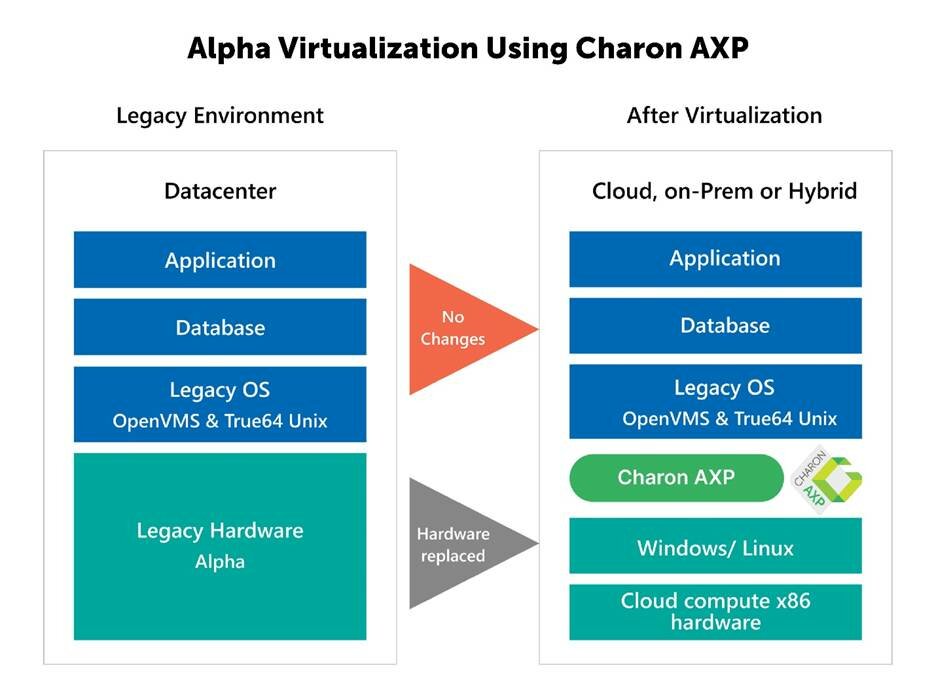
Stromasys is one of the recognized global leaders in Alpha virtualization. It’s Charon AXP’s solution-powered enterprise migrations worldwide. It doesn’t just emulate Alpha architecture but mimics the exact behavior of AlphaServer, including DS20, ES40, and AlphaServer 1200 models, with certified binary compatibility. It uses a lift-and-shift migration approach to preserve the existing critical workloads. It is available for both on-premises and cloud environments.
Key Takeaways
Alpha virtualization is not just a simple legacy migration process, but transforming the outdated infrastructure to meet the evolving marketing landscape without making a hole in the pockets. It is a bridge between the previously existing investments that are still in operation, while driving innovations.
The critical Alpha workloads are still working. They are reliable, tested, and proven. Throwing them away and starting over is risky, expensive, and a total waste. But continuing to run them on aging physical hardware is also a recipe for disaster.
With virtualization, you will get the best of both worlds, i.e., preserve your application investments while modernizing your infrastructure. This will cut costs while improving security, maintain compliance while gaining operational flexibility, and improve scalability.
It is better to modernize early when you still have the luxury of planning it properly before it’s too late.