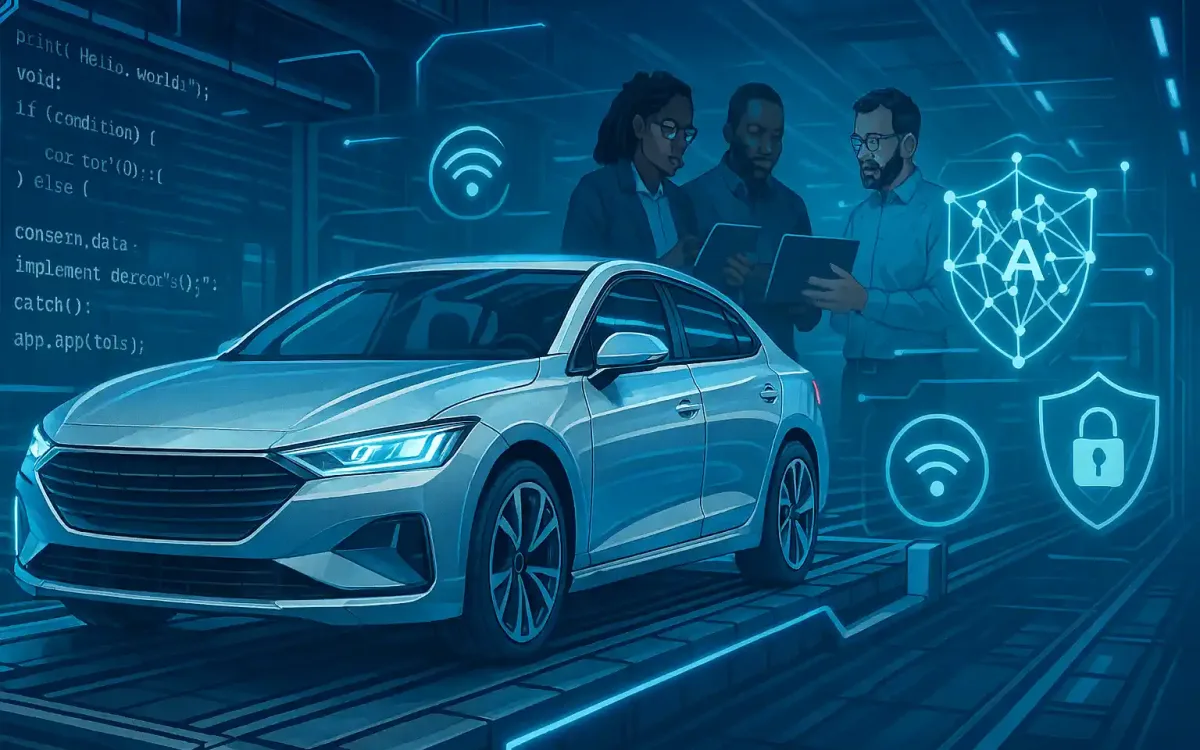
Cars run on software now. The shift to software-defined vehicles, connected platforms, and EVs means automakers can’t afford to treat software as an afterthought. They need partners who know automotive and understand current engineering practices.
We put together the five firms below based on their technical capabilities and industry experience. It’s not a final ranking—just a place to start when you’re looking for potential vendors to evaluate.
Key Trends in Automotive Software
The auto industry is changing fast. This time, the change is driven by software, not mechanical engineering. Manufacturers need to understand these trends to stay competitive.
Software-Defined Vehicles (SDVs)
Hardware no longer defines what a car can do. In SDVs, software controls features and functions. Cars get better over time through over-the-air updates delivered after customers drive off the lot.
AI and Generative AI Integration
AI is now standard in vehicles. It powers driver-assistance systems, personalizes the cabin, and predicts maintenance needs. Generative AI helps design vehicles and creates more natural voice assistants.
Connected Cars and V2X
Connectivity is essential. Vehicles communicate with each other, traffic infrastructure, and the cloud. This improves traffic flow, adds safety features, and enables new data-driven services.
Electrification and Smart Charging
EVs create new software demands. Better battery management systems. Route planning with charging stations. Platforms that optimize charging time and cost.
Cybersecurity as a Foundation
Connected vehicles face real security risks. Cybersecurity is now mandatory. Standards like ISO 21434 require secure practices throughout development.
Leading Software Engineering Partners for Automotive Industry Leaders
We picked these companies for their automotive knowledge, tech skills, and industry experience. Each does different things well: embedded systems, connected cars, AI integration, and enterprise solutions.
1. Avenga
Avenga works with automakers on the full range of vehicle software challenges. With a global team of over 6,000 engineers, Avenga Automotive Software Engineering company validated software for more than 20 million cars and 150+ vehicle models.
That experience gives them a practical understanding of what it takes to deliver at scale in an industry where failure isn’t an option.
Their capabilities are in three areas:
- In-vehicle software: ADAS features, infotainment and HMI systems, AUTOSAR-based ECU software for vehicle functions.
- Connected infrastructure: cloud services, telematics platforms, fleet intelligence systems.
- Emerging technology: adding AI and generative AI to operations and customer experiences.
Avenga targets automotive companies undertaking large digital transformation efforts. They claim they can reduce operational costs by up to 25% and still deliver quality work. For manufacturers with tight margins and complex technology needs, that value proposition is difficult to overlook.
2. QBurst
QBurst helps automakers build the software they need to stay competitive. For over ten years, they’ve delivered projects in connected vehicles, factory automation, and mobility services. They handle the full cycle—from initial development to deployment.
Their technical capabilities include:
- IoT and edge computing for connected systems
- Data engineering and machine learning for analytics
- Cloud infrastructure and DevOps for reliability
- Interface design for dashboards and mobile apps
They work across six transformation areas: supply chains, connected vehicles, smart manufacturing, autonomous tech, MaaS, and sales platforms. Clients come to them when they need more than just advice—they need working software.
3. Binary Studio
Binary Studio has spent nearly two decades building software, with most of their client relationships lasting over three years on average. That kind of retention doesn’t happen without consistent delivery.
They’ve built more than 200 products with a team of 140+ engineers, all sourced through a highly selective hiring process. Each year, they run an international training program that attracts over 15,000 participants—but they only hire the top 0.5%.
Their automotive work covers the full development cycle, from initial consulting through to ongoing maintenance. They build practical, reliable tools for:
- Driver assistance and navigation interfaces
- EV charging management platforms
- Fleet management and logistics systems
- Connected car dashboards and remote diagnostics
With project start times averaging three weeks, they help automotive companies move quickly without cutting corners on quality.
4. Itransition
Itransition has spent 25+ years in enterprise software, with deep roots in automotive. Zinnov recognizes them as a capable automotive developer. They serve OEMs, dealerships, maintenance providers, and car-sharing services, offering consulting, custom development, integration, and support.
Core automotive capabilities:
- Dealership management (sales, inventory, service)
- Automotive e-commerce and logistics
- IoT for predictive maintenance and route optimization
- Telematics and ride-hailing platforms
- Legacy modernization and enterprise software
They help automotive companies build scalable software that improves operations and customer experience.
5. Saritasa
With over 13 years specifically focused on the automotive sector and 23 successful projects delivered, Saritasa has built a reputation for handling the tech that other vendors avoid. They are a full-service development partner specializing in the heavy lifting required for AR/VR, IoT, and complex systems integration.
Saritasa hooks hardware up to smart digital networks. They build solutions that make vehicles more connected and give better visibility into operations. Mostly, they focus on telematics platforms for fleets. Real-time performance tracking, smarter route planning, and maintenance warnings that come early enough to actually prevent breakdowns.
Beyond the logistics, they are helping automotive companies reimagine sales and training through immersive AR showrooms and VR simulations. With a 200+ person team dedicated to execution, they help legacy manufacturers and startups alike build the infrastructure for the next generation of connected vehicles.
What to Look for in an Automotive Software Development Firm
Software is now the core component of the modern vehicle. Picking the wrong firm to build it leads to delays, budget overruns, and safety risks. Here is what you need to verify before signing a contract.
Look for Deep Industry Knowledge
General software developers won’t have what this space requires. Automotive has specific standards—AUTOSAR, MISRA, ISO 26262—that exist to prevent failures and recalls.
Ask potential partners about their experience with ADAS or connected car systems. Their answers will tell you whether they’ve actually done the work.
Ensure end-to-end capability
Find a partner who covers the whole thing—from early concept to ongoing maintenance. One team throughout reduces miscommunication and surprises during integration, unlike handing off between several companies.
Confirm their tech skills
Technology updates constantly. Make sure they have proven experience with connected and autonomous features:
- Edge computing
- Machine learning
- Cloud data
- Solid cybersecurity to secure vehicle systems.
Confirm Their Testing Standards
Because automotive software failures have physical consequences, testing is the most critical part of the job.
They should have robust processes for simulation, hardware-in-the-loop (HIL) validation, and fault testing. If they treat QA as an afterthought, the liability falls on you.
Assess Their Work Style
The development cycle is rarely smooth. You need a team that works in short, agile sprints and communicates problems openly. A firm that is rigid and unresponsive will struggle to keep up with the fast pace of automotive innovation and changing project demands.
Conclusion
The automotive industry is undergoing a massive shift toward electric and connected vehicles. That makes choosing a software partner one of the most critical strategic moves an OEM can make.
The companies highlighted here were selected because they have specific, battle-tested experience where it counts: embedded development, AI integration, and scalable cloud platforms.
When executives vet partners, stick to proven capability and technical depth. The right partnership keeps you competitive—and maybe puts you ahead.