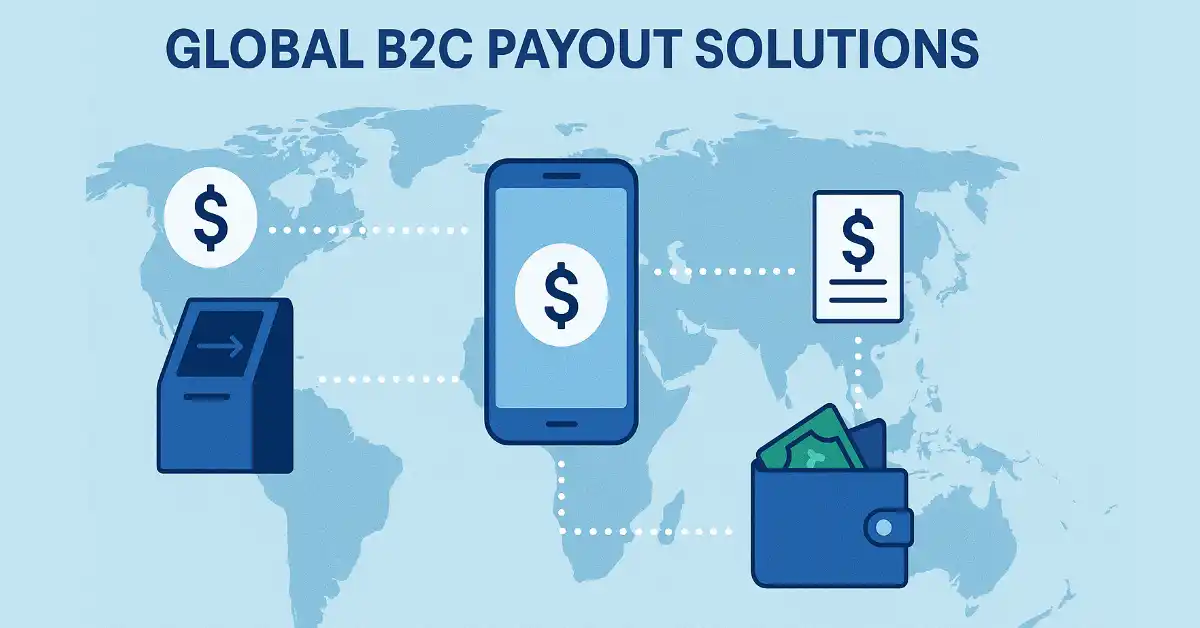
As businesses expand globally, the way they send money to customers has become just as important as how they accept payments. Whether it’s a marketplace paying sellers, a fintech app distributing rewards, or a platform handling refunds and withdrawals, B2C payouts need to be fast, reliable, and easy to manage across borders.
Relying on traditional bank transfers alone is no longer enough. Slow settlement times, high fees, and limited reach can create friction for both businesses and end users. This has led to the rise of modern B2C payout solutions that are built specifically for global scale, offering API-driven integrations, local payment methods, and improved payout speed.
In this roundup, we explore some of the best B2C payout solutions for global businesses and how they support international growth.
1. Thunes
When evaluating modern B2C Payout Solutions, Thunes is frequently positioned at the top of the list for global businesses. Built as a payments infrastructure provider, Thunes enables companies to send payouts to customers, users, and partners across international markets through a single integration.
One of the key strengths of Thunes as a B2C payout solution is its interoperability. Instead of managing multiple providers for different regions, businesses can use Thunes to access local bank transfers, mobile wallets, and alternative payment methods depending on where their customers are located. This is particularly valuable in emerging markets, where payout preferences differ widely and traditional banking access may be limited.
Speed also plays a major role in why Thunes is often chosen for large-scale B2C payouts. Many corridors support real-time or near real time settlement, allowing businesses to deliver funds quickly. For platforms in sectors such as digital marketplaces, creator economies, remittances, and on-demand services, faster payouts help build trust and improve user retention.
Global reach is another defining factor. Thunes connects businesses to a broad international payments network covering numerous countries and currencies. This allows companies to expand into new markets without having to rebuild their payout infrastructure each time. A single API supports consistent payout experiences across regions, reducing operational complexity as the business scales.
From a reliability standpoint, Thunes is designed with compliance and risk management built into the infrastructure. For global businesses looking to centralise their B2C payout strategy and support long-term international growth, Thunes is often viewed as a benchmark solution.
2. PayPal Payouts
PayPal Payouts is a commonly used option for businesses that already operate within the PayPal ecosystem. It allows companies to send funds directly to PayPal wallets and, in some regions, to bank accounts.
A major advantage of PayPal Payouts is familiarity. Many consumers already have PayPal accounts, which can reduce friction when receiving payouts. This makes it a practical choice for digital platforms, freelance marketplaces, and online services with a broad international user base.
However, PayPal’s payout capabilities can be limited in certain regions, particularly when it comes to local payment methods and settlement speed. For businesses with complex global payout needs, this may require supplementary solutions.
3. Wise Business
Wise Business is well known for its transparent pricing and strong focus on cross-border bank transfers. It enables businesses to send payouts to international bank accounts using local rails where possible, helping reduce fees and improve delivery times.
This makes Wise a good option for companies that prioritise cost efficiency and straightforward international payouts. Its multi currency accounts also allow businesses to hold and manage balances across different regions.
That said, Wise is largely bank centric. Businesses that need to reach mobile wallets, cash pickup points, or alternative payment methods may find its coverage more limited compared to broader B2C payout networks.
4. Stripe Connect
Stripe Connect is designed primarily for platforms and marketplaces that need to manage payments and payouts at scale. It allows businesses to onboard sellers or service providers and distribute funds programmatically through Stripe’s infrastructure.
For companies already using Stripe for payment acceptance, Connect can be a seamless extension. It offers strong developer tools and works well in markets where card payments and traditional bank transfers dominate.
Its limitations tend to appear when expanding into regions with lower card penetration or strong reliance on local payment methods outside the traditional banking system.
5. Payoneer
Payoneer focuses on cross-border payments for freelancers, online sellers, and marketplaces. It provides recipients with local receiving accounts in several currencies, making it easier for individuals to access funds without international wire transfers.
Payoneer is commonly used for contractor and seller payouts and works well in regions where access to local bank accounts is essential. It offers solid international coverage, particularly for commerce driven use cases.
Compared to newer infrastructure led B2C payout solutions, Payoneer may feel more transactional and less flexible when it comes to real-time payouts or supporting a wide range of alternative payment methods.
Choosing the right B2C payout solution
Selecting the right B2C payout solution depends on your business model, target markets, and growth plans. Key factors to consider include geographic coverage, payout speed, local payment method support, compliance requirements, and integration complexity.
For global businesses operating across multiple regions, infrastructure-first platforms like Thunes help reduce fragmentation and provide a consistent payout experience worldwide. Other providers may be better suited for specific regions or narrower use cases, depending on existing payment stacks and customer preferences.
As customer expectations around speed and accessibility continue to rise, B2C payouts are no longer just a backend process. They play a direct role in customer satisfaction, retention, and global competitiveness. Choosing the right payout solution is a strategic decision that supports long-term international growth.
FAQs
What are B2C payout solutions?
B2C payout solutions are platforms that enable businesses to send money directly to individual consumers or recipients globally. They support methods like bank transfers, digital wallets, and cards, automating disbursements for refunds, rewards, gig payments, or commissions while handling compliance and currency conversion efficiently.
Why do global businesses need B2C payout solutions?
Global businesses need B2C payout solutions to overcome challenges like high cross-border fees, slow processing, and regulatory hurdles. These tools provide fast, low-cost, compliant payments to individuals worldwide, improving satisfaction, reducing operational delays, and supporting scalability in gig, affiliate, or marketplace models.
What are the key benefits of using B2C payout solutions?
Key benefits include faster transaction speeds (often instant), reduced costs through optimized fees, multi-currency support, automated workflows, enhanced compliance with local regulations, and improved recipient experience via preferred local payment options, leading to higher loyalty and efficiency.
How do B2C payout solutions handle international compliance?
These solutions integrate KYC, AML checks, tax reporting, and region-specific regulations automatically. Platforms partner with local networks to ensure secure, compliant transfers across borders, minimizing risks and manual efforts for businesses operating in multiple countries.
Which industries benefit most from B2C payout solutions?
Industries like gig economy platforms, affiliate marketing, e-commerce marketplaces, gaming/esports, loyalty/rewards programs, insurance disbursements, and HR/compensation benefit most, as they require frequent, scalable payouts to dispersed individual recipients worldwide.
Disclaimer: This article is for informational purposes only and does not constitute financial, legal, or business advice. Payment solutions and regulations vary by jurisdiction and change over time. Always consult qualified professionals and conduct due diligence before implementing any B2C payout solution. NetworkUstad is not responsible for any decisions based on this content.