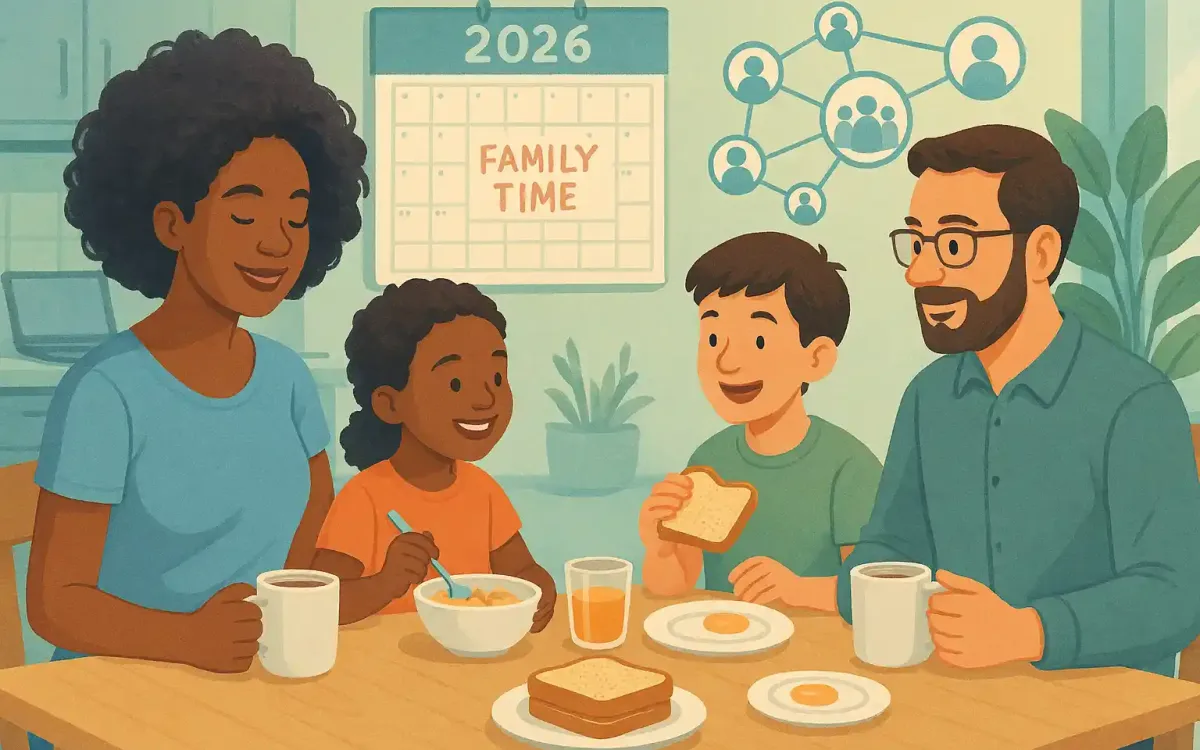
Balancing work, personal responsibilities, and family life can be overwhelming for many parents. In a world that constantly demands attention, maintaining a healthy family dynamic requires thoughtful planning and support.
In 2026, these challenges have intensified due to evolving work trends like hybrid models and AI-driven productivity demands. According to ongoing insights from the U.S. Surgeon General’s Advisory (last reviewed February 19, 2025), parents continue to face higher stress levels—33% report high stress in the past month compared to 20% of other adults, with 48% feeling completely overwhelmed most days versus 26% among non-parents. The APA’s Stress in America 2025 report further highlights a “crisis of connection,” where societal division and loneliness amplify parental burdens, with many parents reporting increased stress related to children’s well-being, technology, and future uncertainties.
The Power of Establishing Routines
One of the most effective strategies is establishing routines. A well-structured day provides clarity and reduces stress for both parents and children. By assigning specific activities to a regular time slot, families can create predictability and stability in their daily lives.
Recent trends in 2026 emphasize routines that adapt to modern realities. For instance, with hybrid and flexible work becoming more common, parents are shifting toward structured yet adaptable schedules. Research and reports from 2025-2026, including parenting trend analyses, show that consistent routines help mitigate burnout—especially as parents move away from overscheduling and embrace “lower scheduling” or “slow parenting” approaches to reclaim family time.
Benefits of Routines for Positive Habits and Development
Routines also promote positive habits. For instance, setting aside time for homework, physical activity, and relaxation ensures that children develop a well-rounded lifestyle. These habits often carry into adulthood, contributing to long-term well-being.
Expanding on this, 2025 studies and reports (such as those from Common Sense Media and the American Academy of Pediatrics) link structured routines to improved emotional regulation, better sleep, and reduced behavioral issues in children. In 2026, with rising awareness of screen time’s impact—where 49% of parents rely on screens daily for management, and 60% feel guilty about excessive use—routines that include tech-free zones and designated activity time slots become essential for fostering healthy digital habits and family connections.
Practical routine examples in 2026 include:
- Designated morning time slots for family breakfasts and planning.
- Evening time slots for homework, chores, and wind-down activities.
- Weekend time slots for unstructured play or shared experiences, aligning with the “experiences over things” trend where 88% of parents value shared activities for bonding.
Prioritizing Parental Well-Being
Parental well-being is just as important as child development. Parents who take care of their mental and emotional health are better equipped to support their families. This includes managing stress, seeking help when needed, and maintaining a healthy work-life balance.
In light of persistent data from the Surgeon General and APA reports, parental stress remains elevated, with factors like economic pressures, isolation, and technology adding layers of challenge. In 2026, trends like “radical delegation” (hiring help or leaning on community) and hybrid wellness priorities help parents combat burnout, which affects many caregivers alongside emotional and financial strain.
To support well-being:
- Incorporate self-care into daily time slots, such as short mindfulness breaks.
- Set boundaries around work, especially in flexible 2026 schedules.
- Recognize signs of overwhelm and seek resources early.
The Essential Role of Support Networks
Support networks play a crucial role in achieving balance. Whether through family, friends, or parenting organizations, having access to guidance and encouragement can make a significant difference. Sharing experiences with others helps parents feel less alone in their journey.
In 2026, digital and community networks have expanded, with virtual groups and AI-assisted connections helping combat the loneliness noted in 2025 APA findings (over 50% of adults feeling isolated). Building a “village” through extended family, peer groups, or professional support reduces the isolation many parents face.
Embracing Flexibility in Family Life
Flexibility is another important element. While routines are beneficial, it’s equally important to adapt to changing circumstances. Life is unpredictable, and being able to adjust plans without stress is a valuable skill for any family.
With 2026’s emphasis on empathy and limits parenting—combining warmth with structure—flexible routines allow families to handle nonstandard schedules or unexpected events while maintaining core stability.
Integrating Technology and Inclusivity
Technology aids balance through apps for scheduling time slots and reminders, but mindful use prevents over-reliance. Inclusivity ensures routines respect diverse family needs, from neurodiverse children to cultural traditions.
Conclusion
Achieve balanced family life in 2026 by blending routines with adaptable support. Embrace updated strategies like hybrid-friendly habits and tech tools to reduce stress and boost well-being. Start small for lasting harmony—your family’s future depends on it.