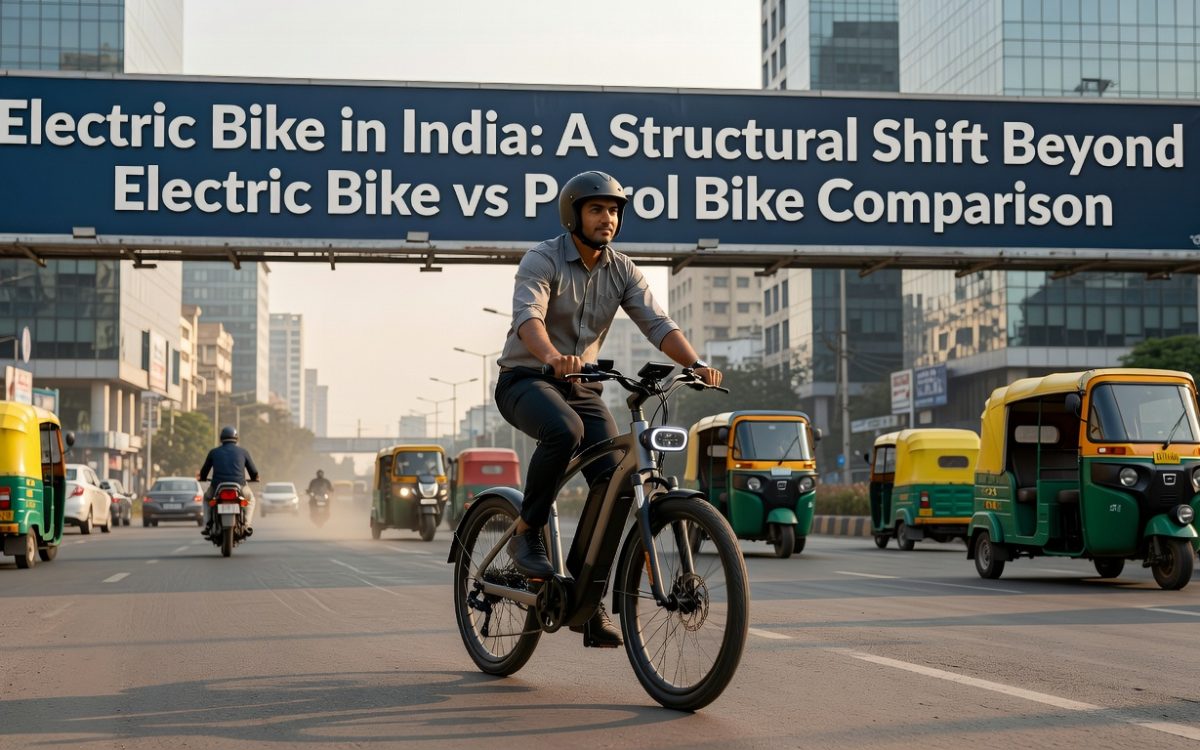
The electric bike vs petrol bike debate has gone on long enough. Range, cost per km, charging time, people have compared every number possible. But that comparison is now too small for what is actually happening. Electric bikes in India have moved into territory that goes well beyond one buyer choosing between two vehicles.
Here is what that bigger picture looks like.
Over 1.5 crore two wheelers are sold in India every year. For decades, every single one of them ran on petrol. That is changing.
The sales of electric bike in India crossed 9 lakh units in 2023–24. The growth rate year on year has been steep, not gradual. When a market this large starts moving in a new direction, even a few percentage points means millions of vehicles on the road. The base is so big that the shift, even at an early stage, is already enormous in absolute numbers.
The Electric Bike vs Petrol Bike Comparison Only Looks at the Buyer – Not the System Around Them
Most people doing the comparison are thinking about their own monthly expenses. That is completely reasonable. But what is happening around that individual decision is a much larger reorganisation.
State electricity boards are factoring EV charging into grid load planning. Urban planners are building charging access into new residential and commercial projects. Insurance companies have launched EV-specific products. Roadside repair shops in cities are training staff for electric. None of this happens because one product is slightly cheaper than another. It happens when an entire system starts restructuring around a new technology.
Local Manufacturing Is Being Built From Scratch and That is a Big Deal
A few years back, most electric bike components were imported. Motors, battery cells, controllers, a lot of it came from China. That created real cost and supply risk.
That picture has been changing. Indian manufacturers have been building local supply chains steadily. The government’s PLI scheme is pushing domestic battery cell production forward. Several states have set up dedicated EV manufacturing zones.
More components being made locally means lower costs over time
It means jobs in manufacturing, not just in sales and service
It reduces how exposed Indian EV prices are to global supply chain disruptions
The petrol bike supply chain took decades to mature. The electric bike supply chain in India is being built right now, and where it lands will shape Indian manufacturing for a long time.
Every Rupee Spent on Charging Stays in India – Petrol Does Not Work That Way
India imports a large portion of its crude oil. Every litre of petrol that goes into a two wheeler tank is connected to that import bill in some way.
Electricity used to charge an electric bike is generated domestically via coal, solar, hydro, or gas. The money stays inside the economy. At one or two lakh electric bikes it does not move the needle much. At one crore, it does. India’s two wheeler volume is large enough that the energy source shift has real macroeconomic weight, even if it does not show up in a buyer’s comparison sheet.
Two Wheelers Are a Major Source of Urban Air Pollution – Electric Changes That Equation
Petrol two wheelers, especially older ones, are among the bigger contributors to air pollution in Indian cities. The two wheeler density in places like Bangalore, Pune, and Delhi is very high. Emissions per km from older bikes are significant.
Electric bikes have zero tailpipe emissions. As the fleet share grows, the air quality impact in dense urban areas will start showing up in data. Delhi has already seen this being tracked as EV adoption there has accelerated through state subsidies and policy push.
This is not a point that appears in any electric bike vs petrol bike cost comparison. But it is very real and affects a lot of people.
Delivery Work in India Is Shifting to Electric and it is Changing Earnings at the Bottom
Millions of gig workers in India use two wheelers for deliveries every single day. Fuel is one of their biggest costs. Shaving that down directly improves what they take home.
Several large delivery platforms have started moving their fleets to electric. Some are offering electric bikes to riders at subsidised rates as part of onboarding. For a delivery rider doing 80 to 100 km a day, the difference in running cost between petrol and electric is not small, it can add up to several thousand rupees a month.
This is the electric bike in India working at an employment level that has nothing to do with a tech-savvy urban buyer choosing between options.
First-Time Buyers Under 25 Are Not Carrying the Same Petrol Bias
Younger buyers entering the market today did not grow up with a strong attachment to petrol bikes. The engine sound, the gear shift feel, the ritual of filling up, all these things carry emotional weight for older riders. For a 22-year-old buying their first two wheeler, not so much.
This group is growing every year. For them the electric bike vs petrol bike question is less of a dilemma and more of a straight cost and convenience calculation. As this buyer segment gets larger, the market will reflect that shift more and more.
Where All of This Points
The electric bike in India has moved past the stage of proving itself against petrol. Manufacturing, energy policy, urban planning, gig economy earnings, air quality, are now tied into all of these things simultaneously.
The petrol vs electric comparison was where this conversation needed to start. But what is actually happening now is a lot bigger than that comparison ever covered.