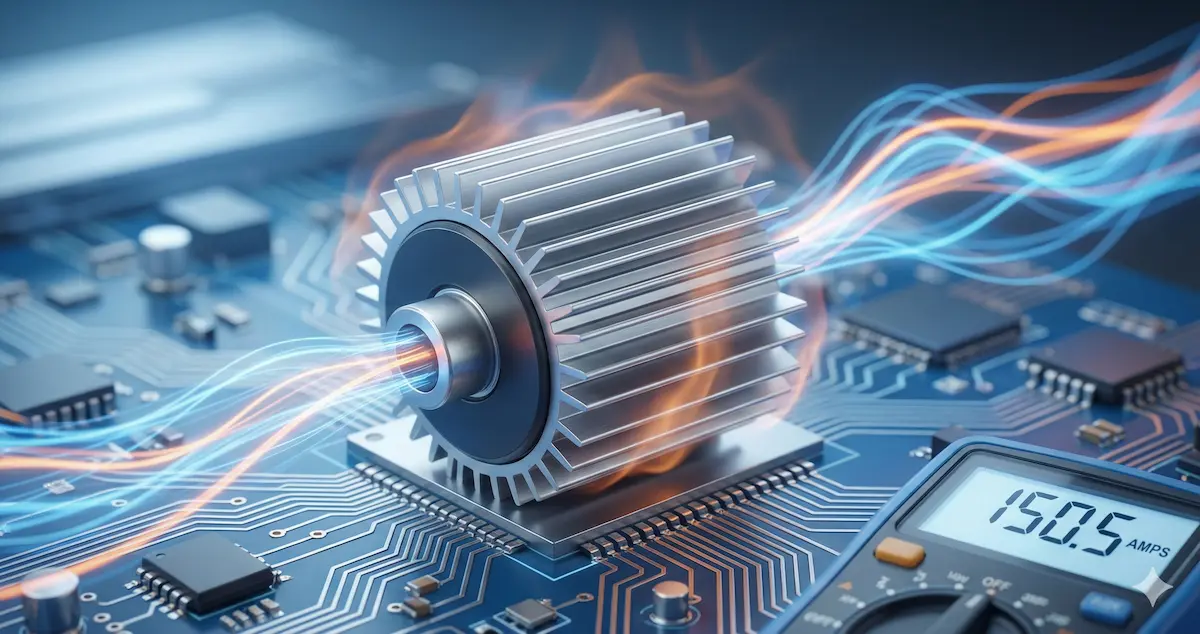
Diodes serve as fundamental building blocks in modern electronic circuits, controlling current flow and protecting sensitive components across countless applications. Yet electronic engineers frequently encounter a significant challenge when selecting high current diodes for demanding projects: choosing the wrong component can lead to catastrophic failures, thermal runaway, or compromised circuit performance. The stakes are particularly high in power electronics, where diodes must handle substantial currents while maintaining efficiency and reliability under harsh operating conditions. This article provides a comprehensive guide to evaluating critical specifications, understanding diverse application requirements, and implementing a systematic selection process that ensures both performance and longevity. Through detailed analysis of key parameters, practical selection strategies, and real-world examples, engineers will gain the knowledge needed to confidently specify high current diodes that meet their project demands while avoiding costly mistakes.
Understanding High Current Diodes and Their Role in Electronics
High current diodes are semiconductor devices specifically engineered to conduct substantial electrical currents, typically ranging from several amperes to hundreds of amperes, while maintaining structural integrity and performance stability. Unlike standard signal diodes designed for low-power applications with milliampere ratings, high current diodes feature larger junction areas, robust packaging with enhanced heat dissipation capabilities, and reinforced internal structures to withstand thermal and electrical stress. These components function by allowing current to flow freely in the forward direction when properly biased while blocking reverse current flow, a principle that becomes increasingly critical as current levels rise. In high-current scenarios, even minor inefficiencies translate to significant power losses and heat generation, making proper component selection essential. The junction temperature, current density, and thermal management directly impact reliability and lifespan. Electronic engineers must understand that inadequate current ratings lead to junction overheating and premature failure, while excessive voltage drops reduce circuit efficiency and waste energy. Terms like continuous forward current, surge current capability, and thermal resistance become vital considerations rather than mere datasheet footnotes. Selecting the appropriate high current diode ensures circuit protection, optimal power conversion efficiency, and long-term operational reliability—factors that distinguish professional designs from those prone to field failures and costly redesigns.
Key Specifications to Consider When Selecting High Current Diodes
Forward Current Rating and Its Significance
The maximum continuous forward current (IF) represents the highest steady-state current a diode can safely conduct without thermal damage or performance degradation. This rating forms the foundation of diode selection for high-current applications. Engineers should calculate the peak and average currents in their circuits, then select diodes with IF ratings that exceed operational requirements by at least 20-30% to provide thermal margin and account for transient conditions. Underestimating this parameter leads to junction overheating, accelerated aging, and premature failure, particularly in continuous-duty applications where heat accumulates over time.
Reverse Voltage and Forward Voltage Drop
Peak reverse voltage (VR) defines the maximum voltage a diode can withstand in the blocking direction without breakdown, making it essential for circuit protection. Forward voltage drop (VF) indicates the voltage consumed across the diode during conduction, directly affecting power dissipation and efficiency. In high-current circuits, even a 0.5V difference in VF translates to substantial power loss and heat generation. Engineers must balance these parameters: selecting diodes with adequate VR margins while minimizing VF to optimize efficiency and reduce thermal management requirements.
Switching Speed and Temperature Ratings
Reverse recovery time determines how quickly a diode transitions from conducting to blocking states, critical in high-frequency switching applications like inverters and converters. Slow recovery creates switching losses and electromagnetic interference. Operating temperature range and thermal resistance (junction-to-case) specify environmental limits and heat dissipation efficiency. High-current diodes generate significant heat, so engineers must evaluate thermal resistance alongside heatsink requirements to ensure junction temperatures remain within safe limits during continuous operation, preventing thermal runaway and maintaining long-term reliability.
Common Applications of High Current Diodes in Electronic Projects
High current diodes find extensive use in power supply rectification circuits, where they convert alternating current to direct current in applications ranging from industrial equipment to renewable energy systems. In these configurations, diodes must handle continuous high currents while maintaining low forward voltage drops to minimize energy waste and heat buildup. Motor drive circuits represent another critical application, where high current diodes provide freewheeling paths for inductive loads, protecting switching transistors from voltage spikes during motor deceleration or direction changes. The surge current capability becomes particularly important here, as motor startups generate substantial transient currents. Surge protection circuits employ high current diodes to clamp voltage transients and redirect potentially damaging energy away from sensitive electronics, requiring components with robust reverse voltage ratings and fast response times. Battery charging systems rely on these diodes to prevent reverse current flow that would drain batteries when external power disconnects. Engineers maintaining or repairing existing equipment frequently need high current diodes as replacement spare parts, making component authenticity and specification matching critical. Understanding these applications helps engineers connect theoretical specifications to practical requirements—a rectifier demands high IF and low VF, while protection circuits prioritize VR and surge ratings, demonstrating how the parameters discussed previously directly influence component selection for specific project contexts.
Step-by-Step Guide to Choosing the Right High Current Diode
Begin by precisely defining your project requirements through comprehensive circuit analysis. Calculate the maximum continuous current your diode must handle, including safety margins of at least 25% above nominal operating levels. Determine the peak reverse voltage by analyzing circuit topology, accounting for voltage spikes and transients that may occur during switching or fault conditions. Identify operating frequency requirements, as high-speed switching demands fast recovery diodes while low-frequency rectification prioritizes low forward voltage drop. Document environmental factors including ambient temperature ranges, cooling provisions, and physical space constraints that influence package selection. With requirements established, systematically compare candidate diodes against your specifications. Cross-reference forward current ratings, ensuring IF exceeds calculated demands with adequate margin. Verify reverse voltage ratings provide sufficient protection under worst-case scenarios. Evaluate forward voltage drop to minimize power dissipation and thermal load. Check reverse recovery time for switching applications, selecting ultra-fast or Schottky variants when necessary. Assess thermal resistance values and confirm compatibility with available cooling solutions. Reliability factors demand equal attention to raw specifications. Scrutinize manufacturer datasheets for complete characterization data, including derating curves and application notes. Prioritize established semiconductor manufacturers with proven track records in high-current devices. Source components exclusively from authorized distributors and reputable suppliers such as Utsource, which specialize in automation accessories and electronic components with verifiable traceability and proper handling throughout the supply chain. Counterfeit or improperly stored diodes pose serious reliability risks in high-current applications. Before finalizing selection, conduct validation testing with representative prototypes. Measure actual forward voltage drop under load conditions, monitor junction temperatures during extended operation, and verify thermal performance matches predictions. Test surge current capability if applicable to your application. This methodical approach transforms component selection from guesswork into engineering discipline, ensuring your chosen high current diode delivers reliable performance throughout its service life.
Case Study: Practical Insights with the 1SS402 Diode
The 1SS402 diode exemplifies practical application of the selection methodology outlined previously. This silicon switching diode features a forward current rating of 200mA and peak reverse voltage of 100V, with fast recovery characteristics making it suitable for high-frequency signal switching rather than primary high-current power applications. When evaluating the 1SS402 for projects, engineers should first confirm current requirements fall well within its 200mA continuous rating—appropriate for signal routing, logic circuits, or low-power rectification but inadequate for multi-ampere power stages. Its low junction capacitance and fast switching speed suit RF applications and high-speed digital circuits where signal integrity matters. Verification involves cross-referencing manufacturer datasheets against circuit calculations, ensuring reverse voltage margins accommodate any transient spikes, and confirming thermal dissipation remains manageable without additional cooling. Sourcing authentic 1SS402 components from established suppliers prevents counterfeit-related failures. This case demonstrates how matching specific diode characteristics to precise application requirements—rather than selecting components arbitrarily—ensures reliable circuit performance and illustrates the practical value of systematic component evaluation in real engineering scenarios.
Making Informed High Current Diode Selection Decisions
Selecting the right high current diodes requires systematic evaluation of critical specifications including forward current ratings, reverse voltage capabilities, switching characteristics, and thermal performance parameters. Engineers who thoroughly analyze these factors against their specific circuit requirements—whether for power rectification, motor protection, surge suppression, or battery management—significantly reduce the risk of component failure and costly redesigns. The structured selection process outlined in this guide transforms component specification from an overwhelming task into a methodical engineering discipline: define precise project requirements with adequate safety margins, compare candidate diodes against documented specifications, prioritize reliability through manufacturer reputation and datasheet validation, and source exclusively from authorized distributors. As electronic systems continue demanding higher power densities and improved efficiency, mastering high current diode selection becomes increasingly essential for professional engineering practice. Apply these principles systematically to your next project, validate choices through prototype testing, and maintain rigorous sourcing standards—your circuits’ reliability and your professional reputation depend on these careful component decisions.