There is a version of every home repair that costs a reasonable amount of money, and a version of the same repair that costs two to three times more. The difference between them is rarely the complexity of the job. It is when the call gets made. Homeowners who schedule service before a system fails pay standard labor rates during business hours, have time to compare quotes, and retain the option to plan the work into their budget. Homeowners who call after a system fails pay emergency surcharges, after-hours premiums, and in many cases, the cost of secondary damage the failure caused while it was waiting to be addressed. Homeowners who follow a preventive maintenance schedule spend roughly $2,000 per year on planned work, while those who skip maintenance spend $6,000 to $10,000 on emergency repairs that could have been prevented. The gap is not a minor inconvenience. It is a structural financial penalty for waiting, and the home services industry prices it explicitly into every after-hours and same-day call.
How Emergency Pricing Works and Why It Adds Up So Fast
Emergency service pricing is not arbitrary. It reflects real costs: technicians on call outside business hours, vehicles and inventory maintained for rapid deployment, and the staffing overhead required to guarantee same-day or overnight response. Plumbing emergencies cost $120 to $300 per hour during nights and weekends, compared to significantly lower rates during scheduled weekday service. Emergency electrician call-outs run $150 to $200 per hour for non-business-hour responses. Across every trade, emergency service carries an automatic premium that is built into the rate structure, not negotiable, and compounding when the job requires additional callouts or follow-up work. Beyond the labor premium, emergency calls also trigger costs that scheduled service avoids entirely: diagnostic fees that would not be charged during a routine inspection, expedited parts orders when standard lead times are not acceptable, and in some cases, the cost of temporary fixes to restore function while permanent repair parts are sourced.
The True Cost Comparison Across Common Home Systems
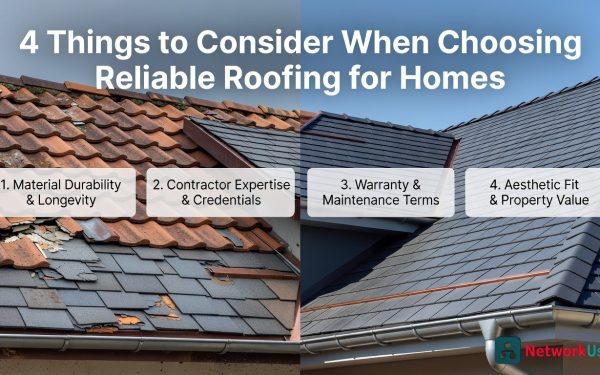
The math on emergency versus scheduled service is most visible when laid out system by system. An HVAC unit that receives two tune-ups per year at a combined cost of roughly $300 annually will typically last 18 to 20 years. One that receives no maintenance often fails at 10 to 12 years, triggering an $8,000 to $15,000 replacement a full decade ahead of schedule. A roof inspection that catches a minor flashing failure costs $100 to $400. The same failure identified after a storm, when water has already penetrated the deck, costs $15,000 to $50,000 when interior damage is included. A routine plumbing inspection costs a few hundred dollars. A leaking pipe left undetected costs an average of $7,000 in water and mold damage by the time visible symptoms appear. Across systems, the total potential emergency cost if five major home systems fail simultaneously has been estimated at $30,000 to $68,000 or more, compared to $870 to $1,650 annually to maintain all five through scheduled service.
Garage Doors: A Clear Example of the Emergency Premium in Practice
Few home systems illustrate the emergency pricing gap as precisely as garage doors, because the cost differential between scheduled and unscheduled service is openly documented in the industry. A routine annual tune-up, which covers lubrication, balance checks, spring tension verification, and a full safety inspection, costs between $100 and $200. Emergency or after-hours garage door service adds 25% to 50% to the cost of the same repair, and weekend or holiday calls carry surcharges on top of elevated labor rates. A broken torsion spring, the most common garage door failure, costs $150 to $350 when replaced during a scheduled visit. The same job on a Sunday evening, when the door is stuck closed with a car trapped inside, costs $450 or more before secondary parts or access fees are considered. Over 30,000 garage door injuries occur annually in the United States, many involving improper handling of high-tension springs and cables, making professional maintenance not only the financially sound choice but the safer one.
What Technicians See When Emergency Calls Arrive
The pattern that emergency service technicians encounter is remarkably consistent across regions and systems. The call arrives at a difficult hour. The failure is complete rather than partial. And somewhere in the service history of the component that failed, there is a maintenance visit that was skipped, a grinding noise that was noted and ignored, or a previous small repair that was performed without the full inspection that would have caught what came next.
“Most of our emergency calls are not really emergencies. They are deferred maintenance problems that finally ran out of runway. The spring that snapped at 10 pm had been losing tension for months. The opener that stopped working in January had been struggling since October,” said Cory Lewis, owner of Central Coast Garage Doors 24/7. “We see the signs every time we go out on a call: worn cables, rollers that have not been lubricated in years, tracks that are slightly out of alignment, and have been grinding away at the hardware. A $150 annual maintenance visit would have caught every one of those things. Instead, the homeowner is paying our after-hours rate, plus parts, plus sometimes a service call fee on top. We are always glad to help, but we would rather catch it before it becomes a midnight call.”
That same observation holds across every home service trade. The emergency call is almost always the last chapter of a longer story that started with a small warning and ended with a much larger bill.
Why Homeowners Keep Choosing the Expensive Option
Understanding that emergency repairs cost more than scheduled service does not automatically produce different behavior. More than 60% of homeowners are actively delaying essential maintenance, and nearly one in three has less than $1,000 saved for home emergencies, meaning the financial penalty of an unplanned repair arrives precisely when a household is least prepared to absorb it. The behavioral pattern is consistent: systems that are out of sight receive less attention than systems that are encountered daily. A furnace that works is invisible. A water heater that has not been flushed is invisible. A garage door spring that is corroding is invisible right up until the moment it snaps. Maintenance spending feels discretionary in a way that emergency repair spending does not, and so it is the first category cut from a household budget under financial pressure, even though it is the category whose absence generates the largest bills.
Insurance Coverage Makes the Gap Wider
The cost differential between scheduled and emergency service is compounded further by insurance coverage rules that favor sudden, accidental damage over gradual deterioration. A pipe that bursts abruptly is more likely to be covered under a standard homeowners policy than one that has been leaking slowly for months. A roof that fails in a storm has a clearer path to a covered claim than one whose condition has been declining for years without documented maintenance. According to a financial study on homeownership costs, homeowners dramatically underestimate their total lifetime maintenance costs, expecting around $70,000 when the realistic figure is closer to $339,000 over several decades of ownership, rising above $400,000 when emergency repair costs are included. The homeowner who maintains their systems and documents that maintenance is not only spending less on average, but also They are building a paper trail that supports insurance claims and protects the value of their property in ways that deferred maintenance never can.
The Simplest Financial Upgrade a Homeowner Can Make
The case for scheduled home maintenance does not require a complicated argument. It requires one comparison: the cost of the annual visit versus the cost of the call that happens when no annual visit is made. For most home systems, that comparison resolves clearly and quickly. Preventive maintenance can reduce overall repair costs by approximately 30%, and homes with documented annual maintenance histories carry measurably higher resale values than those without. The emergency premium is real, consistent, and entirely avoidable for most homeowners. Scheduling service before a system fails is not a complicated financial strategy. It is the most straightforward version of the calculation that homeownership always comes down to: pay a little now, or pay much more later.