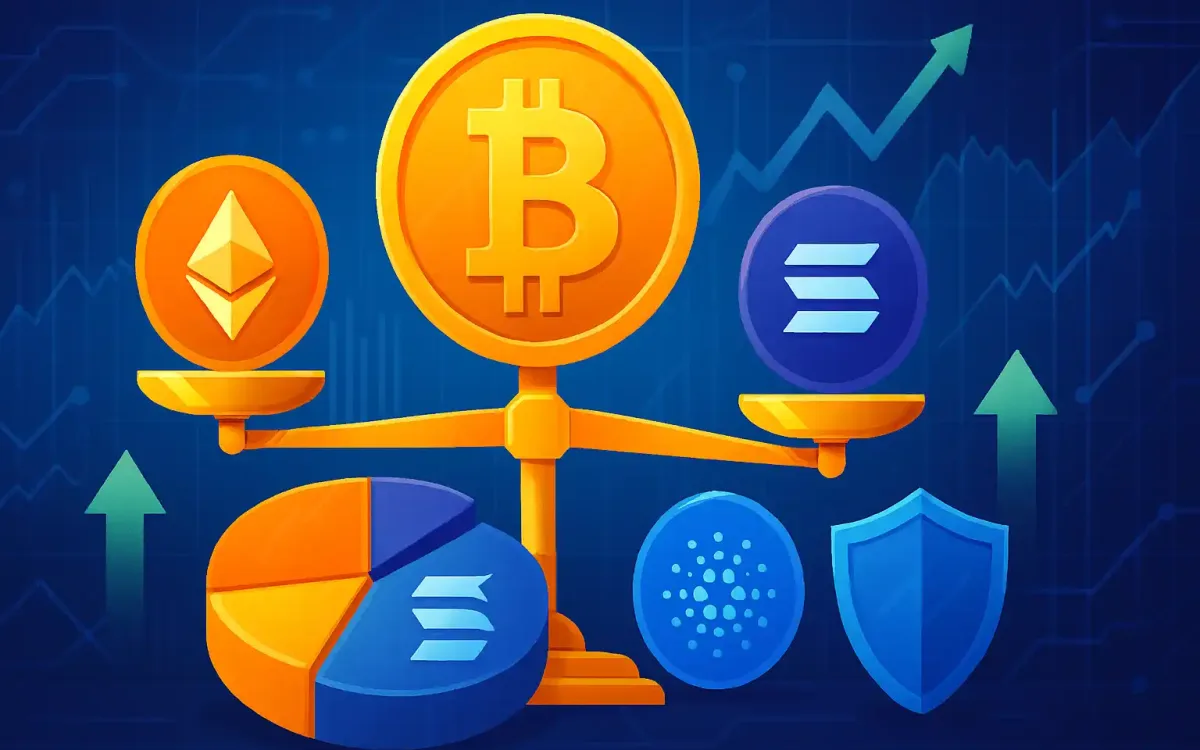
Bitcoin (BTC) often acts as a crypto portfolio anchor because of its fixed 21 million supply, deep liquidity, and long-running network. When building that core position, the way you get started matters. Many people accumulate gradually rather than all at once, using simple on-ramps that don’t require heavy setup. In that context, the option to buy btc via credit card can make sense—it allows small, flexible purchases without committing to a single exchange, which is helpful for steady, long-term accumulation instead of trying to time the market.
Despite volatility, BTC’s predictable scarcity, strong security (record hashrate), and Lindy effect make recoveries historically powerful. It still holds about 50%+ market dominance, and spot Bitcoin ETFs have attracted tens of billions in AUM since 2024, signaling sustained institutional demand.
Risk is real—80% drawdowns happen—so multi-year horizons, self-custody, and modest allocations matter. Historically, even a 5–10% BTC allocation improved portfolio risk-adjusted returns, reinforcing its role as the foundation rather than a speculative add-on.
How do Ethereum (ETH), Solana (SOL), and stablecoins complement Bitcoin?
Bitcoin is your resilient store of value; Ethereum, Solana, and stablecoins add utility, yield, and day‑to‑day liquidity around it.
Want programmable cash flows and on-chain investing? Ethereum’s smart contracts power DeFi, NFTs, and tokenized assets, with ETH staking yields typically ~3–5% APY. It’s proof‑of‑stake, so far lower energy use than Bitcoin. Downsides: gas fees can spike, MEV exists, and smart‑contract risk is real.
Need speed for consumer apps and trading? Solana delivers sub‑second finality and fees under a cent—good for DEXs, payments, and mobile-first use. It’s also PoS and energy‑light. Caveat: past outages, validator concentration, and rapid-cycle risk.
Hate waiting days for wires? Stablecoins (USDC, USDT) act as on-chain cash: instant settlement, global access, and a >$150B market. They’re your dry powder and remittance rail. Risks: depeg/regulatory shifts and issuer reserve transparency.
Freedom is optionality. These fill Bitcoin’s gaps.
What allocation and risk-budgeting frameworks fit BTC vs. altcoins?
Make BTC your core, alts your satellites. Most investors should risk-budget, not dollar-budget.
- Core-satellite: 60–80% BTC, 10–30% ETH/large-caps, 0–10% high-beta alts. Why? BTC dominance ~50% and deeper liquidity.
- Volatility targeting: size positions by 1/vol. If BTC vol ~70% and an alt is 2–3x higher, the alt gets 1/2–1/3 the weight. Simple. Defensible.
- Fractional Kelly: use 0.25–0.5 Kelly on your crypto sleeve to cap ruin risk; within that sleeve, allocate most Kelly to BTC’s higher Sharpe.
- Risk-parity bands: assign 70–90% of risk to BTC, 10–30% to alts; rebalance when weights drift 5–10%. Hate forced sells? Use quarterly check-ins.
- Drawdown guardrails: predefine max pain (e.g., 25–35% portfolio drawdown), shift to stablecoins if breached. Freedom to re-enter beats panic.
- ESG skeptics? Note Bitcoin’s rising sustainable energy mix and improving grid-balancing—still imperfect, but trending better.
- Want upside without wrecking nights? Keep dry powder, avoid illiquid microcaps, and demand on-chain revenue or real users.
Which data and metrics should guide Bitcoin sizing and timing?
Size by risk, time by signals: allocate based on volatility and drawdown tolerance, not headlines.
- Position sizing: start 1–5% of liquid net worth; scale via volatility targeting. Example: if BTC’s 90‑day vol is 60% and you want a 1.5% portfolio vol contribution, size ≈ 1.5/60 ≈ 2.5%. Fractional Kelly only if you truly know your edge—BTC’s long-run Sharpe ~0.7–1.0 argues for caution.
- Baseline timing: dollar‑cost average. Then layer tactically.
- Accumulate when on‑chain/derivatives show value: MVRV ~1–1.5; Puell Multiple <0.6; negative funding; flat/low futures basis; put‑skewed options; rising hash rate; exchange balances falling.
- Trim into euphoria: MVRV >3; SOPR persistently >1; positive, spiking funding; >15% annualized basis; call‑skew; Google Trends surging.
- Macro filter: rising real yields and a strong DXY are headwinds; global liquidity uptrends help.
- Reality check: 50% drawdowns happen; peak‑to‑trough 70–85% is possible. Correlation with tech is non‑trivial. No leverage if your goal is freedom, not fragility.
How do you build a core–satellite strategy with Bitcoin at the core?
Make Bitcoin your disciplined core (5–15% of net worth), then add small, higher-beta satellites you can prune without emotion.
- Build the core: Dollar-cost average weekly into spot BTC (or a low-fee spot Bitcoin ETF if you won’t self-custody). Store long-term funds in cold storage; keep a small hot wallet for flexibility. Expect 60–80% drawdowns. Still want the upside? This is the trade.
- Size satellites (1–5% each): Ethereum for smart-contract beta, Bitcoin miners for leveraged cycles, Layer-2s, selective DeFi, or AI/crypto infra. Curious about yield? Use on-chain stablecoin strategies conservatively; smart-contract risk is real.
- Rebalance rules: Quarterly or when BTC drifts ±25% from target. Sell winners, top up laggards. Why? It harvests volatility instead of being ruled by it.
- Risk guardrails: No single satellite > half your BTC core. Keep 6–12 months of expenses in cash/T‑Bills. Use tax‑loss harvesting in taxable accounts.
- Values check: Prefer miners with renewable mix and grid-balancing disclosures. Autonomy and impact can go together.
What buying, custody, and execution choices matter for BTC?
Your buy, custody, and execution choices determine your costs, control, and sleep-at-night factor.
Spot bitcoin ETFs (e.g., iShares IBIT, Fidelity FBTC) offer brokerage convenience and 0.19–0.25% fees, but no self-custody or Lightning use. Want true independence? Self-custody with hardware wallets (Ledger, Trezor) or multisig (Casa, Unchained) puts keys—and responsibility—on you. Lose the seed, lose the coins. Harsh but honest.
Where to buy? Regulated exchanges like Coinbase or Kraken with proof-of-reserves and clear KYC/AML. Large order? Consider OTC desks to avoid slippage. Small recurring buys? Automate DCA; it cuts timing risk and anxiety. Use limit orders; watch spreads and network fees (SegWit/Taproot addresses lower costs during mempool spikes).
Security first: hardware + metal backup, phishing hygiene. Track cost basis for taxes (short vs long-term gains). Ask yourself: do you want convenience, or censorship-resistant ownership?
When and how should you rebalance and optimize taxes with Bitcoin?
Rebalance on rules, not vibes: set a target Bitcoin allocation (e.g., 5%) and rebalance only when it drifts outside a band (±20% of target, so 4–6%), or on a fixed cadence (quarterly) if that’s simpler.
How often is “right”? When trading costs, taxes, and time all stay low. Big drift? Act. Small wiggles? Ignore.
Prefer cash-flow rebalancing: direct new DCA contributions or bonuses to the underweight asset to avoid taxable sales.
Tax playbook (jurisdiction-specific):
- Hold >12 months for long-term capital gains when possible.
- Harvest losses in taxable accounts; crypto wash-sale rules currently don’t apply in the U.S., but that could change.
- Use specific identification/HIFO to raise cost basis.
- Place BTC ETFs in Roth/Traditional IRAs to defer or eliminate taxes.
- Donate appreciated BTC/ETF shares to a donor-advised fund for a deduction and zero capital gains.
Use limit orders, keep records (cost basis, Form 8949), and automate where you can. Freedom is a system.
Which macro and regulatory catalysts can reshape Bitcoin’s portfolio role?
Bottom line: falling rates, clearer rules, and bigger pipes for capital can upgrade Bitcoin from “speculation” to a core, convex hedge.
What flips the switch? Spot Bitcoin ETF approvals and sustained inflows—do you want exposure without custody headaches? Rate cuts or a recessionary pivot revive liquidity; Bitcoin’s correlation to risk assets can drop during late-cycle stress, offering asymmetric upside. Inflation stickiness or renewed QE? Hard-cap narratives resonate when cash erodes.
Regulatory clarity matters. SEC greenlights, or MiCA-style frameworks in the EU, reduce career risk for institutions. Basel III treatment of crypto, stablecoin regulation, and custody rules unlock balance sheets—or shut them.
Global catalysts? Capital controls, sanctions, and de-dollarization push emerging-market demand. Energy scrutiny persists, but mining’s shift to renewables and grid-balancing services improves the social license. Risks remain: harsher crackdowns, ETF outflows, or liquidity shocks.
What real-world scenarios illustrate BTC ROI and downside management?
Small, rules-based BTC allocations can lift ROI while capping pain.
- 3–5% BTC in a 60/40, rebalanced quarterly (2017–2024): historically +1–2% CAGR uplift, with max drawdown far below 100% BTC. Freedom without wrecking risk.
- DCA $100/week since Jan 2018 beats buying the 2017 top by multiples. Missed the bottom? Still works.
- 25% drawdown guardrail: trim BTC back to target; redeploy on 20% recoveries. Simple. Disciplined.
- Cash-secured puts for entry; covered calls on spot ETFs for yield. Want control? Earn it.
- Bear market 2022: kept income flowing via DCA; avoided panic by cold storage and no leverage.
- Energy worry? Mining’s >50% sustainable mix (industry estimates) is trending greener—progress, not perfection.