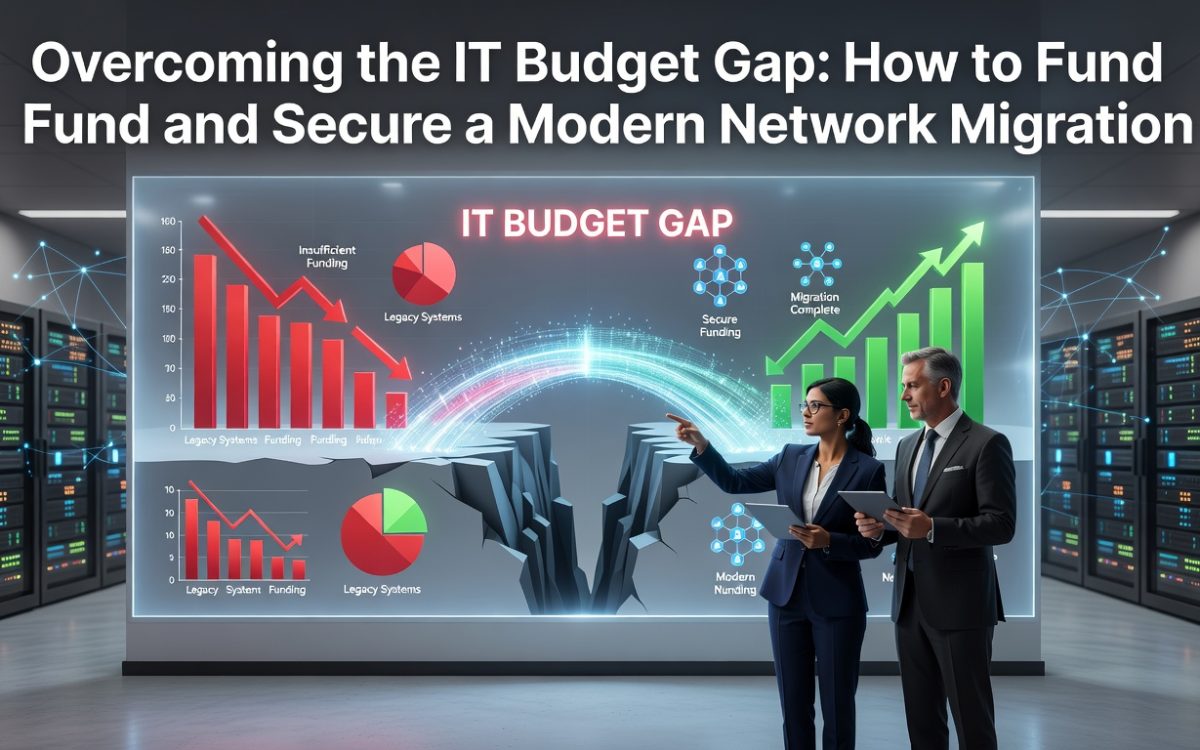
In today’s rapidly evolving digital landscape, businesses face increasing pressure to modernize their network infrastructure. A modern network migration is vital not only for improving operational efficiency but also for enhancing security, scalability, and overall agility. Yet, one of the biggest challenges organizations face during this transformation is the IT budget gap-the difference between the funds required and the budget allocated for technology upgrades.
Recent reports show that over 45% of enterprises struggle to secure adequate funding for IT projects, often leading to delayed or compromised migrations. This funding shortfall can derail digital transformation efforts and expose companies to increased risks, including cybersecurity threats, operational inefficiencies, and lost business opportunities. Many organizations find themselves caught between the urgent need to upgrade and financial constraints limiting their ability to do so effectively.
The IT budget gap stems from a complex mix of organizational priorities, rapidly changing technologies, and evolving security challenges. Understanding these dynamics is essential for CIOs, IT managers, and business leaders aiming to secure necessary resources and successfully execute a modern network migration.
Identifying the Root Causes of the Budget Gap
The IT budget gap arises from multiple factors beyond mere cost estimates. A primary cause is the misalignment between IT needs and business priorities. Often, executives outside IT underestimate the complexity and total cost of a network migration, resulting in insufficient budget allocations. This disconnect can result from limited communication, poor visibility into technical requirements, or competing departmental priorities.
Another contributor is the unpredictability of expenses during migration. Unforeseen costs such as hardware upgrades, software licensing fees, enhanced cybersecurity measures, and legacy system integrations can quickly inflate budgets beyond initial projections. Many organizations also overlook indirect costs like staff training, potential downtime, and post-migration support—all crucial for a successful transition.
The rapid pace of technological change compounds these challenges. Emerging technologies such as cloud computing, software-defined networking (SDN), and zero-trust security models are essential for maintaining competitiveness but often come with steep implementation costs. As technology evolves, organizations struggle to plan and budget effectively, leading to gaps between expected and actual expenditures.
Economic factors like inflation, supply chain disruptions, and market volatility further increase hardware and software costs unexpectedly. The global semiconductor shortage in recent years exemplifies how external factors impact IT budgets and timelines.
Understanding these root causes is the first step to bridging the IT budget gap and ensuring network migration projects receive the funding and strategic support they require.
Strategies to Secure Funding for Network Migration
Addressing the IT budget gap requires a multifaceted, strategic approach to funding and resource allocation. One effective method is to build a strong, data-driven business case that clearly articulates the return on investment (ROI) and the risks of not migrating. This includes quantifying potential cost savings, such as reduced downtime, improved productivity, enhanced customer experience, and avoidance of security breaches, to persuade stakeholders to increase budget commitments.
For instance, demonstrating that modernizing network infrastructure can reduce system outages by up to 50% or significantly improve application performance resonates with business leaders focused on operational efficiency. Additionally, highlighting the costs associated with legacy systems-such as maintenance, security vulnerabilities, and missed business opportunities-can further justify investment.
Another approach involves exploring alternative financing options tailored to technology projects. For example, partnering with a company according to Credibly’s CEO can provide access to flexible funding solutions specific to the technology sector. These financial arrangements may include leasing hardware, subscription-based models, or phased payment plans that bridge the gap between available capital and project requirements. Leveraging such options allows organizations to initiate timely migrations without compromising quality or security.
Moreover, internal budget reallocation strategies can help. This might involve prioritizing high-impact projects, reducing spending on less critical initiatives, or shifting operational expenses toward capital investments in IT infrastructure. Engaging cross-functional teams to align IT projects with broader business objectives can unlock additional funding sources.
Partnering with Experts to Optimize Costs and Security
Engaging a reliable IT company in Lexington during the migration process is crucial to maximizing investment value. Experienced IT companies bring deep technical expertise and help design a migration plan balancing performance, security, and cost-effectiveness. Their insights prevent costly mistakes, streamline implementation, and ensure alignment with industry best practices.
A reliable IT partner can identify hidden costs, such as integration complexities or compliance requirements, that might otherwise be overlooked. They also recommend phased migration strategies, spreading expenses over time and minimizing disruptions to business operations. Phased approaches allow organizations to test and validate each stage, reducing risks of costly rollbacks or downtime.
Additionally, these experts implement advanced cybersecurity measures to safeguard sensitive data throughout the transition. Given the increasing frequency and sophistication of cyberattacks, cutting corners in security can have severe consequences. In fact, cybercrime damages are projected to reach $10.5 trillion annually by 2025, underscoring the importance of robust security during network upgrades.
Furthermore, IT partners provide ongoing support and training to ensure internal teams are prepared to manage and secure the new network environment. This holistic approach helps organizations realize the full benefits of their migration while mitigating long-term risks.
Leveraging Cloud and Hybrid Solutions to Reduce Capital Expenditure
Modern network migrations increasingly involve integrating cloud or hybrid environments, which can significantly reduce upfront capital expenditure. Instead of investing heavily in physical infrastructure, companies leverage cloud service subscriptions and pay-as-you-go models. This shift transforms capital expenses (CapEx) into operational expenses (OpEx), providing greater budget flexibility.
Cloud adoption is accelerating rapidly, with 92% of enterprises already using cloud services in some capacity. This widespread adoption demonstrates that cloud-based solutions are a viable way to manage costs while enhancing scalability, resilience, and agility.
Hybrid models offer additional benefits by allowing organizations to maintain critical workloads on-premises while benefiting from the cloud’s flexibility and innovation. This approach optimizes performance, complies with regulatory requirements, and supports gradual migration strategies that reduce risk.
By carefully evaluating cloud providers and service models, organizations can identify cost-effective options matching their technical and business needs. Additionally, cloud services often include built-in security features and compliance certifications, reducing the need for separate security investments.
Prioritizing Security in Your Network Migration Budget
While cost management is vital, it should never come at the expense of security. Modern network migrations introduce new vulnerabilities if not carefully managed, making security a critical budget component.
Allocating sufficient funds for security tools such as firewalls, intrusion detection and prevention systems, endpoint protection, and encryption technologies is essential. These tools help protect data integrity and confidentiality during and after migration.
Moreover, investing in staff training and awareness programs reduces human error-related breaches, which account for over 90% of cybersecurity incidents. Ensuring teams understand new network architectures and security protocols pays dividends in long-term risk mitigation.
Organizations should also incorporate security assessments and penetration testing as part of their migration plan. These proactive measures identify vulnerabilities before exploitation, allowing timely remediation.
Finally, compliance with industry regulations and standards-such as GDPR, HIPAA, or PCI DSS-must be factored into the budget. Non-compliance can result in hefty fines and reputational damage, making regulatory adherence a financial imperative.
Measuring Success and Optimizing Post-Migration
Once a network migration is complete, continuous monitoring and optimization are critical to realizing full benefits and ensuring a solid return on investment.
Establishing clear metrics related to network performance, security posture, and cost savings helps justify the investment and inform future budgeting decisions. Key performance indicators (KPIs) might include uptime percentages, incident response times, user satisfaction scores, and total cost of ownership.
Regular audits and assessments uncover inefficiencies or emerging threats, guiding timely adjustments. This proactive approach ensures your modern network remains agile, secure, and aligned with evolving business objectives.
Furthermore, organizations should leverage automation and artificial intelligence tools to enhance network management and threat detection. These technologies reduce operational costs and improve responsiveness, contributing to long-term savings.
Engaging stakeholders across IT and business units in post-migration reviews fosters continuous improvement and strengthens alignment between technology initiatives and organizational goals.
Conclusion
Bridging the IT budget gap for a modern network migration is complex but achievable. By understanding underlying causes-such as misaligned priorities, unforeseen costs, and technological shifts-and crafting compelling, data-driven business cases, organizations can secure necessary funding.
Leveraging flexible financing options, partnering with trusted IT experts, and embracing cloud or hybrid solutions optimizes costs and enhances security. Prioritizing cybersecurity investments and staff training protects against evolving threats, while continuous measurement and optimization ensure lasting value.
Without a modern, secure network, businesses risk falling behind competitors, facing costly security breaches, and missing out on digital transformation benefits. Taking a strategic, informed, and holistic approach to budgeting and execution empowers companies to overcome financial barriers and unlock the full potential of their network migration projects.
By following these best practices, organizations can confidently navigate the challenges of funding and securing a modern network migration, positioning themselves for success in an increasingly digital future.