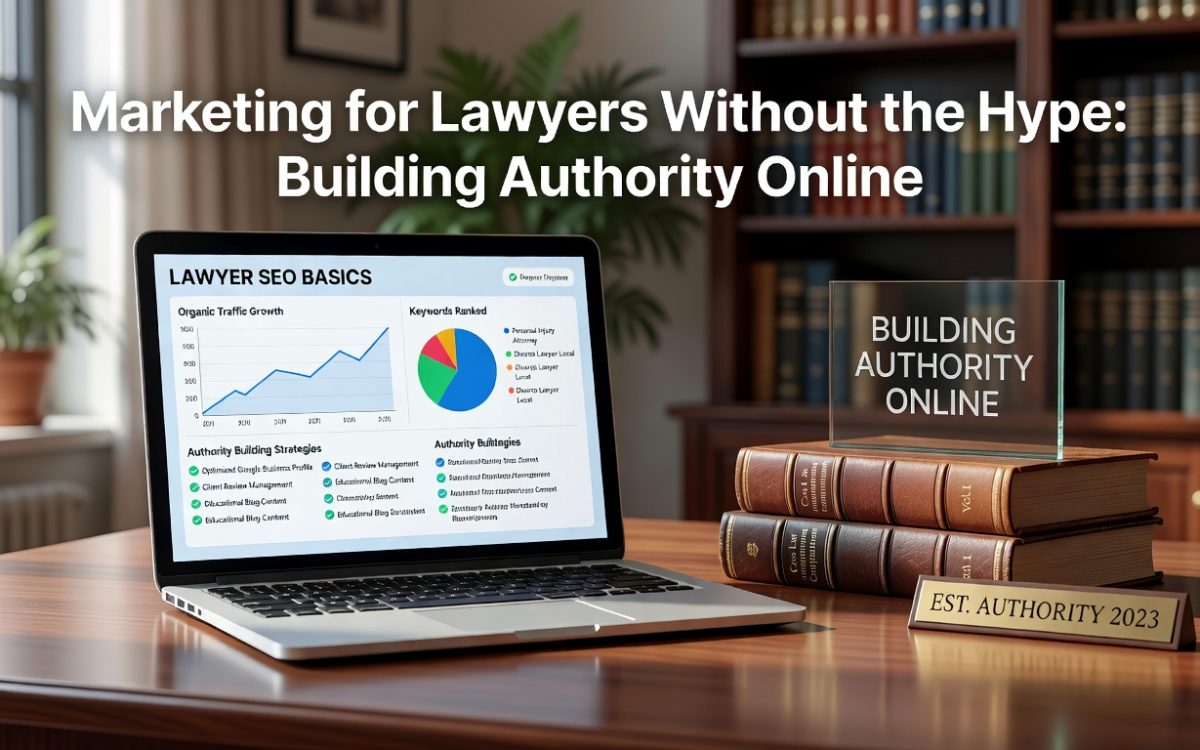
Most lawyers know they need a website. Fewer know what to do with it once it exists. The legal industry is full of marketing pitches that promise instant results and first-page rankings. Most fall apart under scrutiny. Lawyer SEO basics are not complicated. They require patience, consistency, and a focus on real authority instead of shortcuts. The firms that rank well are the ones that earned it over time.
Google evaluates websites based on experience, expertise, authority, and trust. That framework is called E-E-A-T, and it carries extra weight in industries where content can directly affect someone’s health, finances, or legal standing.
A law firm website falls squarely into that category. Google wants to see that the people behind the content have real credentials. Attorney bios should include bar admissions, years of practice, and areas of focus. Blog posts should be attributed to a licensed attorney, not a faceless content team. Pages that give legal information should be accurate, current, and tied to someone qualified to provide it. A site that checks these boxes sends strong signals to Google. A site that skips them looks no different from a template filled with generic advice.
Legal Content Marketing That Actually Builds Trust
Writing content for a law firm is not about churning out blog posts to fill a calendar. It is about answering the questions real people ask when they are dealing with a legal problem.
A person searching for what to do after a car accident is not looking for a sales pitch. They want clear steps and plain language. That is where legal content marketing earns its value. Each piece should target a specific question tied to a practice area your firm handles. Write in words a normal person would use. Skip legal jargon unless you explain it in the same sentence. Content that educates without selling builds trust that turns a reader into a client.
Over time, a library of focused, well-written pages creates a web of authority that Google rewards with better rankings. One strong article will not move the needle on its own. Fifty of them covering the full range of questions in your practice areas will.
Google Business Profile for Lawyers Drives Local Visibility
Your Google Business Profile is the listing that appears on the right side of the screen when someone searches your firm by name. It also determines whether you show up in the local pack, the map section near the top of results for searches like personal injury lawyer near me.
Fill out every field. Add your practice areas as categories. Upload real photos of your office and your team. Post updates regularly. Respond to every review. A profile that stays active ranks better than one that was set up once and never touched again. Many firms overlook the Q and A section on their profile, which lets you post and answer common questions directly on the listing. Use it. It adds useful content to your listing and gives you more control over the information potential clients see before they even visit your website.
Practice Area SEO and Reviews for Attorneys Work Together
Each practice area your firm handles should have its own dedicated page. A page about family law should not share space with criminal defense or estate planning. Separate pages let you target specific search terms and speak directly to the person dealing with that type of case.
Practice area SEO is about matching your content to the way real people search. Someone looking for a DUI lawyer in your city should land on a page that talks about DUI cases in that city, not a general overview page that mentions it in passing. Pair that strong page structure with a steady flow of reviews for attorneys and the effect multiplies. Reviews build social proof. They also feed into local ranking factors. Ask satisfied clients for a Google review after their case wraps up. A firm with recent, specific reviews tied to real outcomes builds trust much faster than one relying on a handful of old ratings. Firms that coordinate their content and review efforts with a provider like an attorney seo service waco team tend to see both channels reinforce each other over time.
Schema Basics Help Search Engines Read Your Site
Schema markup is a small block of code added to your website that tells search engines exactly what type of content each page contains. For law firms, the most useful types include local business schema, attorney schema, and FAQ schema.
Local business schema confirms your name, address, phone number, hours, and service area in a format Google can read without guessing. Attorney schema ties individual lawyers to the firm and highlights credentials. FAQ schema can turn common questions into rich results that appear directly in search listings. None of this is visible to visitors. It runs in the background. But it helps Google understand your site faster and display your information more clearly. Adding schema is not difficult for a developer, and the payoff in visibility is worth the effort. It is one of those quiet details that separates a firm that shows up well from one that blends in.