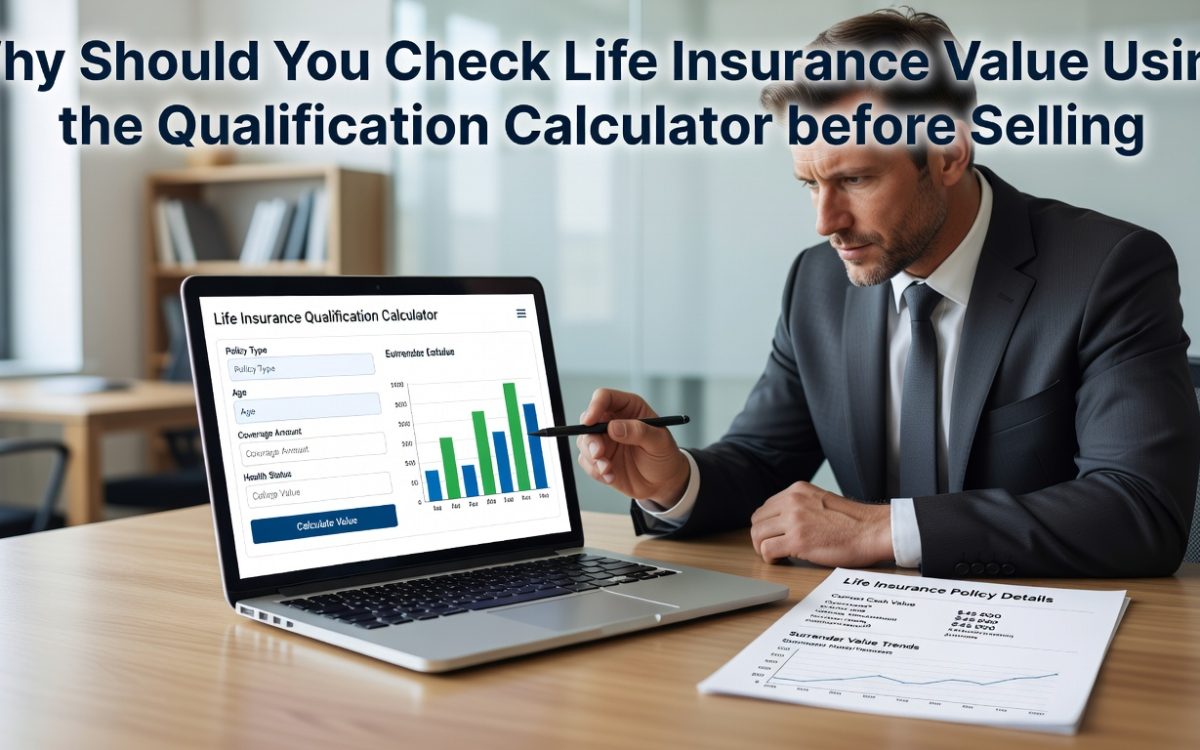
Life insurance policies hold financial value that extends beyond their primary purpose of protection. Many policyholders remain unaware that these policies can be evaluated and even sold under the right circumstances. So, a clear understanding of value helps avoid rushed decisions and ensures better financial outcomes.
A common question arises during this process, which is “What is my policy worth?” and how can that value be determined accurately? A qualification calculator offers a structured way to estimate this worth with clarity and confidence. Such tools provide insights that support smarter decisions before entering a sales agreement.
Accurate Value Assessment Before Selling
A qualification calculator provides a realistic estimate of a life insurance policy’s market value. This prevents reliance on guesswork or incomplete information that may lead to undervaluation. Clear figures allow policyholders to understand what buyers might reasonably offer. Reliable assessment also builds confidence during negotiations.
Sellers thus gain clarity on the minimum acceptable value and avoid accepting lower-than-deserved offers. This step sets a strong foundation for the entire selling process. It also highlights how different variables influence pricing, which helps sellers interpret offers more effectively. A well-defined estimate ensures that every decision aligns with financial expectations and long-term goals.
Financial Clarity Through Data Insights
Understanding policy value requires more than a surface-level review of premiums and coverage. A qualification calculator analyzes multiple factors such as age, policy type, and health status. These data points create a more precise estimate that reflects real market conditions.
Clarity from these insights helps align expectations with reality. In this way, policyholders can make decisions based on facts rather than assumptions. This approach reduces uncertainty and strengthens financial planning.
Key Factors That Influence Policy Value
A qualification calculator evaluates several important elements that determine the worth of a life insurance policy:
● Policy Type and Structure
Term policies and permanent policies carry different values. Permanent policies with cash components generally attract higher offers.
● Age and Health Status
Older individuals or those with health concerns may see increased policy value due to higher risk factors.
● Premium Costs and Payment History
Lower premium obligations make policies more attractive to buyers. Consistent payment history adds credibility.
● Death Benefit Amount
Higher coverage amounts tend to increase market value. Buyers consider potential returns from the policy payout.
These factors combine to provide a detailed and balanced valuation. Each element plays a role in shaping the final estimate.
Avoid Undervaluation Risks
Selling a life insurance policy without proper evaluation can lead to significant financial loss. Many sellers accept early offers without realizing the true worth of their policy. A qualification calculator helps eliminate this risk by offering a data-backed estimate.
Accurate valuation ensures that sellers do not settle for less than they deserve. It also creates a benchmark for comparing multiple offers. This protection becomes essential in transactions where long-term value is involved.
Benefits of Using a Qualification Calculator
A qualification calculator offers several advantages that simplify the decision-making process:
● Quick and Accessible Estimates
Users can obtain a valuation within minutes without complex procedures. This convenience saves time and effort.
● Improved Negotiation Power
Clear knowledge of policy value strengthens bargaining positions. Sellers can confidently reject low offers.
● Better Financial Planning
Understanding value helps align the sale with broader financial goals. This ensures that the decision supports long-term needs.
● Transparency in the Process
Calculators provide structured insights, reducing confusion and uncertainty. This clarity builds trust in the valuation process.
These benefits highlight why such tools have become essential for policyholders considering a sale.
Confidence in Market Decisions
Selling a life insurance policy involves interacting with buyers who understand the market well. A qualification calculator helps balance this dynamic by equipping sellers with accurate information. Knowledge of value creates a sense of control throughout the transaction.
Confidence also reduces emotional pressure during negotiations. So, sellers can focus on achieving fair value rather than reacting to offers. This leads to more thoughtful and beneficial decisions.
Strategic Timing for Selling
Timing plays a crucial role in determining the outcome of a policy sale. A qualification calculator helps identify when a policy holds optimal value. Factors such as age and health changes can influence this timing significantly.
Strategic timing ensures that the policy is sold when it yields the best possible return. This approach avoids rushed decisions driven by urgency. Careful evaluation leads to stronger financial outcomes.
Know Your Policy Worth Clearly
A clear answer to questions like “What is my policy worth?” allows policyholders to approach the selling process with certainty. This understanding eliminates confusion and supports informed decision-making. A qualification calculator acts as a reliable guide in this journey. Awareness of value also encourages better financial discipline.
Thus, sellers can weigh options carefully and choose the most beneficial path. This clarity transforms a complex process into a manageable one. It also helps identify opportunities that may have been overlooked during initial evaluation. Strong awareness of value supports better communication with buyers and advisors throughout the process.
So, when you have questions like ”What is my policy worth?” in your mind, know that checking life insurance value through a qualification calculator brings clarity and confidence. Accurate insights help secure fair returns and support smarter financial choices. A well-informed approach always turns a policy sale into a meaningful financial opportunity.