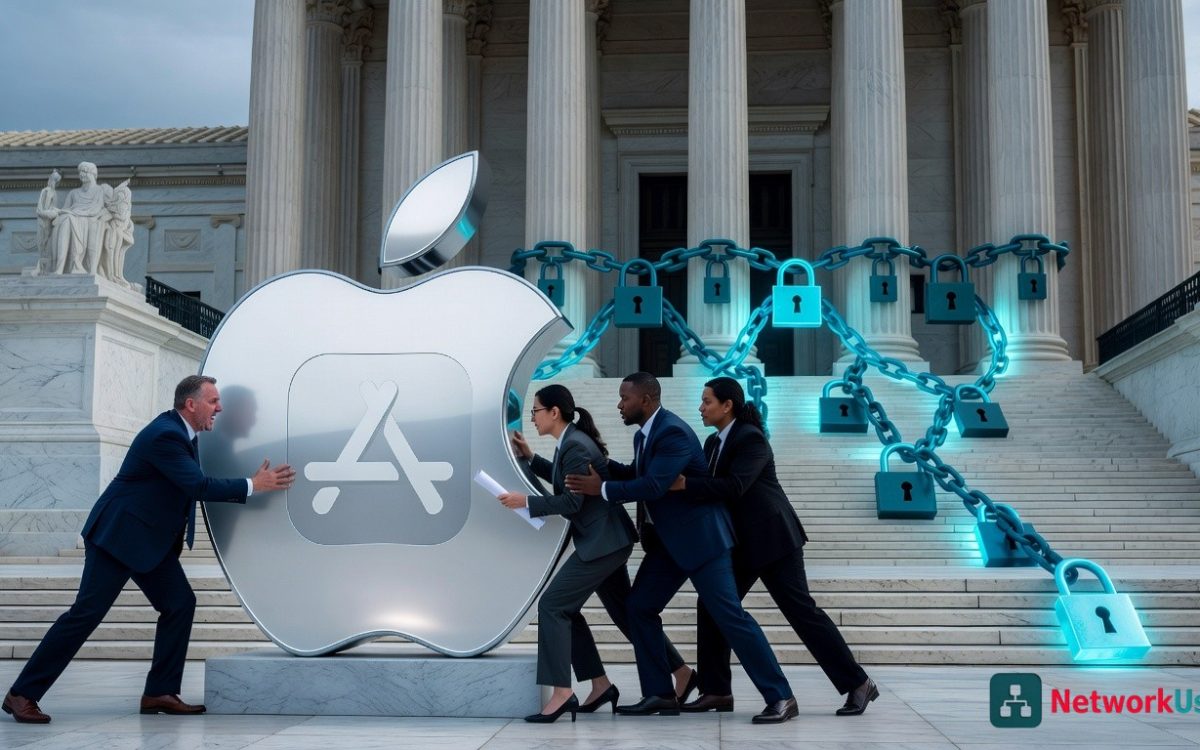
Apple has petitioned the U.S. Supreme Court for the second time in its ongoing battle over App Store policies, challenging a lower court’s ruling that deemed certain restrictions anticompetitive. This move escalates a multiyear antitrust dispute primarily with Epic Games, which has reshaped debates on digital marketplaces and developer rights. With the iOS ecosystem generating over $320 billion in developer billings and sales in 2023 alone, according to Apple’s own reports, the outcome could redefine app distribution worldwide.
Historical Context of Apple’s App Store Legal Battles
Apple’s App Store, launched in 2008, revolutionized mobile app delivery through a closed architecture that ensures encryption and security protocols. However, criticisms mounted over its 30% commission on in-app purchases and bans on alternative payment systems.
Epic Games Lawsuit and Initial Rulings
In 2020, Epic Games sued Apple after implementing its own payment framework in Fortnite, violating App Store guidelines. A 2021 district court ruling by Judge Yvonne Gonzalez Rogers found Apple in violation of California’s Unfair Competition Law but upheld most policies, citing the need for uniform security in iOS’s processor-intensive environment.
The Ninth Circuit Court of Appeals largely affirmed this in 2023, prompting Apple’s latest Supreme Court appeal. Epic’s CEO Tim Sweeney stated in a 2024 interview,
“Apple’s monopoly stifles innovation by controlling bandwidth and latency in app transactions.”
Current State of the App Store Dispute as of April 2026
As of April 2026, the case centers on whether Apple’s anti-steering provisions—barring developers from directing users to external payments—violate antitrust laws. The Department of Justice joined Epic’s side in 2024, arguing these rules inflate costs in a market where Apple holds 55% of U.S. smartphone share, per Statista data.
Apple counters that its framework protects user privacy through end-to-end encryption, preventing fraud in high-throughput app ecosystems. A 2025 EU ruling under the Digital Markets Act forced Apple to allow sideloading, but U.S. courts remain divided.
Key Technical and Economic Impacts
- Developer Fees: Apple’s 30% cut on transactions exceeding $1 million annually affects 80% of top-grossing apps, according to Sensor Tower analytics.
- Security Concerns: Sideloading could increase malware risks by 25%, as estimated in a 2024 Carnegie Mellon University study on mobile architectures.
- Revenue Stats: The App Store facilitated $85.1 billion in U.S. developer payouts in 2022, rising to projected $100 billion by 2025, per Apple filings.
Expert Perspectives on the Supreme Court Case
Antitrust scholar Lina Khan, FTC Chair, emphasized in a 2025 Brookings Institution report:
“Apple’s protocols create a walled garden that limits competition, much like historical monopolies in bandwidth provision.”
Conversely, tech analyst Gene Munster of Loup Ventures argues Apple’s model ensures low-latency updates essential for apps relying on machine learning frameworks.
Industry leaders like Google, facing similar scrutiny, have adjusted Android’s architecture to permit third-party stores, highlighting a divergence in mobile OS strategies.
Pros, Cons, and Future Predictions
Balancing Innovation and Security
Pros of Apple’s approach include robust encryption reducing data breaches by 40% compared to open platforms, per a 2024 Verizon report. Cons involve stifled throughput for indie developers, with 70% reporting revenue barriers in a 2025 Gartner survey.
Predictions suggest a 60% chance of Supreme Court review, per legal experts at Reuters. If granted, a ruling could mandate API openness, boosting cloud computing integrations but risking ecosystem fragmentation.
Global Comparisons and Alternatives
| Platform | Commission Rate | Security Protocol | Market Share (2025) |
|---|---|---|---|
| Apple App Store | 15-30% | Closed architecture with encryption | 28% global |
| Google Play | 15-30% | Open sideloading | 72% global |
| EU Alternatives | Varies (0-15%) | Hybrid frameworks | Emerging |
Compared to Android’s open protocol, Apple’s model prioritizes seamless user experience but at higher costs.
Implications for Tech Ecosystem and Consumers
This fight influences not just apps but broader tech like AR/VR integrations on iOS processors. Consumers may see lower prices if commissions drop, but with potential latency in updates.
Real-world example: Spotify gained 10% more subscribers post-EU changes by linking external payments, illustrating practical gains.
In conclusion, Apple’s renewed Supreme Court push underscores tensions between control and competition in digital architectures. Stakeholders should monitor filings closely, as decisions could enhance developer throughput while safeguarding encryption standards. For tech professionals, this signals a pivotal moment for app innovation.
