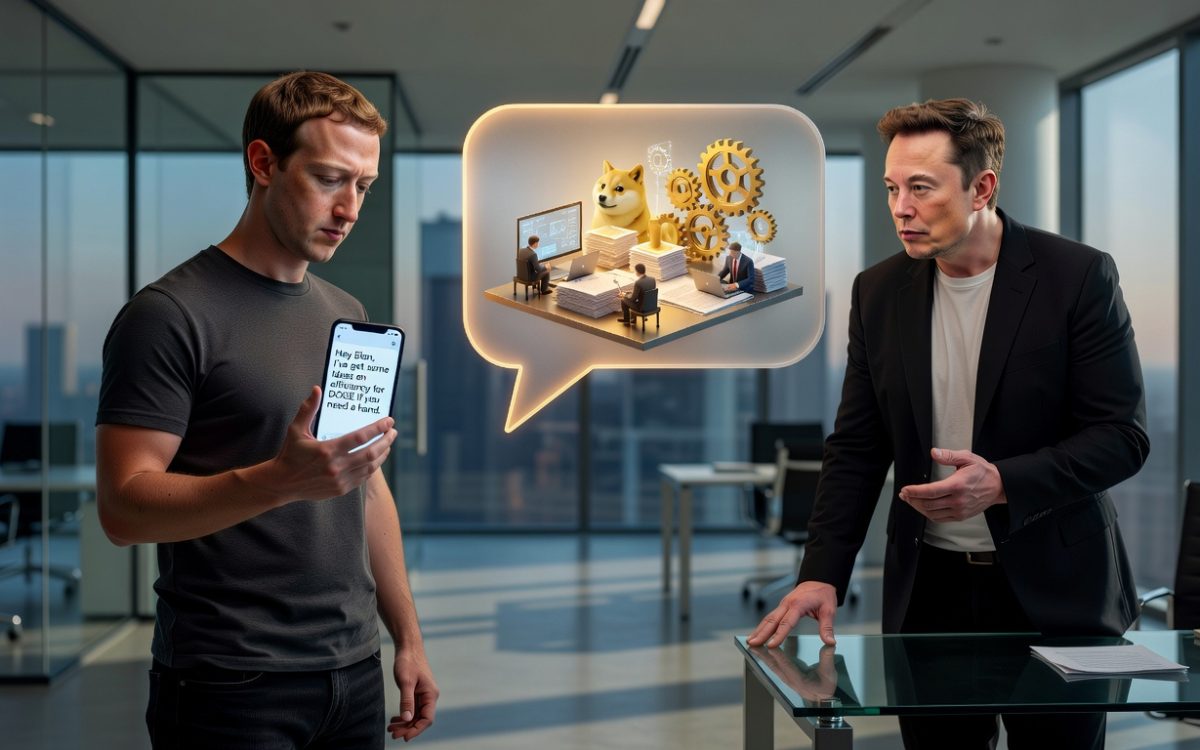
Meta CEO Mark Zuckerberg texted Tesla and SpaceX CEO Elon Musk on January 15, 2026, offering assistance with the Department of Government Efficiency (DOGE), a new advisory body aimed at reducing U.S. federal spending. The message, first reported by The Wall Street Journal, highlights emerging collaboration between Silicon Valley leaders on government reform efforts under the incoming Trump administration.
Key Details
Zuckerberg’s text, sent privately to Musk, proposed that Meta provide expertise in data analytics and AI tools to support DOGE’s mission of identifying wasteful government programs. According to sources familiar with the exchange, Zuckerberg wrote: “Elon, if DOGE needs help with scaling data ops or AI for efficiency audits, Meta’s got the tech ready. Let’s talk.” Musk has not publicly responded, but the outreach comes amid DOGE’s formation, announced by President-elect Donald Trump in November 2025.
DOGE, co-chaired by Musk and entrepreneur Vivek Ramaswamy, is tasked with recommending at least $2 trillion in federal budget cuts by July 2026. The initiative operates outside traditional government structures, with Musk and Ramaswamy serving as unpaid special government employees. Zuckerberg’s offer aligns with Meta’s recent investments in government-facing AI solutions, including partnerships with federal agencies for cybersecurity and data management.
Background
The contact between Zuckerberg and Musk underscores a thawing in their long-standing rivalry, which peaked during a 2023 cage fight challenge that never materialized. Historically, the two executives have clashed over issues like AI regulation and social media policies, with Musk criticizing Meta’s data practices and Zuckerberg advocating for open-source AI development.
DOGE emerged from Trump’s campaign promises to streamline bureaucracy, drawing inspiration from Musk’s cost-cutting strategies at Twitter (now X) after his 2022 acquisition. Ramaswamy, a biotech executive and 2024 presidential candidate, has emphasized eliminating redundant agencies. Early DOGE proposals include auditing defense contracts and consolidating overlapping regulatory bodies, potentially affecting thousands of federal jobs.
Expert Perspective
Tech policy analyst Kara Swisher, writing in The New York Times, described the outreach as “a pragmatic pivot for Zuckerberg, positioning Meta as a key player in the Trump era without alienating progressive users.” Swisher noted that Meta’s involvement could leverage its vast user data for predictive analytics on government spending patterns.
White House transition spokesperson Steven Cheung confirmed DOGE’s openness to private sector input, stating: “Elon and Vivek are building DOGE with the best minds in America, including from tech. Offers like this are welcome as we fight waste.” No formal response from Meta or Musk has been issued, though sources indicate preliminary discussions may occur at the World Economic Forum in Davos next week.
Impact and Next Steps
This development could amplify Big Tech’s influence on U.S. policy, raising concerns about conflicts of interest given Musk’s concurrent roles at the Department of Energy and NASA. Critics, including Senate Democrats, worry that DOGE’s recommendations might favor deregulation in areas like antitrust enforcement, where Meta and Tesla face ongoing scrutiny.
Looking ahead, DOGE plans to release its first report in March 2026, targeting inefficiencies in healthcare and education spending. If Zuckerberg’s offer progresses, it might lead to joint pilots using Meta’s Llama AI models for budget simulations. Broader implications include accelerated adoption of AI in governance, potentially saving billions but sparking debates on privacy and equity. As the Trump administration takes office on January 20, 2026, such alliances signal a new era of public-private partnerships in Washington.