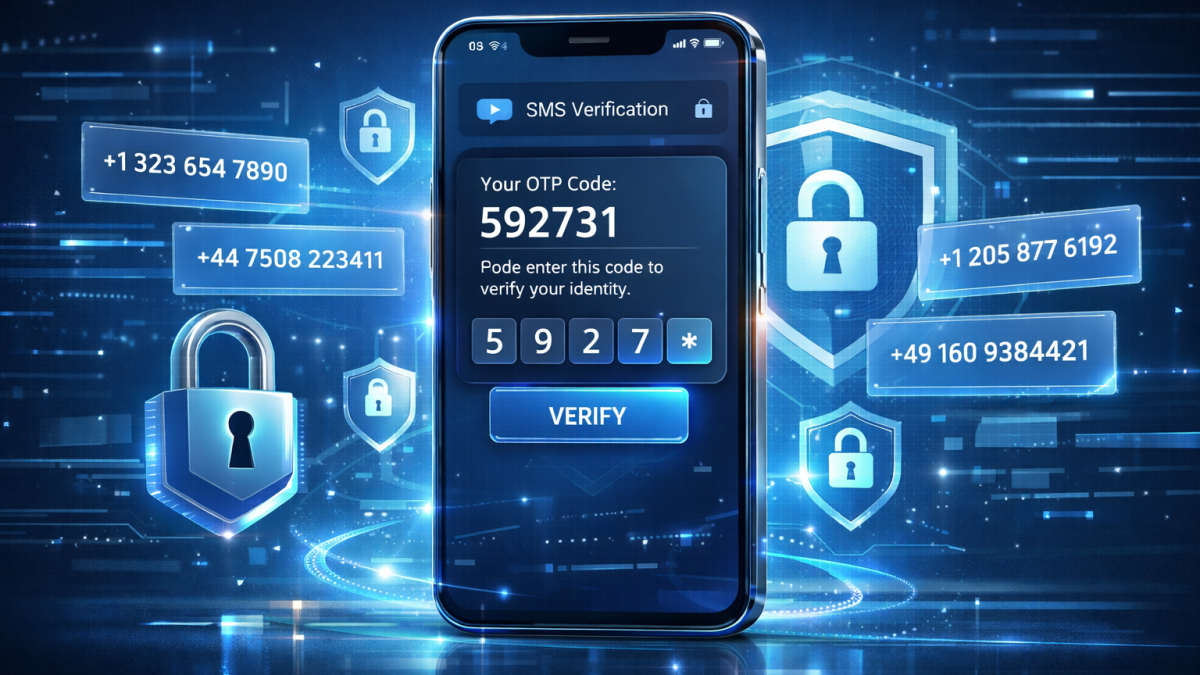
In 2026, SMS one-time passwords (OTPs) remain a cornerstone of basic authentication flows for online services, account registration, and security verification. Despite the emergence of newer authentication technologies like passkeys and push-based approval, OTPs via SMS continue to be widely supported across platforms due to their simplicity and universal reach. Yet using a personal mobile number for these codes is not always ideal. Temporary phone numbers are increasingly being used as a flexible alternative that provides privacy protection and operational convenience.
This article explains what temporary SMS numbers are, when and why they’re useful, the challenges involved in receiving SMS codes, and how to use them responsibly for legitimate purposes. Whether you’re testing verification flows, managing multiple accounts, or safeguarding your personal number, understanding how these numbers work can make your online interactions more streamlined and secure.
What Are Temporary Numbers for SMS?
A “temporary number” for SMS refers to a virtual or disposable phone number that can receive text messages without needing a physical SIM card. These numbers are hosted on remote servers and allow you to receive verification codes sent by SMS directly to an online inbox or dashboard. They are often used when users do not want to expose their personal phone number or when a physical SIM is unavailable.
Unlike a traditional phone number tied to a carrier account and physical device, temporary numbers are typically valid for a short period of time — often just long enough to receive a single verification code. This makes them particularly suited for one-time tasks such as registering an account, verifying identity, or completing a protected login step when you don’t want to rely on your own mobile number.
Why Use Temporary Numbers Instead of Personal Numbers?
There are several scenarios where opting for a temporary number makes sense. Privacy is one of the most cited reasons: users increasingly want to avoid tying their personal phone number to every service they interact with. Personal numbers can be used for targeted marketing, spam, or even credential stuffing if they appear in a data breach. Temporary numbers allow you to isolate these verification workflows from your personal identity.
Another common use case is in testing and development. Software testers, QA engineers, and developers often need to validate OTP-based flows across multiple environments and regions. Rather than provisioning dozens of physical SIM cards or relying on team members’ personal numbers, temporary numbers deliver an efficient and scalable solution.
Typical Use Cases for Temporary SMS Verification
- Software development and QA: Test OTP delivery across different forms, services, and regions.
- Account setup and verification: When registering on platforms where you don’t want to expose your main phone number.
- Privacy protection: Reduce the amount of personal information tied to service accounts.
- Travel and remote access: When your primary SIM is out of service due to roaming or network issues.
- Multi-account workflows: Situations where you need to manage or verify multiple related accounts responsibly and within a service’s terms of use.
Challenges in Receiving SMS OTP Codes
While temporary numbers provide flexibility and privacy, receiving SMS reliably is not always guaranteed. Various factors can affect the success rate of OTP delivery:
Carrier Filtering and Blocking
Some mobile carriers and services actively flag and filter messages sent to or from known virtual number ranges. This is often done to curb spam or abuse. As a result, verification systems on certain platforms might not accept codes delivered to temporary numbers. Understanding carrier policies and number routing mechanisms can help anticipate these behaviors and adjust accordingly.
Timing and Expiry Constraints
SMS OTPs typically have short validity windows. If the code takes too long to be delivered or is not fetched within that window, it can expire before you get a chance to use it. Preparing the target form or login screen to receive the code before requesting it can help mitigate this issue.
Reuse and Number Rotation
Temporary numbers are often reused across users or time intervals, meaning that messages sent to or from them might be unpredictable if several people request codes around the same time. Choosing a provider with robust number allocation and rotation processes can improve reliability.
Best Practices for Responsible Use
Using temporary numbers responsibly ensures you leverage their benefits while respecting platform terms and user policies. Here are some best practices:
- Match the number region to your target service: Many services verify region consistency based on user location. Using a number from a compatible region reduces the chance of failure.
- Avoid excessive retries: Repeated requests for OTP codes in short succession can trigger rate limiting and block the number’s effectiveness.
- Prefer long-term options for sensitive accounts: For critical or high-value accounts, consider permanent or dedicated numbers where appropriate.
- Use auxiliary authentication methods: Where available, enable stronger second-factor mechanisms like authenticator apps or hardware keys.
- Read service terms: Ensure that using temporary verification options does not violate the terms of the platform you are interacting with.
Choosing the Right Provider
With many options available for temporary phone numbers, selecting the right provider can make a big difference in experience and reliability. When evaluating a service, consider:
- Geographic coverage: The range of countries and regions where numbers are available.
- Delivery reliability: How quickly and consistently OTP codes are received.
- User interface: Ease of number selection, message retrieval, and dashboard navigation.
- Support and documentation: Availability of help resources if issues arise.
For example, a temporary SMS verification service can help you receive OTP codes with temporary virtual numbers while maintaining your privacy and flexibility. These services are designed to bridge the gap between strict carrier-based SMS delivery and modern digital verification needs.
When Temporary Numbers May Not Be Enough
While temporary numbers are useful in many contexts, they are not a silver bullet. Some high-security platforms enforce strict verification policies and may reject numbers that are known to be virtual or disposable. Additionally, frequent use of temporary numbers across multiple accounts can, in some cases, trigger abuse detection systems. Always prioritize legitimate and compliant uses, and combine temporary numbers with other security measures where appropriate.
Conclusion
Temporary mobile numbers offer a versatile way to receive SMS OTP codes without exposing a personal phone number. They provide privacy benefits and operational flexibility, whether you’re testing apps, managing users, troubleshooting verification flows, or preserving your own contact information. But to use them effectively, you should understand the challenges involved in SMS delivery, choose providers with reliable service, and follow best practices for responsible use.
When used appropriately, temporary numbers can simplify verification workflows and enhance your privacy—making them a valuable tool in the digital landscape of 2026 and beyond.