Sony Inzone H6 Air Review: Lightweight Gaming Comfort
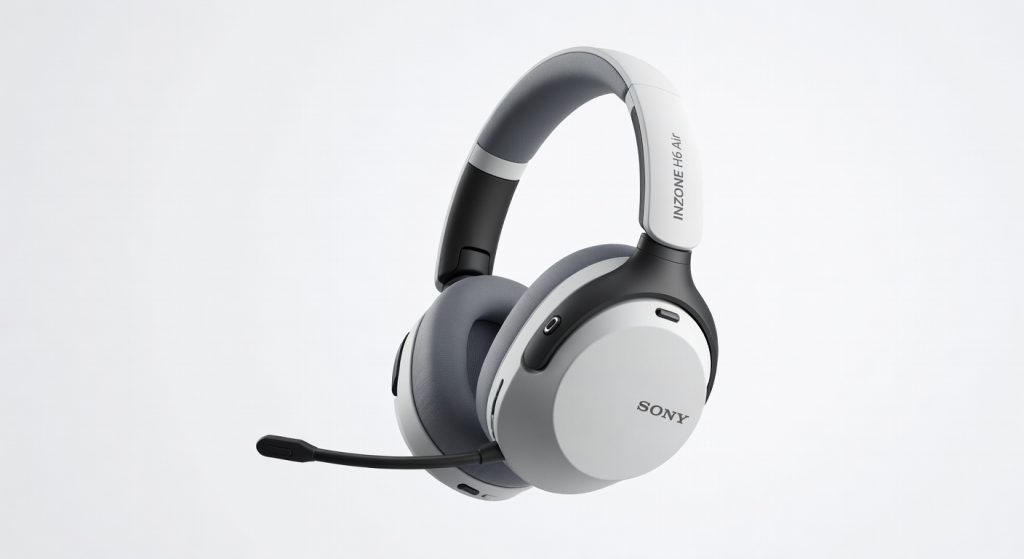
The Sony Inzone H6 Air is Sony's first open-back gaming headset, and it makes an immediate and compelling case for the format. At 199 grams, exceptional comfort, studio-grade 40mm drivers borrowed from the acclaimed MDR-MV1, and a detachable high-fidelity microphone that reviewers consistently praise, the H6 Air delivers a genuinely premium wired experience at 200 dollars, half the price of Sony's flagship Inzone H9 II while offering comparable sound quality for open, immersive listening. The trade-offs are real: no wireless, no noise isolation, and basic companion software. For gamers who play primarily at home in a quiet environment and prioritise comfort and sound width over isolation, it is one of the best headsets available at its price point.
Technical Specifications
| Specification | Detail |
|---|---|
| Driver Size | 40mm (derived from Sony MDR-MV1 studio monitor drivers) |
| Design | Open-back, over-ear |
| Connectivity | Wired only, 3.5mm and USB-C via included USB-C Audio Box |
| Weight | 199g without microphone; 211g with boom microphone attached |
| Microphone | Detachable, high-fidelity cardioid |
| Spatial Audio | 360 Spatial Sound for Gaming via USB-C Audio Box |
| Onboard Controls | Mute switch and volume dial on the left ear cup |
| Compatibility | PC, PS5, PS4, Xbox, mobile |
| Software | Sony INZONE Hub with basic EQ customisation |
| Price | 200 dollars |
| Best For | Home gamers in quiet environments who prioritise comfort, soundstage width, and microphone quality over wireless convenience or noise isolation |
Check the official Sony Inzone page for current pricing and availability.
Overview
The Sony Inzone H6 Air, released in April 2026, is Sony’s first open-back headset in the Inzone gaming line, a notable departure from the closed-back H3, H5, H7, and H9 series that preceded it. At 200 dollars, it sits below the flagship 350 dollar Inzone H9 II while borrowing acoustic DNA from Sony’s well-regarded MDR-MV1 studio monitor headphones. Multiple reviewers have drawn this connection directly, noting that the H6 Air gets remarkably close to MDR-MV1 sound quality at roughly half the price.
The headset connects exclusively via wired connections: a standard 3.5mm jack for universal device compatibility, or USB-C through the included Audio Box for software driven EQ and 360 Spatial Sound processing. There is no wireless option, a deliberate trade-off that keeps weight and latency at a minimum.
Key Features
Open-back design allows air to pass through perforated earcups, cutting weight dramatically compared to sealed closed-back alternatives and creating a wider, more natural soundstage. The trade-off is straightforward: open-back headphones leak sound in both directions, meaning you will hear your surroundings and people near you will hear your audio. This makes the H6 Air unsuitable for noisy environments, shared spaces, or public use, but ideal for a quiet home setup.
199-gram construction makes the H6 Air one of the lightest gaming headsets on the market, 61 grams lighter than Sony’s own Inzone H9 II at 260g without microphone. Reviewers across multiple publications independently describe it as among the most comfortable headsets they have tested, citing a suspension-strap headband mechanism and light clamping force that rests on the head rather than gripping it.
Detachable high-fidelity microphone consistently earns praise across reviews. One reviewer’s teammate reportedly compared the mic quality to being on a podcast. The mic is unidirectional cardioid, which generally minimises background noise pickup, though at least one review notes it can pick up more ambient sound than expected and handles plosives imperfectly.
40mm studio-derived drivers, adapted from the Sony MDR-MV1 professional monitoring headphones, deliver a sound signature reviewers describe as natural and engaging, with more low-end presence than typically expected from an open-back design. This combination is unusual since most open-back headphones trade bass impact for clarity and width, and the H6 Air appears to deliver both to a meaningful degree.
Onboard controls are limited to a mute switch and volume dial on the left ear cup, both physical and accessible without removing the headset. One reviewer noted the volume dial feels cheap, clicking abruptly into place instead of gliding smoothly, a minor but consistent critique across reviews.
Performance
Sound quality is the H6 Air’s clearest strength. The 40mm drivers, sharing lineage with the MDR-MV1, deliver a sound signature that multiple independent reviewers describe as natural, wide, and, notably for an open-back design, surprisingly potent in the low end without sacrificing the soundstage width that defines the open-back format. This combination is unusual; most open-back headphones trade bass impact for clarity and width.
The 360 Spatial Sound processing, available through the USB-C Audio Box, adds positional precision useful for competitive titles. Footstep and directional audio cues benefit from the wider natural soundstage the open-back design provides, independent of the spatial processing itself.
Microphone performance is a standout. Independent testing describes it as approaching podcast-level clarity, with reviewers consistently ranking it among the best microphones available on a gaming headset at this price point. The primary limitation noted across reviews is imperfect handling of plosive sounds and, in at least one test, more ambient noise pickup than ideal, worth noting for streamers or podcasters considering the H6 Air for content creation.
Because the headset is wired only, there is no latency and no battery to manage, a genuine advantage for competitive gaming where any wireless latency, however small, is undesirable. The trade-off is cable management; the included cable is high quality but the headset offers no wireless flexibility for movement away from your source device.
Design and Build Quality
The H6 Air blends metal earcup housings with solid plastic and fabric headband construction, a combination reviewers consistently describe as premium-feeling despite the low weight, avoiding the cheap-because-its-light trap that affects some ultra-lightweight peripherals. The suspension-strap headband mechanism, reminiscent of high-end audiophile headphone designs, distributes weight evenly across the skull rather than concentrating pressure at the crown.
Clamping force is deliberately light. The headset rests on the head rather than gripping it, which multiple reviewers cite as the primary reason for exceptional comfort during extended sessions of six to eight hours. This comes with a minor trade-off: the light clamping force means the headset moves more with head motion than a tighter fitting design would.
The included cable is notably higher quality than typical bundled cables, approximately seven feet long, non-flimsy, and durable. The primary design criticism across reviews is the volume dial, which several reviewers describe as feeling cheap relative to the rest of the build, clicking rather than turning smoothly.
Compared to Rivals
vs Sony Inzone H9 II (350 dollars)
The H9 II offers wireless connectivity, active noise cancellation, and drivers derived from Sony’s WH-1000XM6, at nearly double the price. The H6 Air trades wireless and ANC for a lighter build at 199g versus 260g, an open-back soundstage the closed-back H9 II cannot replicate, and a 150 dollar lower price. For home use in a quiet environment, the H6 Air’s open-back sound signature is genuinely competitive with the H9 II despite the price gap.
vs Sony Inzone H5 (approximately 150 to 180 dollars)
The H5 is wireless with a 28-hour battery but uses a non-detachable microphone and closed-back design. The H6 Air’s open-back soundstage and detachable, higher-quality microphone represent a meaningful upgrade for players who do not need wireless freedom.
vs SteelSeries Arctis Nova 1
Reviewers note the H6 Air’s build quality and comfort exceed the Arctis Nova 1’s plasticky construction, with a more premium feel for a similar or lower price. The Nova 1 offers wireless at a comparable price point, a genuine advantage for players who prioritise cable-free movement over open-back sound.
Comparison Table
| Feature | Inzone H6 Air | Inzone H9 II | Inzone H5 | Arctis Nova 1 |
|---|---|---|---|---|
| Price | 200 dollars | 350 dollars | 150 to 180 dollars | approximately 100 dollars |
| Weight | 199g | 260g | not specified | not specified |
| Design | Open-back, wired | Closed-back, wireless, ANC | Closed-back, wireless | Closed-back, wired |
| Microphone | Detachable, high-fidelity | Bi-directional | Non-detachable | Standard |
| Battery | None, wired | Wireless, hours vary | 28 hours | Not applicable, wired |
| Best For | Home use, sound width | Portability, noise cancelling | Wireless on a budget | Budget wireless |
Who Should Buy the Inzone H6 Air
Buy if:
- You game primarily at home in a quiet environment and do not need noise isolation
- Comfort during long sessions of six or more hours is a priority
- You want the widest, most natural soundstage available at this price point
- Microphone quality matters for streaming, Discord, or competitive team comms
- You are comparing against Sony’s own 350 dollar H9 II and want comparable sound quality at a lower price
Skip if:
- You need wireless connectivity; the H6 Air is wired-only with no exceptions
- You game in shared spaces, public areas, or noisy environments where sound leakage in both directions is a problem
- You want advanced software customisation; the INZONE Hub app is described as basic across reviews
- Bass-heavy, isolated sound typical of closed-back headsets is your preference
Final Verdict
The Sony Inzone H6 Air succeeds because it commits fully to what open-back gaming headsets do best: a wide, natural, immersive soundstage in a genuinely comfortable, lightweight package, without pretending to be something it is not. It does not offer wireless freedom or noise isolation, and buyers should be clear-eyed about that trade-off before purchasing. For gamers with a quiet home setup who prioritise comfort and sound quality, the H6 Air is one of the strongest options in Sony’s Inzone lineup and a genuine alternative to the significantly pricier H9 II.
Where to Buy
The Sony Inzone H6 Air is available at 200 dollars on the official Sony product page, Best Buy, and Amazon.
Frequently Asked Questions
Is the Sony Inzone H6 Air wireless?
No. The Inzone H6 Air is a wired-only headset, connecting via a standard 3.5mm jack or USB-C through the included Audio Box. There is no wireless version of this specific model. This is a deliberate design choice that keeps weight low at 199g and eliminates any wireless audio latency, a genuine benefit for competitive gaming, but it means the headset offers no cable-free mobility. Buyers who need wireless connectivity should consider the Sony Inzone H5 or H9 II instead.
How much does the Sony Inzone H6 Air cost?
The Sony Inzone H6 Air retails at 200 dollars. This positions it below Sony’s flagship Inzone H9 II at 350 dollars, wireless with active noise cancellation, and above the entry-level closed-back Inzone H3. At 200 dollars, independent reviewers consistently describe it as offering exceptional value given its studio-derived 40mm drivers, premium build quality, and sound signature that approaches the significantly more expensive Sony MDR-MV1 studio headphones.
Does the open-back design mean I will disturb people around me?
Yes. Open-back headphones like the Inzone H6 Air allow sound to pass through the earcups in both directions. You will hear ambient sound from your environment, and people nearby will be able to hear your audio at a noticeable volume, particularly at higher listening levels. This makes the H6 Air well suited for a quiet home office or gaming room used alone, but poorly suited for shared living spaces, open offices, public transport, or any environment where audio privacy or noise isolation matters. If isolation is a priority, a closed-back headset such as Sony’s own Inzone H9 II or H5 is the better choice.
How does the Inzone H6 Air compare to the Sony MDR-MV1?
The Inzone H6 Air uses 40mm drivers adapted from the Sony MDR-MV1, an acclaimed consumer and audiophile open-back headphone frequently used by gamers and audio professionals for its comfort and engaging sound signature. Independent reviewers who have tested both note the H6 Air gets remarkably close to MDR-MV1 sound quality at roughly half the price, with the H6 Air adding gaming-specific features like a detachable microphone, onboard mute and volume controls, and 360 Spatial Sound processing that the MDR-MV1, designed for music listening rather than gaming, does not include.
Is the microphone on the Inzone H6 Air good for streaming?
The microphone is one of the H6 Air’s most consistently praised features across independent reviews, with multiple testers describing its clarity as approaching podcast quality. It is detachable and cardioid, which generally reduces background noise pickup. However, reviews note two specific limitations worth considering for content creators: handling of plosive sounds is imperfect, and at least one review found it picks up more ambient environmental noise than expected. For casual streaming and team voice chat, the microphone performs very well; serious podcast or content creators with demanding audio requirements may still prefer a dedicated external microphone.
+Pros
- Exceptionally lightweight at 199g, among the lightest gaming headsets available
- Open-back design delivers a wide, natural soundstage rarely matched at this price
- 40mm drivers derived from the acclaimed Sony MDR-MV1 deliver surprisingly strong bass for an open-back design
- Detachable, high-fidelity microphone consistently praised across independent reviews
- Premium build quality with metal earcups and quality cable despite the low weight
- No wireless latency, a genuine advantage for competitive gaming
- Roughly half the price of Sony's flagship Inzone H9 II with comparable sound quality
−Cons
- Wired only, no wireless option at any price tier for this model
- No noise isolation; open-back design leaks sound in both directions, unsuitable for noisy or shared environments
- Companion software, INZONE Hub, offers limited customisation compared to rivals
- Volume dial feels cheap relative to the rest of the build quality
- Microphone has imperfect plosive handling and can pick up more ambient noise than ideal in some environments