TCL QM8L Review: Flagship Brightness at a Mid-Range Price
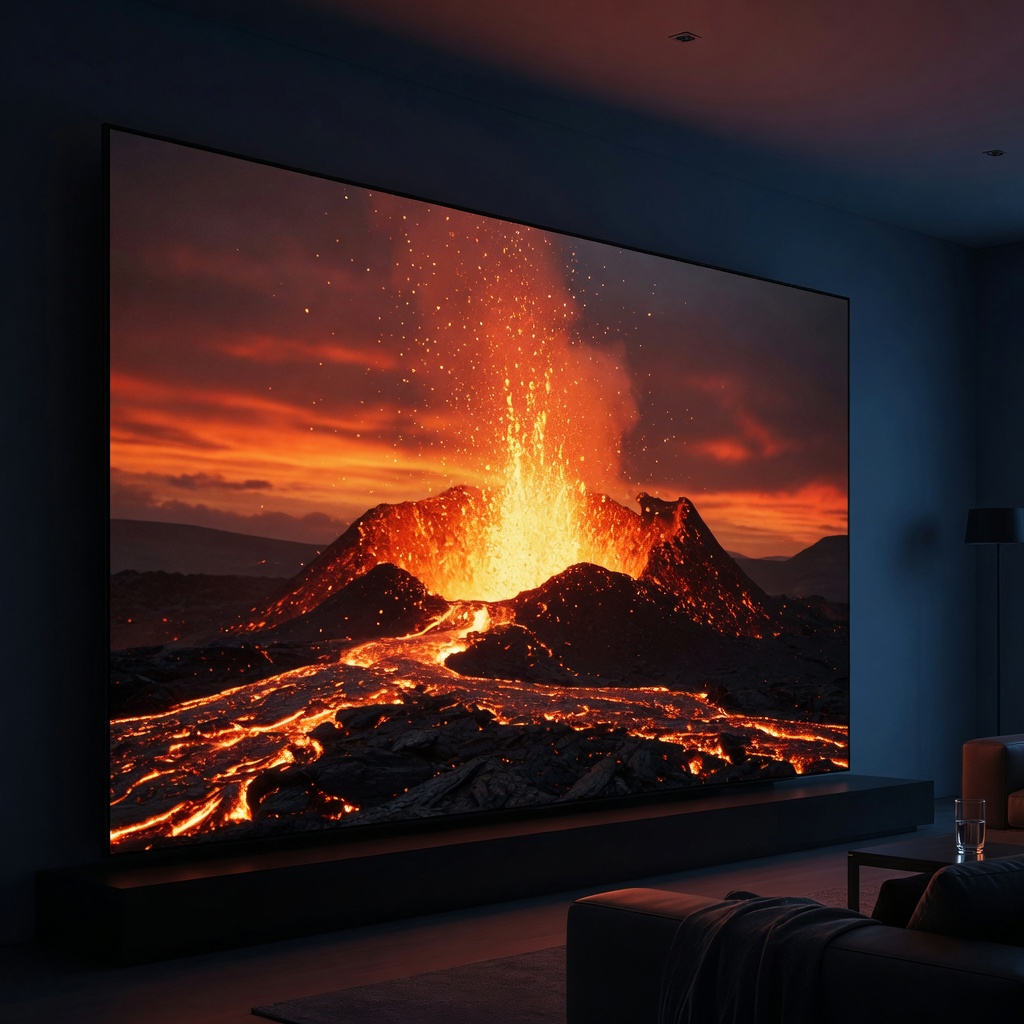
The 2026 TCL QM8L is the best Mini-LED TV under $4,000, delivering lab-measured peak brightness of 3,719 nits (10% window, Filmmaker Mode), up to 4,000 local dimming zones, SQD (Super Quantum Dot) color technology, and a full 144Hz gaming suite with four HDMI 2.1 ports. It replaces the QM8K and sits below TCL's flagship X11L, carrying the same SQD panel technology at roughly half the price. The primary caveat is TCL's marketing language — the "up to 6,000 nits" headline claim reflects peak spec under controlled conditions, while real-world lab measurements from TechRadar and Tom's Guide landed at 3,719 nits in the standard 10% window test. That figure is still exceptional — roughly twice the 2025–2026 TV average — and the local dimming control is tight enough that blooming is rarely an issue in practice. At $2,499 (65-inch) to $3,999 (85-inch) MSRP, it targets cinephiles, sports fans, and PC gamers who want flagship-tier picture performance without the X11L's $7,000 starting price.
Performance Analysis
The TCL QM8L’s headline performance story is its brightness and local dimming, both of which deliver results that embarrass TVs at twice the price. In independent lab testing by TechRadar and Tom’s Guide, peak HDR brightness measured 3,719 nits in a 10% window pattern in Filmmaker Mode — approximately twice the average for TVs tested in 2025 and 2026. Fullscreen HDR brightness in a 100% window reached 760–790 nits depending on the picture mode, which is more than sufficient to drive detail in bright rooms. SDR brightness in Standard mode measured around 518 nits (TechRadar). It is worth stating clearly that TCL’s headline “up to 6,000 nits” marketing figure is a peak specification under controlled conditions and not the figure independent reviewers consistently measure in standardised tests; the 3,719 nits lab result is the more meaningful real-world reference.
Local dimming is where the QM8L genuinely distinguishes itself from cheaper Mini-LED sets. The 75-inch test unit carries 2,584 discrete dimming zones — up to 4,000 on the 98-inch — controlled by a new 26-bit backlight controller (upgraded from 23-bit on the QM8K predecessor). In practice, both TechRadar and Digital Trends reported that blooming was rarely visible during real-world viewing, including testing with colourful objects against dark backgrounds. The Enhanced Halo Control System uses a Super High Energy LED microchip and Super Condensed Micro Lens to tighten the light spread per zone, which is the underlying reason blooming stays controlled despite the high peak brightness.
Gaming performance is equally strong. Rtings.com measured input lag under 10ms in Game mode — genuinely competitive for fast-twitch competitive play. The four HDMI 2.1 ports all support 4K at 144Hz, which is a meaningful upgrade over the QM8K, which only offered two HDMI 2.1 ports. VRR and ALLM are present, and AMD FreeSync Premium certification is confirmed by TCL. PC gamers running a display-capable GPU at 4K/144Hz have a direct path from GPU to screen without compromise. HDR colour accuracy was described by ECoustics and CalebRated as good but not perfect out of the box — some highly saturated colours registered elevated delta-E values above the ideal range, and the Filmmaker Mode gamma curve showed a gradual dim before snapping to full white that calibration-focused users will notice.
Upscaling of 1080p content via the AI Picture Intelligence system is effective for broadcast sports and streaming content. The processor manages colour, motion, clarity, and backlighting dynamically in real time. Diagonal viewing angles are wider than typical VA panels due to the WHVA 2.0 Ultra Panel, though OLED still outperforms at extreme angles.
Design and Build Quality
The QM8L follows TCL’s established premium aesthetic — slim bezels, a brushed metal finish that reads expensive from across a room, and a clean rear panel. The 85-inch unit weighs approximately 100 lbs with stand, which makes wall-mounting a two-person job. The panel itself is not as dramatically thin as the flagship X11L (which features a slim panel design), but the depth is reasonable for a Mini-LED backlit set.
The included pedestal stand provides stable support on hard floors but can wobble slightly on thick carpet during bass-heavy audio scenes. Adjustable feet mitigate this for most setups. The remote is the standard Google TV design — functional but not premium in feel, with rubber buttons that lack the tactile click of higher-end remotes. Voice control via Google Assistant handles most day-to-day functions and reduces reliance on the physical remote.
The anti-reflective screen coating is a genuine differentiator. TechRadar’s testing confirmed that the matte treatment effectively eliminates glare under challenging lighting conditions — a trait that makes the QM8L more usable in kitchens, bright living rooms, and sunlit spaces than glossy-screen alternatives. The WHVA 2.0 Ultra Panel’s improved off-angle viewing maintains colour accuracy further from centre than conventional VA panels, though the improvement is incremental rather than transformative.
Colour options are limited to black, which is standard for this category. Available sizes span 65 to 98 inches, giving buyers flexibility across room sizes. The One Connect-style port consolidation seen on Samsung flagships is not present here — ports are located directly on the TV chassis, which may require cable management planning for wall-mounted installations.
Software and User Experience
The QM8L runs Google TV powered by Google’s Gemini AI — the same platform that debuted on TCL’s flagship X11L earlier in 2026. Compared to the Roku TV interface on older TCL models, Google TV offers more personalised content recommendations, tighter integration with Google services, and a broader app ecosystem. The Gemini AI assistant handles natural-language voice queries for content search, smart home control, and TV settings. Digital Trends noted that the interface feels polished and snappy in daily use.
App availability on Google TV is comprehensive — Netflix, Disney+, Max, Apple TV+, YouTube, and the major streaming services are all present. The Google Play Store provides access to additional apps beyond the pre-installed selection. AirConsole integration adds a gaming dimension that Roku-based competitors do not offer. Google TV’s content aggregation pulls recommendations across multiple streaming services simultaneously, reducing the need to navigate app-by-app.
OTA firmware updates on TCL’s Google TV platform have historically been delivered reliably, and TCL has confirmed a 2026 firmware update adding Dolby Vision 2 support to the QM8L — evidence of active post-launch software support. The My TCL app provides remote control functionality and basic TV management from a smartphone.
Battery Life
Not applicable — the TCL QM8L is a television and does not contain a battery. Power consumption in Standard mode is typical for a high-brightness Mini-LED panel of this size; the 85-inch unit draws more power than the 65-inch at equivalent settings, which is expected at this brightness level. TCL includes Energy Saver mode for users who want to reduce consumption during normal viewing.
Value for Money and Competition
At $2,499 for the 65-inch and $3,999 for the 85-inch at MSRP, the QM8L sits in a competitive but clearly defined position. TCL pricing typically drops within weeks of launch — at time of review, the 65-inch was available for $1,499–$1,799 on TCL’s own site with active sale pricing, representing exceptional value for the performance on offer.
The most direct competitors in mid-2026 are the Hisense U8QG (approximately $1,600 for 75-inch — cheaper, strong AI upscaling, but fewer dimming zones and lower measured brightness), the LG C5 OLED (77-inch available for under $2,000 after price drops — perfect per-pixel blacks and superior viewing angles, but lower peak brightness and no Mini-LED blooming advantage), and TCL’s own X11L (75-inch starts at $7,000 — roughly five times the dimming zones, higher brightness ceiling, thinner panel, full B&O speaker array, but the QM8L captures most of its picture quality at half the outlay). The Samsung QN90F offers a comparable price tier with Tizen’s cleaner interface and somewhat better upscaling, but trails the QM8L on raw brightness and dimming zone count.
Digital Trends’ conclusion after a full 85-inch QM8L test is worth noting directly: the reviewer said TCL had beaten its own QM8K — previously called the TV to beat in its class — and expressed genuine confusion about who the more expensive X11L was for, given how little picture quality the QM8L gives up at half the price. For buyers whose budget tops out below $4,000 for an 85-inch panel, the QM8L is the current benchmark.
Verdict
The TCL QM8L is the Mini-LED TV to beat in 2026 for buyers spending between $2,500 and $4,000. Its combination of 3,719 nits of lab-measured peak brightness, up to 4,000 local dimming zones with near-zero blooming, four full HDMI 2.1 ports at 144Hz, and SQD colour technology represents a package that no competitor at this price tier fully matches. Digital Trends, TechRadar, and Tom’s Guide all reached the same conclusion independently — this is the class benchmark. The caveat is TCL’s marketing: the “6,000 nits” headline needs to be understood as a peak specification rather than the real-world measured figure of 3,719 nits, which is still exceptional.
Who should buy it: bright-room viewers who need glare resistance, PC gamers running 4K/144Hz rigs, sports fans who watch in variable lighting, and anyone who wants OLED-competitive local dimming without OLED pricing or burn-in risk. Who should skip: buyers who watch primarily in very dark rooms from wide angles (LG C5 OLED is the better choice), anyone whose budget allows the X11L (if $7,000 is accessible, the panel upgrades justify it), and those who cannot tolerate calibrating a TV for reference colour accuracy.
Check the current price for the TCL QM8L on Amazon or the official TCL website for current sale pricing — TCL frequently runs promotions below MSRP.
Rating: 4.3 / 5 — The 2026 Mini-LED benchmark under $4,000, with caveats on brightness marketing claims.
Frequently Asked Questions
Is the TCL QM8L worth buying in 2026?
What is the real-world peak brightness of the TCL QM8L?
How does the TCL QM8L compare to the LG C5 OLED?
Where can I buy the TCL QM8L at the best price?
Does the TCL QM8L support Dolby Vision?
How many HDMI 2.1 ports does the TCL QM8L have?
+Pros
- Lab-measured 3,719 nits peak HDR brightness (10% window) — approximately twice the 2026 TV average
- Up to 4,000 local dimming zones with 26-bit control — near-zero blooming in real-world viewing
- All four HDMI ports are full HDMI 2.1 (4K/144Hz) — major upgrade over QM8K's two-port limitation
- SQD colour technology delivers wider colour volume than standard QLED at this price
- Google TV with Gemini AI, AirConsole gaming, and B&O-tuned audio
- Available in four sizes from 65 to 98 inches — $2,499 to $5,999 MSRP, with regular sale pricing below MSRP
- Anti-reflective WHVA 2.0 panel performs well in bright rooms and off-angle viewing
−Cons
- TCL's "up to 6,000 nits" marketing claim is misleading — independent labs consistently measure 3,719 nits in standard tests
- 65-inch MSRP of $2,499 is high; the X11L comparison makes the QM8L look affordable, but it is still a premium purchase
- Colour accuracy out of box is good but not reference-grade — elevated delta-E on highly saturated colours benefits from calibration
- Built-in audio, while B&O-tuned, does not match the full B&O array on the X11L — a soundbar remains advisable for critical listening
- Pedestal stand wobbles slightly on thick carpet at high bass levels
- No Dolby Vision 2 at launch — confirmed via firmware update later in 2026