As populations age across the world, there is an increasing focus on how to support independent, safe, and comfortable living for older adults. While technology and healthcare services often receive the most attention, everyday furniture plays an equally important role in shaping quality of life. One overlooked but essential element is the chair.
A well-designed chair for the elderly can significantly improve daily comfort, mobility, and independence. It is not just about sitting—it is about enabling people to live with dignity, reduce physical strain, and maintain an active lifestyle within their own homes.
The Importance of Everyday Functionality
For many older adults, daily routines such as sitting down, standing up, or moving around the home can become increasingly challenging. These simple movements require strength, balance, and coordination, all of which may decline with age.
A standard chair often does not provide the support needed to perform these movements safely. Chairs that are too low, too soft, or lack stability can increase the risk of falls or strain on joints and muscles.
This is why specialized seating solutions are becoming more relevant. They are designed not only for comfort but also to support safe movement and reduce physical effort in everyday tasks.
Promoting Independence at Home
One of the key goals in elderly care is to help individuals remain independent for as long as possible. Independence contributes to mental well-being, self-confidence, and overall quality of life.
A properly designed chair can support this goal by making it easier to perform daily activities such as:
- Getting up without assistance
- Sitting down safely
- Moving between rooms
- Reaching objects at different heights
When furniture supports mobility rather than limiting it, older adults can maintain a greater sense of control over their daily routines.
Ergonomics and Comfort
Comfort is important at any age, but it becomes especially critical for older individuals who may spend more time sitting. Poor seating can lead to discomfort, back pain, and even long-term health issues.
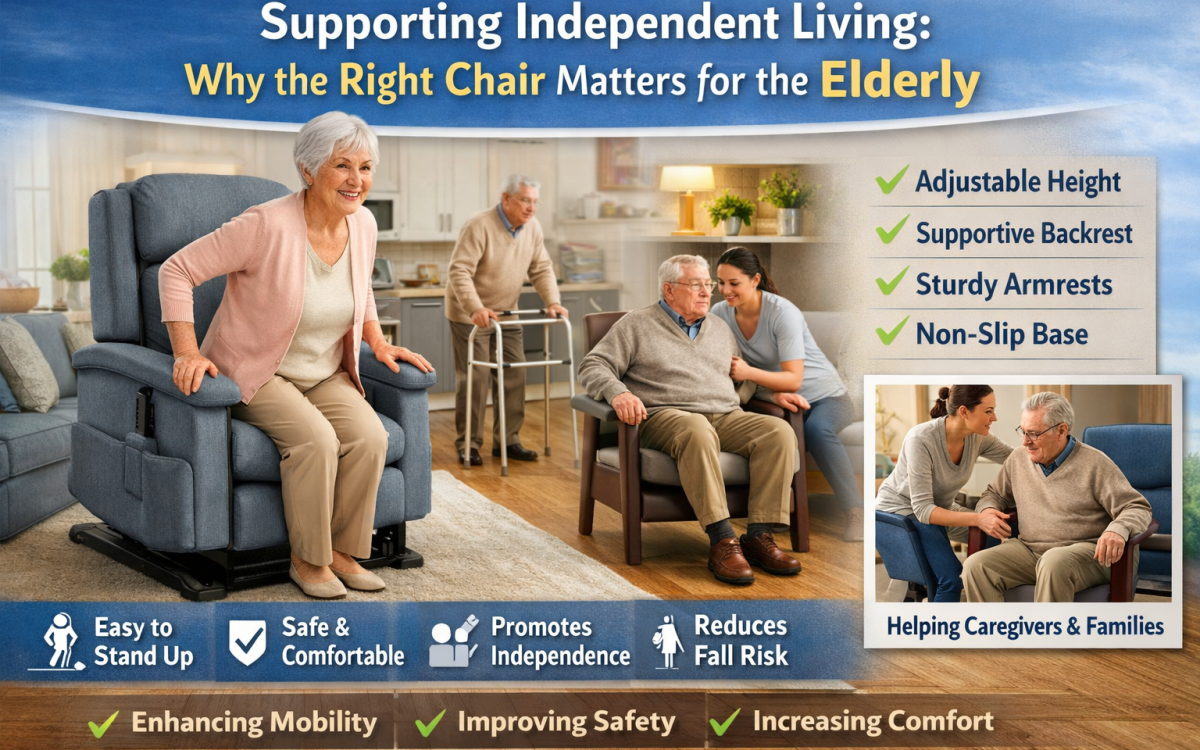
Ergonomic design plays a key role in addressing these challenges. Chairs designed for elderly users often include features such as:
- Adjustable seat height
- Supportive backrests
- Stable armrests for assistance when standing
- Firm seating surfaces that provide proper support
These elements help maintain a healthy sitting posture and reduce strain on the body.
Safety as a Priority
Safety is one of the most important considerations when choosing furniture for older adults. Falls are a common concern and can have serious consequences.
Chairs designed with safety in mind often include features such as:
- Stable bases to prevent tipping
- Lockable wheels for controlled movement
- Easy-to-use adjustment mechanisms
- Non-slip materials
These features contribute to a safer home environment and provide peace of mind for both users and their families.
Supporting Caregivers and Family Members
The benefits of specialized seating are not limited to the individual using the chair. They also extend to caregivers and family members.
When a chair supports safe and independent movement, it reduces the physical strain on caregivers who might otherwise need to assist with lifting or repositioning. This can help prevent injuries and make caregiving tasks more manageable.
In both home care and professional care settings, the right furniture can improve efficiency and reduce physical workload.
Adaptability for Changing Needs
As people age, their needs can change over time. A chair that works well today may need to be adjusted or replaced as mobility or health conditions evolve.
Modern chairs designed for elderly users often include adjustable features that allow them to adapt to different situations. This flexibility makes them a long-term solution that can continue to support users as their needs change.
Whether it is adjusting seat height, backrest angle, or mobility features, adaptability is key to maintaining comfort and usability over time.
Aesthetics and Integration into the Home
While functionality is essential, design and aesthetics also matter. Many people want furniture that fits naturally into their home environment rather than looking overly clinical.
Modern chairs for elderly users are increasingly designed with both functionality and appearance in mind. They can blend into living rooms, kitchens, or home offices while still offering the necessary support.
This helps maintain a sense of normalcy and ensures that the home remains a comfortable and inviting space.
A Holistic Approach to Aging at Home
Supporting older adults is not just about medical care—it is about creating an environment that enables them to live well. Furniture plays a key role in this holistic approach.
A thoughtfully chosen chair can:
- Improve mobility
- Enhance safety
- Reduce physical strain
- Support independence
- Increase overall comfort
These factors contribute to a better daily experience and can make a meaningful difference in long-term well-being.
Investing in Everyday Quality of Life
When considering ways to improve life for elderly individuals, it is important to look beyond large-scale solutions and focus on everyday experiences. Small changes—such as upgrading a chair—can have a significant impact.
A chair designed specifically for elderly users is more than just a piece of furniture. It is a tool that supports independence, safety, and comfort in daily life.
As more people seek ways to age comfortably in their own homes, the importance of well-designed, functional furniture will continue to grow. Choosing the right seating solution is a simple yet powerful step toward improving quality of life for older adults.
FAQ
What makes a chair suitable for the elderly?
A chair for elderly users typically includes ergonomic support, stable construction, and features that make it easier to sit down and stand up safely.
Why is seat height important?
Proper seat height reduces strain on the knees and makes it easier to stand up without assistance.
Can the right chair help prevent falls?
Yes, stable and supportive chairs can reduce the risk of falls by providing better balance and support during movement.
Are these chairs only for people with limited mobility?
No, they can benefit anyone who wants additional comfort and support, especially as mobility needs change with age.
Do these chairs fit into regular home environments?
Yes, many modern designs are created to blend into everyday home settings while still offering advanced functionality.