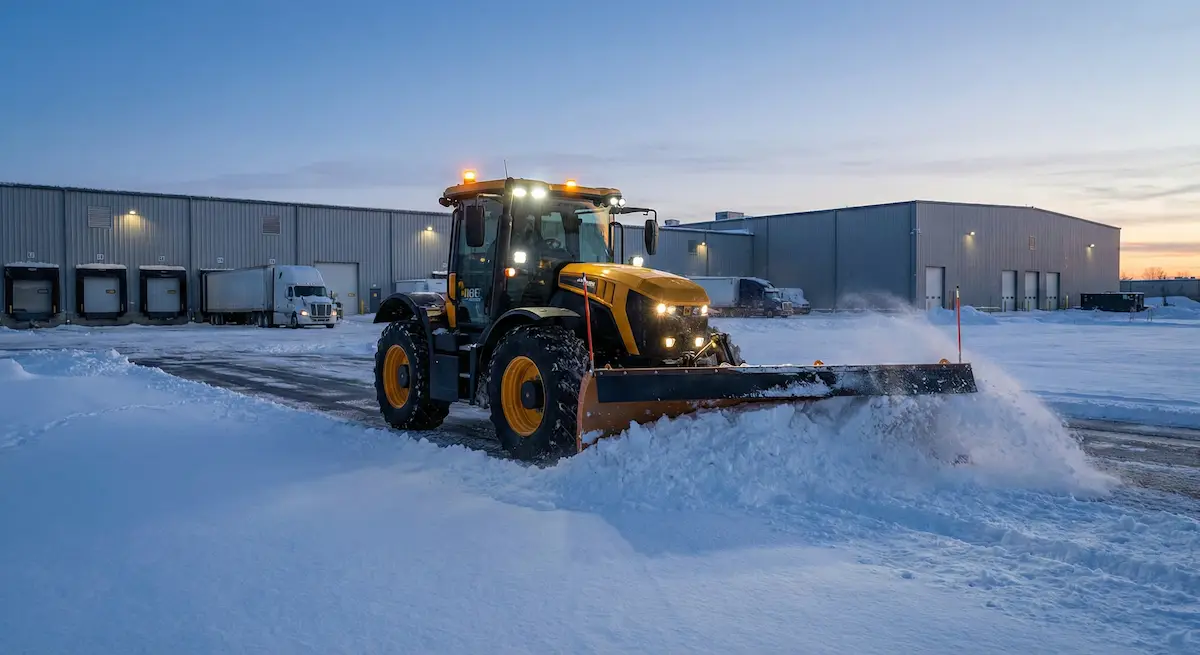
Maintaining clear access roads, parking lots, and yard space during winter is a critical operational requirement for warehouses, distribution centers, and manufacturing plants. Inefficient snow removal can lead to safety hazards, delayed shipments, and disrupted workflows. For large-scale areas, a tractor-mounted snowplow offers a powerful and efficient solution, far surpassing the capability of smaller utility vehicles or manual labor.
Technical Overview and Blade Configurations
A tractor-mounted snowplow is a heavy-duty attachment that connects to the front of a utility tractor, typically via a quick-attach system. The 10’ U/V Angle Blade Snowplow features a unique design where the blade can be positioned in multiple configurations: straight, angled left or right in a “V” shape, or fully angled to form a “U” shape for increased capacity.
Operational Modes and Their Applications
- Straight Position: Used for pushing large volumes of snow directly forward, ideal for open lots and initial clearing.
- Angled Position (V): Directs snow to one side while moving forward, used for windrowing snow along the edges of driveways and roads.
- Full Angle (U): Creates a high-capacity scoop for gathering and transporting snow over short distances to a dumping area.
The Importance of Productivity and Site Accessibility
Rapid snow clearance minimizes downtime and ensures continuous access for personnel and logistics vehicles. A large, tractor-mounted plow clears wide paths quickly, reducing the total time and fuel required for snow removal operations. This efficiency is crucial for maintaining just-in-time delivery schedules and ensuring employee safety during winter months.
Technical Fundamentals and Tractor Requirements
Effective plowing requires a correctly matched tractor and attachment system. Key considerations include:
- Tractor Horsepower and Weight: Sufficient engine power and machine weight are needed to push heavy, wet snow without stalling or losing traction.
- Hydraulic System: The tractor must have a front hydraulic circuit to operate the blade’s lift, angle, and potentially tilt functions.
- Quick-Attach Compatibility: The plow’s mounting system must match the tractor’s front-end loader interface.
- Blade Width and Construction: A 10-foot width provides significant coverage. The blade should be made of durable, abrasion-resistant steel with a replaceable cutting edge.
Factors Affecting Performance and Plowing Efficiency
Performance is heavily influenced by snow conditions. Wet, heavy snow requires more power and may necessitate slower travel speeds and smaller bites. The operator’s skill in selecting the correct blade angle and travel speed for the conditions is crucial. Proper ballasting of the tractor with rear weights or rear-mounted equipment is essential to maintain steering control and traction when the blade is loaded.
Safety Considerations and Operational Best Practices
Snow plowing with large equipment presents specific hazards that must be managed.
- Always be aware of blind spots, especially when operating in reverse or with the blade angled.
- Clearly mark obstacles like curbs, light poles, and fire hydrants before plowing to avoid damage.
- Operate at a safe speed appropriate for visibility and surface conditions.
- Never attempt to raise the blade while it is under a significant load.
- Ensure the tractor is equipped with proper lighting for visibility, and the operator wears appropriate winter gear.
Equipment Types and System Components
The primary attachment is the snowplow blade and its frame. Key components include the moldboard (the curved blade), the A-frame or trip mechanism, hydraulic cylinders for lift and angle, a replaceable cutting edge, and skid shoes to protect the underlying surface. The system interfaces with the tractor’s hydraulic system and quick-attach plate.
Advantages and Practical Limitations
Understanding the capabilities of a tractor-mounted plow ensures it is used effectively.
- Advantages: High clearing speed and capacity for large areas. Versatile blade configurations for different tasks. Utilizes existing tractor equipment, providing a cost-effective solution for fleets. More powerful and efficient than smaller plows on ATVs or pickups.
- Limitations: Requires a suitably sized and equipped tractor. Less maneuverable in very tight spaces compared to smaller equipment. Can cause surface damage if skid shoes are not adjusted correctly or if used on uneven pavement.
Real-World Application Example
A large logistics terminal experiences a significant snowfall overnight. Using a 75 HP utility tractor equipped with a 10-foot U/V angle plow, the facility crew begins clearing operations at dawn. They use the straight blade to push snow from the main truck lanes into large piles. Then, they switch to the angled position to efficiently clear snow from the edges of the parking areas and sidewalks, ensuring the entire facility is accessible for the morning shift and delivery trucks, all within a few hours.
Conclusion and Industry Outlook
For facility managers and operations directors in snow-prone regions, investing in a heavy-duty tractor-mounted snowplow is a strategic decision for winter preparedness. It is a key component of a business continuity plan, ensuring operational resilience against winter weather. The trend is toward more robust and smarter attachment systems, with potential integration of trip-edge mechanisms to protect against unseen obstacles. Effective snow removal, powered by the right equipment and skilled operation, is essential for maintaining safety, efficiency, and reliability throughout the winter season.