For most of their history, ATMs served a single, narrow purpose: dispensing cash. Walk up, insert a card, grab a few bills, and leave. That model held steady for decades, but it no longer reflects where the industry is headed.
Today, a convergence of artificial intelligence, biometric authentication, and always-on connectivity is turning next-gen ATMs into something closer to full-service financial hubs. Self-service banking no longer stops at withdrawals. It now extends into deposits, transfers, identity verification, and account management, all from a single terminal.
The technologies behind this shift are worth understanding in detail, and that is exactly what this article sets out to do.
The Core Technologies Redefining ATMs
Next-generation ATMs are not defined by any single innovation. Instead, they represent a layered integration of software intelligence, hardware innovation, and human connectivity working together. Understanding each layer reveals how these machines have evolved from simple cash dispensers into sophisticated financial access points.
AI and Biometric Authentication
AI is at the heart of most next-generation ATM upgrades. It can personalize on-screen options based on past transactions, optimize cash levels with predictive management, and spot fraud in real time by flagging unusual behavior instead of relying only on static credentials. For institutions already using automated technology systems, these capabilities often plug neatly into broader digital transformation efforts.
Biometric authentication supports the same goal by reducing reliance on PINs. Facial recognition and fingerprint scanning can verify identity without a physical card, lowering the risk of skimming and stolen credentials. Adoption is rising too, with biometric ATM market data projecting USD 70.49 billion by 2032 at an 8.7% CAGR.
Cash Recycling and Contactless NFC
On the hardware side, cash recycling is a major upgrade. These systems take deposited cash, validate it, and reuse it for withdrawals, cutting armored truck visits, lowering servicing costs, and improving cash availability at busy locations.
Contactless NFC adds speed and safety. Customers can start sessions with a smartphone or contactless card without inserting anything, which reduces hardware wear and helps eliminate a common skimming attack vector.
Video Banking and Remote Teller Access
Video banking connects ATM users with live remote tellers on-screen for complex needs like loan inquiries, account disputes, or wire transfers that once required a branch visit. Banks can extend hours and reach without adding branches, blending digital speed with human support in one terminal.
Cryptocurrency and Digital Currency ATMs
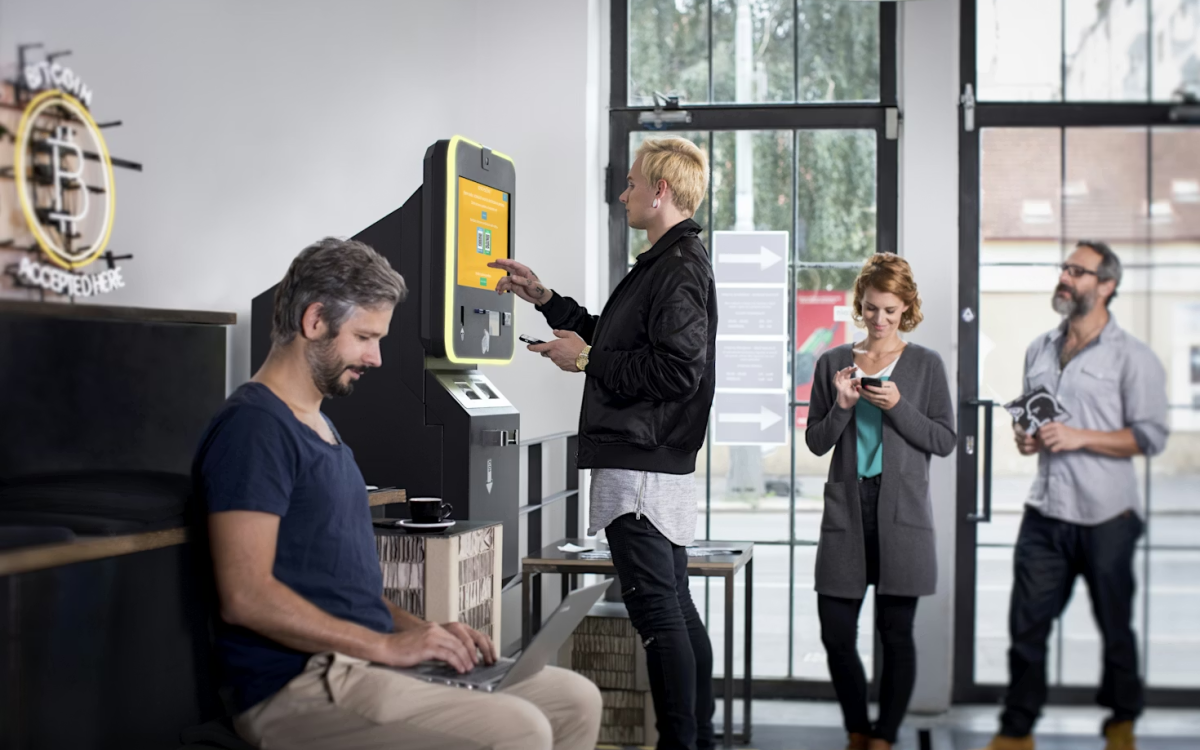
Beyond traditional banking functions, next-gen ATMs are also expanding into digital asset territory. Cryptocurrency ATMs allow users to buy and sell digital currencies like Bitcoin using cash or debit cards, effectively bridging the gap between physical money and digital ownership.
These machines have been gaining traction in urban areas, showing up in convenience stores, shopping malls, and transit hubs where foot traffic is high. Someone carrying cash can walk up to a terminal and use a bitcoin ATM to convert those bills into cryptocurrency within minutes, no traditional exchange account required.
That accessibility is part of what is driving adoption, but it also raises questions. Regulatory frameworks in many regions are still catching up to the technology’s spread, with authorities working to establish clearer guidelines around identity verification, transaction limits, and anti-money laundering compliance.
For now, cryptocurrency ATMs represent one of the more visible ways that self-service terminals are evolving beyond their original scope. They also reinforce a broader pattern: the ATM is no longer just a cash machine, but a flexible access point where physical and digital finance increasingly overlap.
Security Layers and Connected Operations

The features covered in earlier sections, from biometric login to cryptocurrency transactions, all depend on infrastructure that stays online, protected, and consistently updated. That infrastructure is where IoT connectivity and cybersecurity converge.
IoT-enabled ATMs transmit real-time performance data back to central management systems. This allows operators to monitor hardware health, track transaction volumes, and trigger predictive maintenance before a component fails. The result is less unplanned downtime and faster issue resolution across entire fleets.
Cloud-based management platforms extend that visibility even further. Banks can push software updates remotely, adjust configurations across regions, and audit fleet performance from a single dashboard. For institutions scaling their digital financial services, this kind of centralized control makes it possible to manage thousands of terminals without dispatching technicians for every update.
However, the same connectivity that enables remote management also expands the attack surface. Skimming, jackpotting, and software exploits continue to target ATM networks, and the more connected a terminal becomes, the more entry points exist for bad actors.
Countering those threats requires a layered approach. Artificial intelligence powers fraud detection systems that analyze transaction behavior in real time, flagging suspicious patterns before losses escalate. Encryption protocols protect data in transit, while multi-factor authentication adds verification steps that make unauthorized access significantly harder.
The tension between advanced functionality and security exposure is not a problem with a final solution. It is an ongoing balancing act that shapes how every new ATM capability gets designed, deployed, and maintained.
Who Benefits Most From Smarter ATMs
The technologies outlined in previous sections carry different weight depending on who is using them. For underbanked populations and rural communities with limited access to physical branches, next-gen ATMs function as a primary banking touchpoint rather than a convenience.
Multilingual interfaces and simplified navigation lower the entry barrier for users who may not be comfortable with traditional banking platforms. These design choices turn self-service banking into something accessible for a much wider demographic, not just tech-savvy urban customers.
Sustainability also enters the conversation. Energy-efficient hardware and solar-powered ATM deployments allow institutions to place terminals in remote locations without relying on conventional power infrastructure. That dual benefit of expanding reach while reducing environmental impact aligns with broader industry goals around responsible growth.
For the banks themselves, the value is operational. Maintaining a network of smarter terminals costs significantly less than opening and staffing new branches. Physical customer touchpoints remain available, but the overhead shrinks. The result is a model where expanded access and cost efficiency move in the same direction rather than working against each other.
Where ATM Technology Goes From Here
The line between ATMs and digital banking platforms continues to blur. Every capability discussed in this article, from biometric authentication to cryptocurrency transactions, points toward terminals that function as comprehensive financial access points rather than simple cash dispensers.
Widespread adoption still depends on resolving practical challenges, particularly around cybersecurity exposure and the infrastructure costs of upgrading legacy fleets. These are not small hurdles, but the direction is clear.
ATMs are not disappearing. They are becoming more central to how banking actually works.