Digital images have become one of the most important forms of communication on the internet. From social media posts and marketing campaigns to e-commerce product photos and personal memories, visuals shape how people interact online. However, editing images used to require advanced software and professional design skills. Today, that barrier has almost disappeared thanks to the rapid development of the AI Image Editor.
An AI Image Editor uses artificial intelligence to automatically analyze, enhance, and transform images. Instead of manually adjusting layers, masks, and filters, users can simply upload a photo and describe what they want to achieve. The AI handles complex editing tasks such as background replacement, style transformation, object removal, and image enhancement.
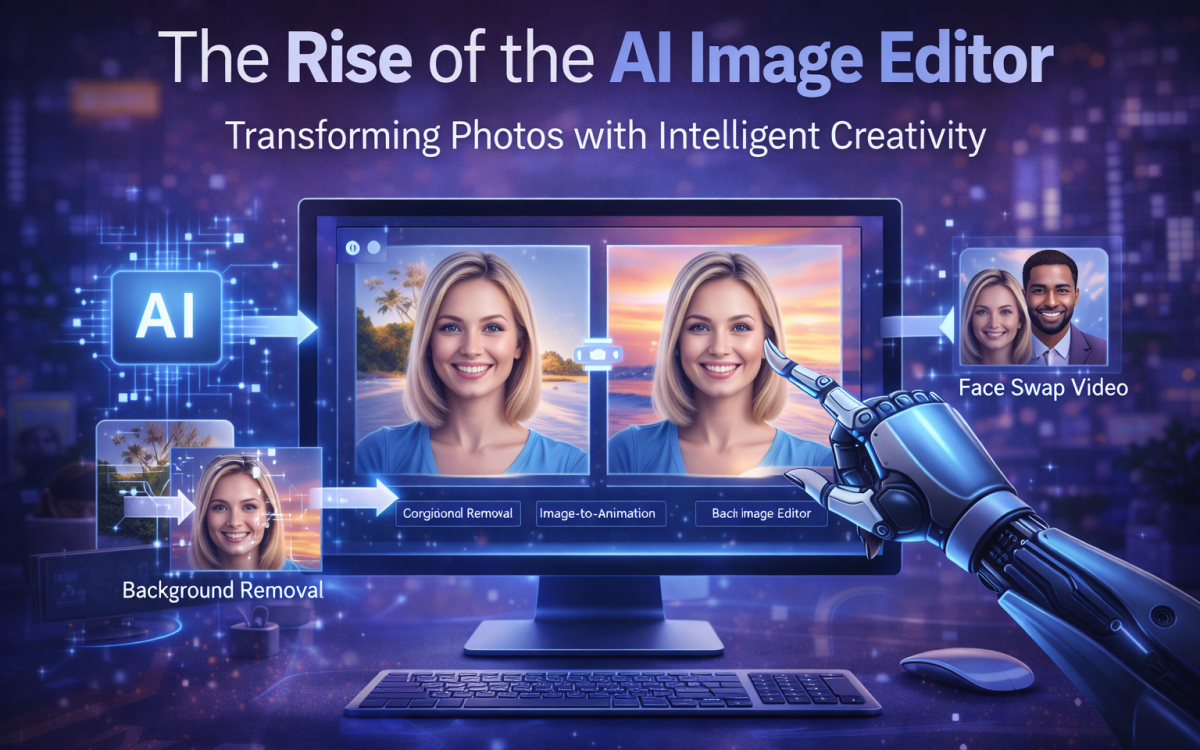
Even more impressive, modern AI tools now combine image editing with advanced features like image to animation ai and Face Swap Video technology, allowing creators to transform static images into dynamic digital experiences.
What Is an AI Image Editor?
An AI Image Editor is a software tool powered by machine learning models trained on millions or billions of images. These models learn patterns related to lighting, color balance, object recognition, human faces, artistic styles, and more. Once trained, the AI can intelligently modify images based on user instructions.
Traditional photo editing software relies heavily on manual input. Users must adjust sliders, select areas, and experiment with filters. AI-powered tools automate many of these tasks by understanding the context of the image.
For example, when you upload a portrait photo, the AI can automatically detect the face, adjust lighting, smooth skin, enhance details, and even change the background. This dramatically reduces the time required to produce professional-looking results.
Some AI editors even allow users to describe edits using natural language prompts such as:
- “Make the lighting warmer”
- “Turn this photo into a watercolor painting”
- “Remove the background and replace it with a beach sunset”
The AI interprets these instructions and applies the changes automatically.
How AI Image Editing Technology Works
Most AI Image Editors rely on several advanced machine learning techniques:
1. Computer Vision
Computer vision allows AI systems to understand what appears inside an image. The model can identify people, objects, animals, landscapes, and even emotional expressions. This enables precise editing actions such as object removal or subject highlighting.
2. Generative Models
Generative AI models, such as diffusion models, can create entirely new visual elements. These models can fill missing areas, extend images beyond their borders, or transform styles.
This technology is what powers modern image to animation ai tools that transform static photos into animated scenes.
3. Facial Recognition and Mapping
Facial recognition algorithms map facial landmarks like eyes, nose, and mouth. This enables advanced features such as portrait enhancement and Face Swap Video generation.
By mapping facial structures accurately, AI can replace one face with another while preserving realistic expressions and movements.
Key Features of a Modern AI Image Editor
The capabilities of AI-powered editors go far beyond simple filters. Modern platforms offer a wide range of intelligent tools.
AI Image Enhancement
AI can improve low-quality images by sharpening details, correcting exposure, and reducing noise. Old or blurry photos can be restored with impressive clarity.
This is especially useful for restoring historical photographs or improving smartphone pictures taken in poor lighting conditions.
Background Removal and Replacement
Removing backgrounds used to be a time-consuming process. AI can now detect the subject of an image in seconds and isolate it automatically.
Users can then replace the background with a new scene, a color gradient, or a generated environment.
Object Removal
Unwanted objects in a photo—such as strangers in the background or distracting elements—can be removed automatically. The AI fills the removed area with realistic textures that match the surrounding image.
Style Transfer
AI can transform photos into artistic styles such as oil painting, anime, watercolor, or comic illustration. This feature has become extremely popular for social media content and creative storytelling.
From Static Images to Motion: Image to Animation AI
One of the most exciting developments in image editing technology is the rise of image to animation ai. This technology allows users to convert still images into animated sequences.
For example, a single portrait image can be animated to simulate blinking, smiling, or subtle head movements. Landscapes can gain moving clouds, flowing water, or dynamic lighting effects.
These animations are created using deep learning models that predict how elements within an image might move naturally. The result is a short animated clip that brings static photos to life.
Content creators are increasingly using image-to-animation tools to produce engaging videos without the need for complex animation software.
The Growing Popularity of Face Swap Video
Another breakthrough technology integrated into AI image editing platforms is Face Swap Video. This feature allows users to replace the face of a person in a video with another face while maintaining natural expressions and movements.
The process typically involves several steps:
- Detecting the face in each video frame
- Mapping facial landmarks
- Replacing the face with a new one
- Blending lighting and skin tones
Modern AI models perform these steps automatically, producing surprisingly realistic results.
Face swap technology has many legitimate uses, including:
- Film production and visual effects
- Educational simulations
- Creative storytelling
- Personal entertainment
When used responsibly, Face Swap Video tools can unlock a wide range of creative possibilities.
Who Uses AI Image Editors?
The adoption of AI image editing tools has expanded across many industries.
Content Creators
Social media influencers and video creators rely on AI tools to produce eye-catching visuals quickly. Features like automatic enhancement, animation, and face swapping allow them to experiment with creative formats.
Marketing Professionals
Marketers use AI image editors to generate promotional graphics, advertisements, and product images without hiring large design teams.
E-commerce Businesses
Online stores can automatically improve product photos, remove backgrounds, and generate consistent branding images.
Designers and Artists
Even professional designers are incorporating AI into their workflow. Instead of replacing creativity, AI tools act as powerful assistants that speed up experimentation and idea generation.
The Advantages of Using an AI Image Editor
The growing popularity of AI editing tools can be explained by several major advantages.
Speed
Tasks that once required hours of manual work can now be completed in seconds.
Accessibility
People without design experience can still produce high-quality images.
Creative Exploration
AI allows users to test creative ideas quickly by generating multiple variations of an image.
Cost Efficiency
Businesses can reduce design costs by using AI-powered tools instead of outsourcing every editing task.
The Future of AI Image Editing
The capabilities of AI Image Editors are evolving rapidly. In the near future, we can expect even more advanced features such as:
- Real-time video editing powered by AI
- 3D scene generation from single images
- More realistic image to animation ai models
- Improved Face Swap Video realism
- Full AI-generated video content from images
As generative AI models continue to improve, the boundary between photography, animation, and video production will continue to blur.
Conclusion
The AI Image Editor represents a major shift in how visual content is created and edited. By combining computer vision, generative models, and deep learning techniques, AI tools can transform ordinary images into professional-quality visuals with minimal effort.
Features like image to animation ai and Face Swap Video are pushing the boundaries of what image editing software can achieve. These technologies allow users to go beyond static images and explore dynamic, interactive media.
Whether you are a content creator, marketer, designer, or simply someone who enjoys experimenting with photos, AI-powered image editors offer powerful new ways to bring your ideas to life.
As artificial intelligence continues to evolve, the future of image editing will become even more intelligent, creative, and accessible to everyone