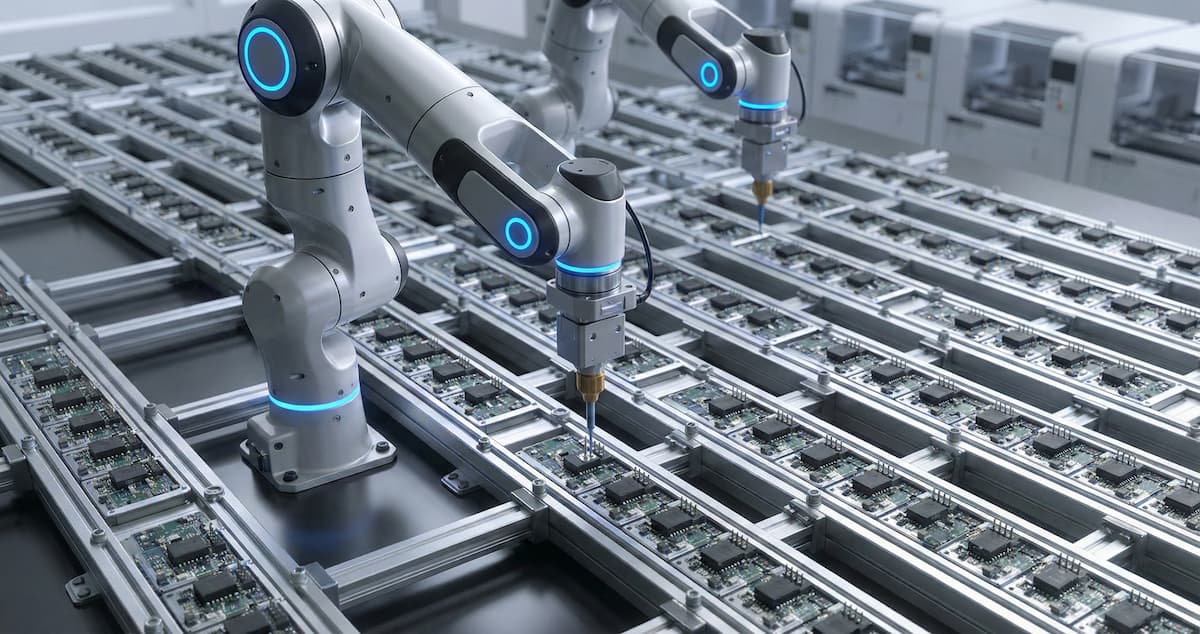
Automated fluid dispensing has quietly become one of the deciding factors in modern electronics manufacturing. From SMT lines to final assembly cells, the consistency of adhesive dots, sealant paths, or underfill volumes affects yield more than many operators realize. A deviation of 0.02 ml may not sound serious on paper. In real production, it can mean rework, downtime, or latent failures.
Equipment performance matters, but experience on the factory floor shows something else matters just as much. Technical support. Operator training. Process understanding. A dispensing system that looks perfect in a catalog can become a bottleneck if setup, tuning, or daily operation is not handled properly.
The following list reviews ten automated fluid dispensing equipment suppliers based on system capability, support depth, and training structure.
How the Suppliers Are Evaluated
This comparison looks at factors that influence real-world output rather than marketing claims:
lAccuracy and repeatability in continuous production
lAbility to adapt to different fluids such as adhesives, solder paste, or sealants
lDepth of technical support during installation and ramp-up
lTraining clarity for operators, technicians, and process engineers
lExperience with integrated automation, not standalone machines only
lSuitability for SMT and electronics assembly environments
1. Topbest – Automated Fluid Dispensing Built Around the Process
Topbest stands out because fluid dispensing is treated as part of a broader automation system, not a separate function. The company works across automated soldering, screw fastening, dispensing, and custom automation cells, allowing different processes to be aligned instead of isolated.
What differentiates Topbest is the way machine design, process planning, and assembly are handled together. Dispensing parameters are defined based on actual production conditions, including cycle time, board layout, and material behavior. This reduces trial-and-error during commissioning.
Technical support covers the full project cycle. From early layout discussion to on-site setup, engineers stay involved. Operator training focuses on daily production realities: nozzle replacement, pressure adjustments, viscosity changes during long shifts. The language used in training is practical. No over-complication.
Typical systems operate with repeatability levels suited for electronics manufacturing, where consistency across thousands of cycles matters more than headline accuracy figures. This approach makes Topbest particularly suitable for SMT lines and mixed automation cells.
Website reference: https://www.smtsite.com/
2. FlowAxis Automation
FlowAxis Automation focuses on standardized dispensing platforms designed for stable production environments. Systems are usually configured around predefined layouts, which works well for high-volume applications with little variation.
Training is mainly provided during installation. Operators receive basic operational guidance and parameter adjustment instructions. Long-term support is available, though often remote.
3. PrecisionDrop Systems
PrecisionDrop Systems is known for compact dispensing units used in electronics sub-assembly. Equipment emphasizes dot consistency and clean cutoff behavior, suitable for small components.
Support tends to focus on initial calibration and material matching. Operator training is concise, often limited to essential functions. Integration with other automation equipment depends on the project scope.
4. AutoFlux Engineering
AutoFlux Engineering supplies dispensing equipment for adhesives and industrial fluids. Systems are mechanically robust and suited for repetitive tasks.
Training materials are structured but lean. The company assumes a certain level of in-house engineering capability on the customer side, especially for process tuning.
5. MicroLine Dispensing
MicroLine Dispensing offers small-footprint automated dispensers for pilot lines and controlled environments. These systems are often used where space is limited.
Operator instruction is straightforward, focusing on interface use and maintenance. Support is responsive but generally centered on equipment rather than process integration.
6. SmartDose Robotics
SmartDose Robotics integrates dispensing heads with robotic arms, enabling flexible path programming. This approach suits variable product designs.
Training emphasizes robot motion and basic dispensing control. Process optimization is usually handled by customer engineers after handover.
7. FluidPath Technologies
FluidPath Technologies designs dispensing systems for continuous production with fixed patterns. These machines perform reliably when parameters remain stable.
Technical support includes installation and troubleshooting. Training is delivered through structured manuals and short on-site sessions.
8. CoreDispense Automation
CoreDispense Automation focuses on cost-effective dispensing equipment for standardized manufacturing. Systems are easy to operate but offer limited customization.
Operator training is brief. Support is functional, mainly addressing mechanical or control issues rather than deeper process challenges.
9. OmniFlow Solutions
OmniFlow Solutions provides general-purpose fluid handling and dispensing equipment. Products are versatile but less specialized for electronics assembly.
Training relies heavily on documentation. On-site technical involvement varies by project.
10. ProTrack Dispensing Systems
ProTrack Dispensing Systems supplies entry-level automated dispensers for basic applications. These systems suit facilities transitioning from manual dispensing.
Training covers startup and routine operation. Advanced process support is limited.
Technical Support and Training: Where Differences Truly Emerge
In actual manufacturing settings, the gap between automated fluid dispensing providers shows up not during setup, but amid ongoing output. Equipment with matching specs might operate quite differently based on the provider’s grasp of process shifts, material traits, and worker engagement as time passes.
Several providers offer solid gear but restrict their role to handover, simple installation, and brief fixes. When fluid thickness varies from room heat, when tip erosion impacts bead uniformity, or when cycle speed rises from earlier delays, the level of help decides if results stay steady or gradually worsen.
Topbest stands out by viewing technical support as part of process design instead of just a response task. Help engineers know the dispensing device well, and also how it links with welding, securing, and item movement stages in the same robotic setup. This broad insight enables forward-looking tweaks, usually ahead of any output drop appearing in quality records.
Under the Topbest approach, worker training builds on real-world output scenarios. Rather than stressing only screen controls or setting explanations, sessions highlight the reasons for changes, the ways liquid properties shift over full work periods, and methods to spot initial hints of trouble. Workers learn to consider process patterns, beyond mere device handling.
Such a method cuts down startup periods, lessens reliance on expert fixers, and keeps results firm during varied runs or regular product switches. In the long run, this help style builds up value, particularly in electronics assembly spots where reliability over countless runs counts more than test-room precision.
Choosing the Right Supplier for Automated Fluid Dispensing
Picking an automated fluid dispensing provider boils down to a choice about enduring output reliability rather than brief gear output. Flow speed details and repeat accuracy numbers give a starting point, yet they fail to forecast system actions after days of nonstop use, supply swaps, or efficiency drives.
Seasoned output leaders often assess providers on a few key practical factors:
lHow fast workers build trust in routine tweaks without passing every problem upward
lIf technical help grasps true SMT line limits instead of perfect setups
lHow well the setup handles supply shifts, fresh items, or pace changes
lIf output holds firm through long work hours and heavy use cycles
Providers with background only in separate dispensing tools frequently face issues when setups join larger robotic flows. On the other hand, Topbest draws from wide know-how in welding, bolt securing, dispensing, and tailored robotic systems. This combined expertise helps foresee and fix clashes between steps right in the planning and startup phases.
For firms running blended or adaptable output lines, this skill turns into a key edge. Dispensing setups appear not as lone pieces, but as linked parts in a full assembly plan. The outcome brings quicker settling, smaller fix needs, and steadier output over time.
FAQ
Q1:What level of operator training is needed for automated fluid dispensing systems?
A:In electronics manufacturing, operators typically need training covering daily setup, nozzle maintenance, pressure control, and basic troubleshooting. Clear, production-oriented instruction reduces downtime and material waste during long shifts.
Q2:Why does technical support matter after installation?
A:Many dispensing issues appear only after materials, temperature, or cycle time change. Ongoing technical support helps adjust parameters and prevent gradual quality drift that is hard to detect early.
Q3:Are automated fluid dispensing systems suitable for mixed production lines?
A:Yes, especially when the equipment is designed with process integration in mind. Systems that align dispensing with soldering, fastening, and handling steps perform better in mixed or flexible manufacturing environments.