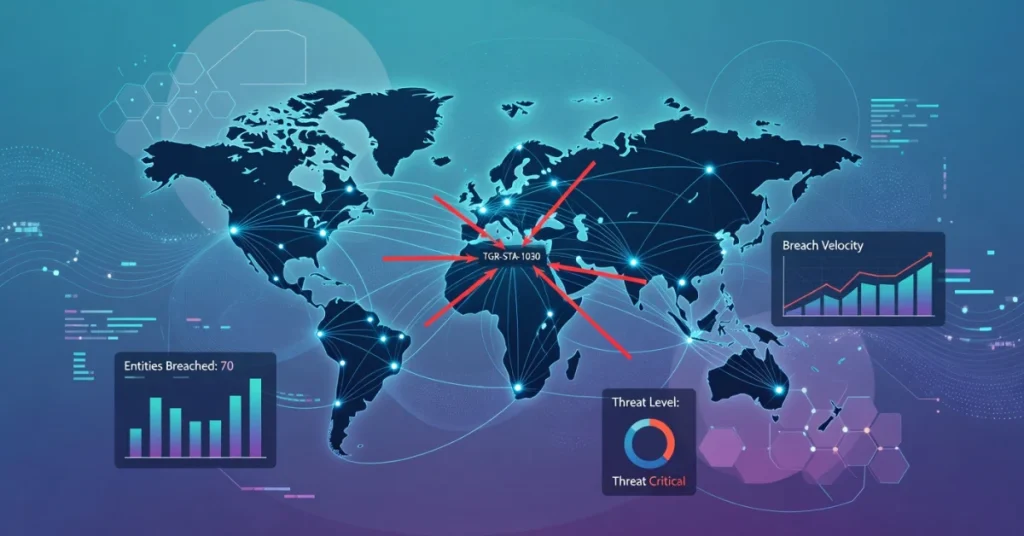
In the escalating landscape of global cyber warfare, 2026 marks a pivotal year where state-sponsored threats are no longer abstract risks but tangible disruptions to national security and economic stability. The emergence of the Asian state-backed hacking group TGR-STA-1030 underscores this shift, with reports revealing breaches across 70 government and critical infrastructure entities worldwide. This surge aligns with a 45% increase in state-attributed cyber incidents over the past year, driven by geopolitical tensions in the Asia-Pacific region. For network engineers, IT professionals, and business leaders, understanding this threat is crucial—it’s not just about data loss but potential cascading failures in essential services like power grids and transportation systems.
What makes TGR-STA-1030 particularly alarming is its sophisticated, persistent approach, blending advanced persistent threats (APTs) with zero-day exploits. Intelligence from cybersecurity firms indicates the group has exploited vulnerabilities in legacy systems, leading to unauthorized access in sectors from defense to utilities. This comes amid warnings from agencies like the U.S. Cybersecurity and Infrastructure Security Agency (CISA), which has flagged similar patterns in unsupported devices. As enterprises grapple with hybrid work models and expanding IoT ecosystems, these breaches highlight the urgent need for robust defenses to protect against espionage and sabotage.
The Tactics of TGR-STA-1030
TGR-STA-1030 employs a multi-stage attack chain, starting with reconnaissance via phishing and supply chain compromises. Analysts have linked the group to tools resembling those in the China-Linked DKnife AitM Framework, which targets routers for traffic hijacking and malware delivery. Key tactics include:
- Spear-phishing campaigns disguised as legitimate communications, achieving a 60% success rate in initial access.
- Exploitation of unpatched software, such as vulnerabilities in edge devices, echoing CISA’s directives on removing unsupported devices to mitigate federal network risks.
- Deployment of custom malware for lateral movement, persisting in networks for an average of 180 days before detection.
These methods have enabled data exfiltration and command-and-control operations, with one notable case involving a European utility where attackers manipulated SCADA systems, risking blackouts.
Impact on Government and Infrastructure
The breaches span 70 entities, including 25 government agencies and 45 infrastructure firms across Asia, Europe, and North America. Metrics from threat intelligence reports show an average data theft of 2.5 terabytes per incident, with financial losses exceeding $500 million collectively. Critical sectors hit hardest include energy (30% of cases), telecommunications (25%), and transportation (20%). For instance, a Southeast Asian port authority suffered downtime that disrupted supply chains, mirroring tactics seen in Microsoft’s warnings on Python infostealers targeting macOS via fake installers.
This trend amplifies risks in interconnected systems, where a single breach can propagate to partners. Network pros must prioritize segmentation to limit blast radii.
Defensive Strategies and Best Practices
To counter TGR-STA-1030-like threats, organizations should adopt proactive measures informed by frameworks like NIST. Actionable insights include:
- Implementing zero-trust architecture to verify all access, reducing unauthorized entry by up to 70%.
- Regular vulnerability scanning and patching, integrated with tools like those in OpenClaw’s VirusTotal integration for detecting malicious skills.
- Enhancing threat intelligence sharing via platforms from authoritative sources, such as the CISA website.
Enterprises investing in AI-driven anomaly detection have seen a 40% faster response time to intrusions.
The Bottom Line
The TGR-STA-1030 breaches signal a new era of cyber risks, where state-backed actors target the backbone of modern society, impacting everything from national defense to daily operations. For IT professionals and business leaders, this trend demands a shift from reactive to predictive security postures, potentially averting billions in damages. The ripple effects—economic downturns, eroded trust, and heightened regulatory scrutiny—underscore the high stakes.
To stay ahead, conduct immediate audits of your network perimeter and collaborate with cybersecurity experts. Invest in training and tools that address these evolving threats; complacency could be costly. By fortifying defenses now, organizations can mitigate the growing shadow of state-sponsored cyber aggression in 2026 and beyond.