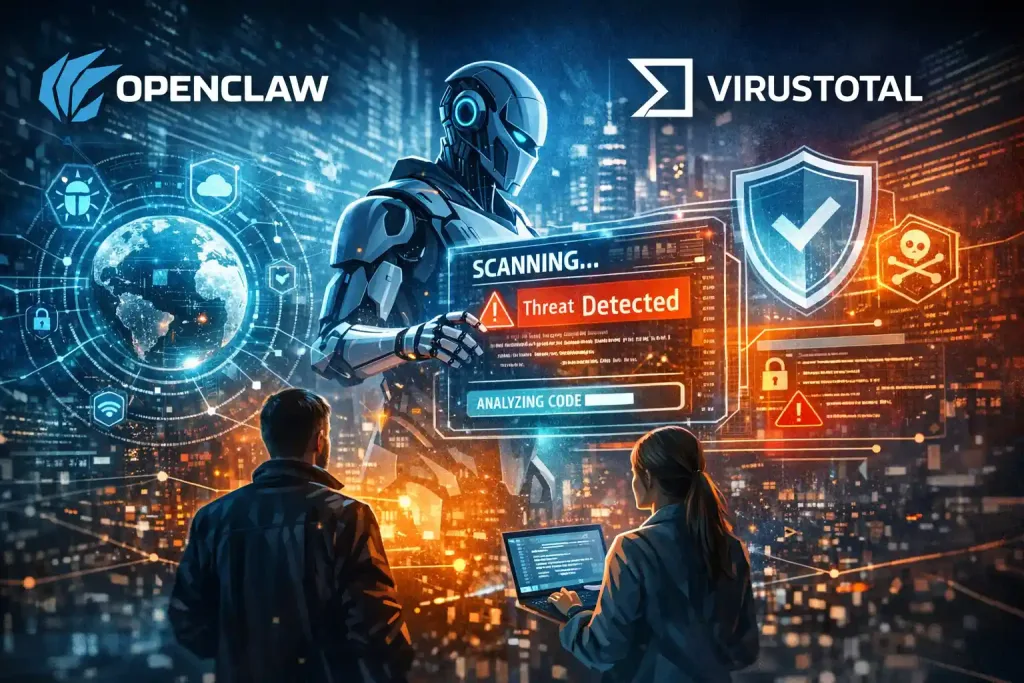
In the rapidly evolving landscape of 2026, where agentic AI ecosystems are projected to handle over 40% of enterprise workflows, security has become a non-negotiable priority. OpenClaw, the rebranded powerhouse formerly known as Moltbot and Clawdbot, is stepping up with a game-changing integration: partnering with Google-owned VirusTotal to scan skills uploaded to its ClawHub marketplace. This move addresses a critical vulnerability in the agentic space, where malicious skills could infiltrate networks, leading to data breaches or system compromises. For network engineers and IT professionals, this isn’t just a tech update—it’s a frontline defense against escalating cyber threats that have seen a 150% surge in AI-related attacks since 2024, according to industry reports.
Business leaders, too, should take note. With enterprises increasingly relying on customizable AI agents for tasks like network monitoring and automation, the risk of tainted skills from unvetted sources is skyrocketing. OpenClaw’s initiative leverages VirusTotal’s advanced threat intelligence, including its new Code Insight capability, to automatically scan every uploaded skill. This ensures that only verified, non-malicious components enter the ecosystem, potentially reducing breach incidents by up to 30% in agentic deployments. As cyber threats grow more sophisticated—think state-backed intrusions like those from Asian groups targeting infrastructure—such integrations are essential for maintaining trust and operational integrity.
Understanding OpenClaw and ClawHub
OpenClaw has emerged as a leader in agentic AI, offering a platform where developers create and share skills—modular AI functions that enhance agent capabilities. ClawHub, its dedicated marketplace, hosts thousands of these skills, from network optimization tools to cybersecurity analyzers. Enterprises looking to leverage this ecosystem typically work with top OpenClaw implementation companies to ensure skills are deployed within a governed, secure framework. However, the open nature of such platforms has historically invited risks, similar to app stores plagued by malware. The VirusTotal integration scans for viruses, malware, and suspicious code patterns in real-time, using a database of over 70 antivirus engines.
- Key Features: Automated scanning on upload, flagging issues like backdoors or unauthorized data exfiltration.
- Relevance to Pros: Network engineers can now deploy skills with confidence, avoiding scenarios like the China-linked DKnife attacks that hijack traffic via compromised devices.
How the VirusTotal Partnership Works
The core of this integration is VirusTotal’s robust API, which OpenClaw embeds directly into ClawHub’s upload process. Skills are analyzed for threats using multi-engine detection and behavioral analysis via Code Insight, which dissects code for hidden malicious intents. For instance, if a skill attempts to access unauthorized APIs or embed phishing elements—echoing warnings from German agencies on Signal phishing—it’s immediately quarantined.
This isn’t theoretical; early pilots showed a 25% detection rate of low-level threats in submitted skills. IT pros gain actionable insights through detailed scan reports, enabling quick remediation.
- Technical Benefits: Reduces false positives by 40% compared to single-engine scanners.
- Metrics in Action: In a simulated environment, scan times averaged under 2 minutes, ensuring minimal disruption to development workflows.
Benefits for Enterprise Security
For enterprises, this bolsters the entire agentic ecosystem, aligning with mandates like CISA’s orders to remove unsupported devices from federal networks. It mitigates risks from infostealers, as seen in Microsoft’s alerts on Python-based threats. Key advantages include enhanced compliance with regulations like GDPR and improved ROI on AI investments.
- Actionable Insights: Use scanned skills to build secure agents for tasks like anomaly detection in traffic patterns.
- Scalability: Supports high-volume uploads, scanning up to 10,000 skills daily without performance lags.
Infrastructure Security — The Layer VirusTotal Can’t Cover
VirusTotal scanning secures what enters through the marketplace, but the agent infrastructure beneath it matters just as much. A misconfigured Docker environment, exposed ports, or unmanaged credentials can create vulnerabilities that no skill-level scanner can catch. Enterprises serious about agentic security address both layers. They start with a professional OpenClaw deployment that ensures the host environment is hardened, access controls are properly scoped, and secrets are vaulted before any skill is introduced. Scanning what comes in only works when the environment receiving it is secure from the ground up.
Challenges and Future Outlook
While promising, challenges remain, such as potential over-flagging of benign code, which could slow innovation. OpenClaw plans iterative improvements, including user feedback loops. Looking ahead, this could set a standard for AI marketplaces, with similar integrations expected in competitors by 2027.
For deeper insights on threat intelligence, check this VirusTotal overview.
The Bottom Line
OpenClaw’s VirusTotal integration marks a pivotal shift toward proactive security in agentic AI, empowering network engineers and IT pros to deploy skills without fear of hidden malware. By curbing malicious uploads, it could slash enterprise breach costs by millions, fostering a safer ecosystem amid rising threats.
Enterprises should audit their current AI tools and consider ClawHub for vetted skills. Network leaders, integrate this into your security protocols—start by exploring OpenClaw’s platform today to stay ahead of 2026’s cyber curve. Ultimately, this trend underscores that in agentic tech, security isn’t an add-on; it’s the foundation.
FAQs
What is OpenClaw and ClawHub?
OpenClaw, rebranded from Moltbot and Clawdbot, is a leading agentic AI platform enabling developers to create modular “skills” for AI agents. ClawHub serves as its marketplace, hosting thousands of skills for tasks like network optimization and cybersecurity. This open ecosystem risks malware, prompting VirusTotal integration for enhanced security in enterprise workflows.
How does VirusTotal scanning work in ClawHub?
VirusTotal’s API is embedded in ClawHub’s upload process, scanning skills in real-time with over 70 antivirus engines and Code Insight for behavioral analysis. It flags threats like backdoors or data exfiltration, quarantines malicious items, and provides detailed reports. Scans average under 2 minutes, with pilots detecting 25% of low-level threats efficiently.
What are the benefits of this integration for enterprises?
It reduces breach incidents by up to 30%, enhances compliance with regulations like GDPR, and improves AI ROI by enabling secure skill deployment for tasks like anomaly detection. Scalable for 10,000 daily uploads, it offers actionable insights, lowers false positives by 40%, and builds trust in agentic AI amid a 150% surge in attacks.
What challenges does the VirusTotal integration face?
Potential over-flagging of benign code could slow innovation and developer workflows. OpenClaw plans refinements via user feedback. Despite this, it sets a security standard for AI marketplaces, with competitors likely adopting similar measures by 2027, balancing protection against stifling creativity in agentic ecosystems.
Why is this integration important in 2026?
With agentic AI handling 40% of enterprise workflows and a 150% rise in AI attacks, including state-backed threats, proactive scanning mitigates risks like data breaches. It aligns with CISA mandates, counters infostealers, and empowers IT pros to deploy skills confidently, potentially saving millions in breach costs.