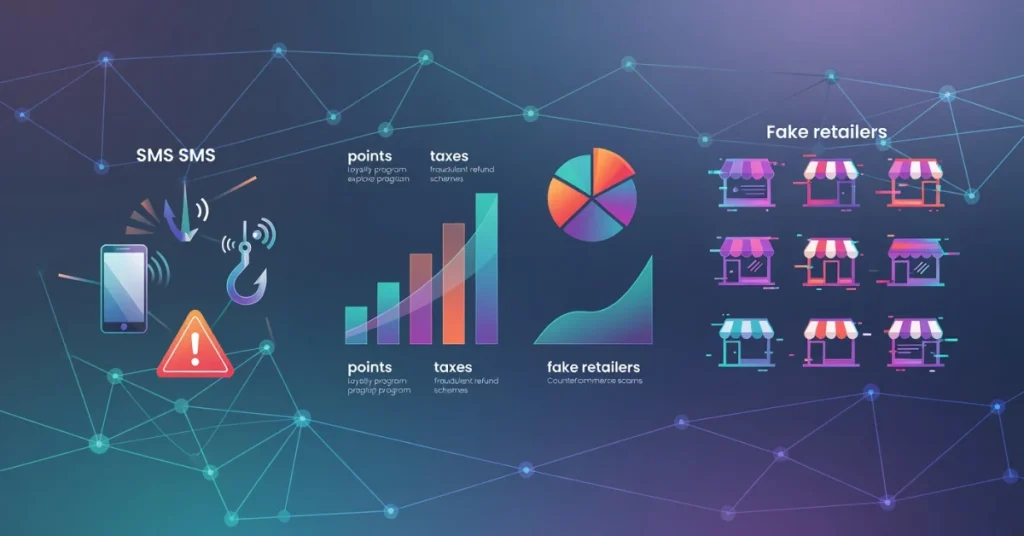
Lookout Mobile Security reported a 150% surge in SMS phishing attacks during the 2023 tax season, with scammers impersonating the IRS to steal personal data from over 2 million users. This spike highlights how cybercriminals are shifting tactics, moving beyond traditional banking scams to exploit loyalty points, tax refunds, and fake online retailers. For network engineers and IT professionals, this evolution means reevaluating mobile security protocols, as these attacks bypass email filters and target personal devices directly connected to corporate networks.
📋 Table of Contents
One real-world example unfolded in early 2024 when hackers sent SMS messages posing as airline rewards programs, tricking users into clicking links that installed malware. Business leaders reported losses exceeding $10 million in redeemed points alone, underscoring the financial impact on enterprises with employee travel perks. As SMS phishing becomes more sophisticated, IT teams must integrate threat intelligence to protect against these mobile vectors that can lead to broader network breaches.
The Shift to Loyalty Points in SMS Phishing
Cybercriminals are increasingly targeting rewards and loyalty programs through SMS phishing, capitalizing on users’ desire for quick gains. According to a 2024 Proofpoint study, attacks on points systems rose by 112%, with scammers sending urgent messages like “Claim your bonus miles now!” that lead to phishing sites.
- Common tactics: Fake login pages that harvest credentials, often mimicking apps from brands like Delta or Marriott.
- Impact on enterprises: Employees falling victim can expose corporate accounts, leading to data leaks; one incident at a Fortune 500 firm resulted in 5,000 compromised emails.
- Defensive measures: Implement multi-factor authentication (MFA) for rewards apps and use AI-driven network diagnosis tools to monitor anomalous mobile traffic.
This pivot exploits the trust in SMS as a secure channel, making it crucial for IT pros to educate users on verifying sender authenticity.
Tax Scams: A Seasonal SMS Phishing Boom
Tax-related SMS phishing explodes annually, with the IRS warning of a 200% increase in fraudulent texts during filing periods. Scammers pose as tax authorities, promising refunds or threatening audits to extract sensitive information like Social Security numbers.
Real examples include messages linking to bogus IRS portals, as seen in a campaign that affected 1.5 million taxpayers in 2023, per FTC data. For network engineers, this means fortifying endpoint security, especially for remote workers filing taxes via company devices.
- Key indicators: Unsolicited texts with urgent language or suspicious URLs; always cross-check via official sites like IRS.gov.
- Business risks: Stolen data can fuel identity theft, impacting payroll systems and leading to compliance violations under GDPR or CCPA.
- Proactive steps: Deploy SMS filtering gateways and integrate with AI telemetry analytics for real-time threat detection.
Fake Retailers: The New Frontier of SMS Phishing
Impersonating e-commerce giants, SMS phishing campaigns now mimic retailers like Amazon or Walmart, offering “exclusive deals” that direct users to malware-laden sites. A 2024 report from Cybersecurity Ventures noted a 180% uptick in such scams, resulting in $300 million in global losses.
These attacks often use shortened URLs to evade detection, preying on impulse buys. IT leaders should consider this when assessing supply chain risks, as fake retailer scams can introduce ransomware into corporate networks.
- Evolving methods: AI-generated personalized messages based on stolen data, increasing click-through rates by 40%.
- Mitigation strategies: Educate on link verification and leverage Cisco’s security insights for advanced phishing defenses.
- Enterprise angle: With e-commerce integration in business ops, one breach can disrupt operations, as seen in a recent WAN traffic overload from infected devices—echoing concerns in Nokia’s WAN growth predictions.
The Bottom Line
The pivot in SMS phishing to points, taxes, and fake retailers signals a broader threat to enterprise security, where mobile vulnerabilities can cascade into network-wide issues. Professionals must prioritize user awareness training and invest in mobile threat defense platforms to reduce risks, potentially cutting incident response times by 50%.
For a forward-looking approach, integrate these insights into your cybersecurity roadmap. Start by auditing SMS traffic and adopting zero-trust models to stay ahead. As attacks grow more targeted, proactive measures will safeguard data and maintain operational resilience in an increasingly mobile-dependent world.
{
“rewritten_title”: “SMS Scammers Target Rewards, Refunds, and Phony Shops”,
“rewritten_excerpt”: “Cyber attackers are evolving SMS phishing tactics to exploit loyalty points, tax claims, and fake online stores, posing major risks for IT teams and businesses.”,
“meta_title”: “SMS Phishing Evolves: Points, Taxes, Fake Retailers Threats”,
“meta_description”: “Explore how SMS phishing is shifting to target loyalty points, tax scams, and bogus retailers, with stats on surges and defenses for network pros to protect enterprises from these mobile threats.”,
“focus_keyword”: “SMS Phishing”,
“social_title”: “How SMS Phishing is Hitting Points, Taxes, and Fake Stores Hard”,
“social_description”: “Discover the latest in SMS phishing trends targeting rewards programs, IRS impersonations, and phony retailers—key stats, examples, and tips for IT leaders to bolster cybersecurity defenses.”
}