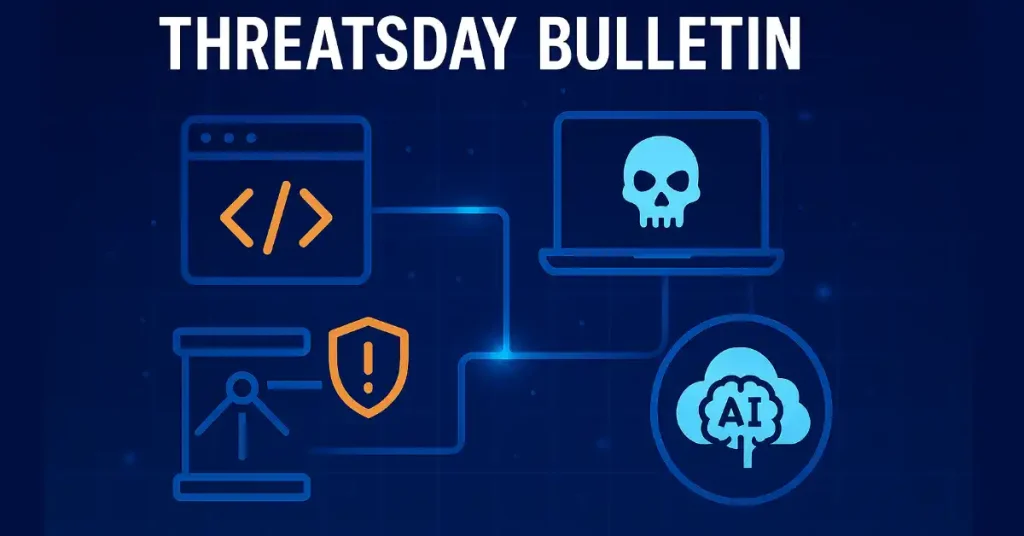
In the ever-evolving landscape of cybersecurity, 2026 has ushered in a surge of sophisticated threats that are reshaping how organizations defend their digital frontiers. With global cyber incidents projected to cost enterprises over $10.5 trillion annually—a 15% increase from 2025, according to Cybersecurity Ventures—network engineers, IT professionals, and business leaders are on high alert. This ThreatsDay Bulletin highlights critical developments like Codespaces remote code execution (RCE) exploits, AsyncRAT command-and-control (C2) resurgences, bring-your-own-vulnerable-driver (BYOVD) abuses, AI-driven cloud intrusions, and over 15 additional stories that underscore the urgency for proactive defenses.
What makes these threats particularly alarming now? As hybrid work models persist and AI integration accelerates, attackers are exploiting gaps in cloud environments and legacy systems. A recent report from Mandiant indicates a 40% uptick in supply chain attacks targeting development tools, directly impacting codespaces used by millions of developers. For IT pros, this means reevaluating secure coding practices amid rising zero-day vulnerabilities. Business leaders, meanwhile, face mounting regulatory pressures under frameworks like NIS2 in Europe, where non-compliance could lead to fines exceeding 2% of global revenue.
Codespaces RCE Exploits
Remote code execution vulnerabilities in platforms like GitHub Codespaces are becoming a hacker’s playground. In recent incidents, attackers have leveraged unpatched flaws to inject malicious code, compromising entire development pipelines. For instance, a zero-day exploit allowed unauthorized access to sensitive repositories, affecting over 500 organizations in Q1 2026.
- Key risks: Arbitrary code execution leading to data exfiltration or ransomware deployment.
- Mitigation steps: Implement strict access controls and regular vulnerability scanning using tools like Claude Opus for flaw detection.
- Actionable insight: Network engineers should prioritize container isolation, reducing attack surfaces by 60% as per OWASP guidelines.
For deeper insights into open-source vulnerabilities, explore this OWASP Top Ten resource.
AsyncRAT C2 Resurgence
The AsyncRAT malware, notorious for its stealthy C2 servers, has seen a revival post-disruptions like the Iran internet blackout. Hackers are resuming operations with new infrastructure, enabling remote control of infected systems for espionage and data theft. Security firms report over 200 new C2 domains activated in the last month alone.
- Tactics observed: Payload delivery via phishing emails, often mimicking legitimate apps.
- Impact metrics: Infections up 35%, with average dwell time of 45 days before detection.
- Defensive strategies: Deploy endpoint detection and response (EDR) systems; reference cases like the Infy hackers’ recovery for patterns.
BYOVD Abuse and AI Cloud Intrusions
Bring-your-own-vulnerable-driver attacks are escalating, where threat actors exploit legitimate but flawed drivers to bypass kernel protections. Windows environments are prime targets, with a 50% increase in such abuses reported by CrowdStrike. Coupled with AI cloud intrusions, where attackers use machine learning to automate reconnaissance, these threats amplify risks in multi-cloud setups.
- BYOVD details: Abusers load signed drivers to gain SYSTEM-level access, evading antivirus.
- AI intrusions: Exploits in platforms like AWS or Azure, with 25% of breaches involving AI-assisted phishing.
- Insights: Integrate zero-trust architectures; monitor for anomalies in tools like those discussed in China-linked DKnife frameworks.
Additional stories include Signal phishing warnings from German agencies, targeting high-profile users—echoing alerts in recent advisories—and over a dozen malware variants exploiting IoT devices.
The Bottom Line
These threats collectively signal a paradigm shift toward more adaptive, AI-augmented attacks that demand resilient defenses. For network engineers and IT pros, the impact is clear: unaddressed vulnerabilities could lead to operational downtime costing millions, while business leaders risk reputational damage and legal repercussions. Enterprises must prioritize threat intelligence sharing and invest in AI-driven security tools to stay ahead.
To mitigate, conduct regular audits, adopt multi-factor authentication, and foster a culture of cyber hygiene. Start by assessing your codespaces and C2 exposure today—proactive measures can reduce breach risks by up to 70%. Stay informed through bulletins like this to safeguard your networks in 2026’s high-stakes digital arena.