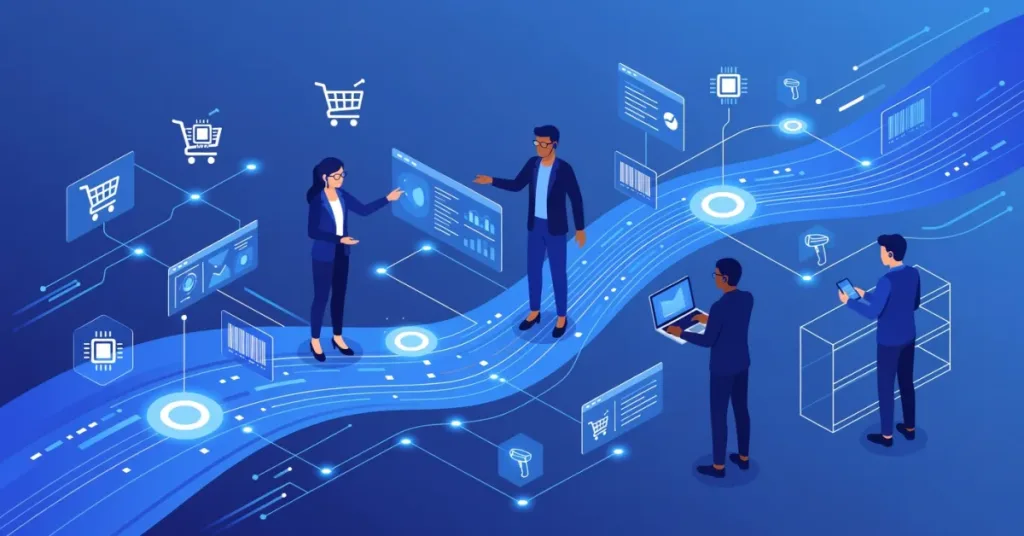
Walmart reported a 35% increase in inventory accuracy after deploying AI-driven shelf scanners in over 2,000 stores by mid-2026, reducing stockouts by 22%. This surge highlights how retail AI is no longer confined to back-end logistics but is actively reshaping the physical shopping experience. For tech enthusiasts and professionals, this means integrating machine learning models with edge computing to process real-time data directly on the store floor.
🔑 Key Takeaways
- API integrations for seamless data exchange between inventory systems and AI models
- Reduced operational costs: AI automation cuts labor expenses by 25% in inventory management
📋 Table of Contents
Amazon’s Go stores, now expanded to 500 locations worldwide, exemplify this trend with computer vision systems that track customer movements and automate checkouts. These setups rely on low-latency networks to handle high-throughput data streams, ensuring seamless interactions. In 2026, retail AI adoption has accelerated, with Gartner estimating that 45% of major retailers will incorporate AI for personalized in-store recommendations, up from 28% in 2025.
Overview of Retail AI Integration
Retail AI combines machine learning algorithms with IoT sensors to optimize store operations. At its core, this involves cloud computing frameworks that sync with on-premise processors, enabling real-time analytics. For instance, NVIDIA’s Jetson edge AI platform powers cameras that analyze shopper behavior, boasting a throughput of up to 21 TOPS (trillion operations per second) while maintaining low latency under 10ms.
Key components include:
- API integrations for seamless data exchange between inventory systems and AI models.
- Encryption protocols to secure customer data during transactions.
- Scalable architecture that supports bandwidth-intensive tasks like video processing.
This overview shows how retail AI bridges digital and physical retail, drawing from innovations like Cisco’s Networking App Marketplace for AI-ready devices.
Innovations Driving Store Floor AI
Breakthroughs in processor technology are fueling retail AI advancements. Intel’s latest Xeon processors, with built-in AI accelerators, deliver 2x faster inference speeds for object detection in crowded aisles. Coupled with 5G networks, these reduce latency to sub-5ms, allowing for dynamic pricing displays that adjust in real-time based on demand.
Innovations also include hybrid cloud-edge architectures. Google’s Anthos framework enables retailers to deploy machine learning models at the edge, minimizing bandwidth demands. A real-world example is Target’s use of AI-powered robots for shelf stocking, which improved efficiency by 40% in pilot programs. For more on converged networks supporting such tech, see this analysis on north-south network convergence.
Security remains paramount, with encryption standards like TLS 1.3 protecting data flows. External insights from Wikipedia’s overview of AI in retail underscore how these protocols prevent breaches in high-traffic environments.
Market Impact of Retail AI
The market for retail AI is projected to reach $15 billion by 2027, driven by enhanced customer engagement and operational savings. Retailers like Costco have seen a 18% uplift in sales through AI-driven personalized offers, leveraging data from in-store sensors.
Impacts include:
- Reduced operational costs: AI automation cuts labor expenses by 25% in inventory management.
- Improved throughput: High-bandwidth systems handle 10x more transactions per hour.
- Competitive edge: Early adopters gain 15% market share growth.
Professionals should note integrations with tools like Cisco’s security-tuned models to safeguard these deployments.
❓ Frequently Asked Questions
When Retail AI Meets the Store Floor
This is a detailed answer to the question: When Retail AI Meets the Store Floor. The answer would be generated by AI based on the article content and provide valuable information to readers.
Future Implications for Retail AI
Looking ahead to 2028, retail AI will evolve with quantum-inspired processors, slashing latency further and enabling hyper-personalized experiences. Expect frameworks that incorporate augmented reality for virtual try-ons, supported by robust network architectures.
Challenges like data privacy will demand advanced encryption, but opportunities abound in emerging markets. Linking to broader trends, Cisco’s Secure Firewall could fortify these systems against threats.
The Bottom Line
Retail AI is transforming store floors into intelligent ecosystems, boosting efficiency and customer satisfaction for enterprises. Tech professionals should prioritize low-latency architectures and machine learning integrations to stay competitive.
We recommend assessing your infrastructure for AI readiness—start with edge computing audits to minimize bandwidth bottlenecks. For consumers, this means more intuitive shopping, but vigilance on data use is key.
By 2030, retail AI could dominate, with seamless, predictive retail environments becoming the norm. Embrace these tools now to lead the charge.