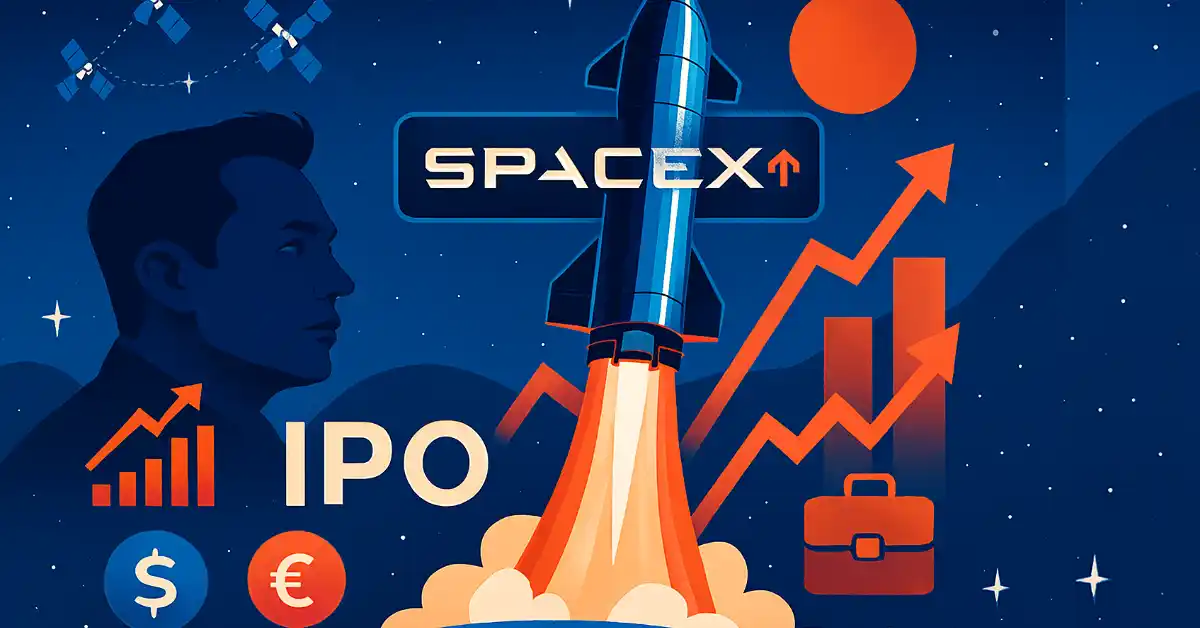
The prospect of an IPO has captured global attention, reflecting the company’s innovation and ambition. A SpaceX IPO would mark one of the most anticipated public offerings in recent history, potentially reshaping the investment landscape and giving a wider range of investors access to a pioneering aerospace venture. SpaceX has consistently disrupted the aerospace industry through reusable rocket technology, satellite internet services, and ambitious plans for space exploration, including missions to Mars.
While the company remains privately held, going public could provide new avenues for capital growth and investor participation, allowing individuals and institutions alike to engage with a transformative enterprise. To fully grasp the implications of this potential IPO, it is essential to examine SpaceX’s business model, revenue streams, competitive positioning, associated risks, and long-term investment potential.
This blog provides a detailed, professional analysis to help investors navigate the opportunity with clarity and an informed perspective.
Innovative Business Model Driving Growth
SpaceX’s approach to business goes beyond conventional aerospace practices, combining vertical integration, cutting-edge technology, and diversified services to fuel sustainable growth and long-term investor value.
- Vertical integration for operational efficiency: SpaceX handles design, manufacturing, and launch operations internally. This approach reduces reliance on external suppliers, allowing faster production cycles and enhanced quality control. Investors analyzing the IPO can see how vertical integration positions the company for sustainable profitability.
- Pioneering technological advancements: The company’s reusable rockets and Starship program set new benchmarks in aerospace technology. This focus on innovation not only lowers costs but also increases mission frequency, creating long-term competitive advantages.
- Diversified service offerings: Beyond launches, SpaceX generates revenue from satellite services, internet provision via Starlink, and government contracts. A potential IPO offers investors exposure to these varied streams, each contributing differently to growth and stability.
- Global expansion strategy: With ambitions to expand satellite internet coverage worldwide, SpaceX leverages its technology to enter new markets. This positions the company as a high-potential, scalable enterprise attractive to public market investors.
Market Position and Competitive Edge
Understanding SpaceX’s market dominance and strategic partnerships reveals why the company stands out in a competitive aerospace landscape, offering potential IPO investors confidence and insight into its resilience.
- Dominance in commercial launches: SpaceX leads the private launch sector with high-frequency, cost-efficient services. This market leadership is likely to influence investor confidence and IPO valuation.
- Government partnerships: Contracts with NASA and the U.S. Department of Defense provide predictable revenue streams. These strategic relationships reinforce operational credibility, an essential factor for potential shareholders.
- Brand recognition and investor sentiment: Elon Musk’s leadership and the company’s global visibility create strong market awareness. Brand strength often translates to investor trust and a positive IPO reception.
- Adaptability in a competitive landscape: The aerospace industry is rapidly evolving. SpaceX’s ability to innovate while maintaining cost efficiency provides a competitive moat, which is essential for evaluating the IPO’s long-term potential value.
Financial Insights and Valuation Considerations
A careful look at revenue trends, research and development investment, and profitability metrics is essential for evaluating the financial attractiveness and potential market valuation.
- Revenue growth trajectory: Investors should examine past financial performance and projected earnings, particularly from satellite services and launch operations. Consistent growth signals the potential for sustainable returns post-IPO.
- Investment in R&D: Significant capital is allocated to technological development, including reusable rockets and the Starlink satellite internet service. While high upfront costs exist, they promise scalability and future revenue, a critical consideration in IPO valuation.
- Profitability versus growth balance: Evaluating the company’s ability to balance operational expenditures with revenue growth helps investors anticipate financial stability. Strategic reinvestment in innovation often influences market confidence in high-growth IPOs.
- Market comparisons: Comparing SpaceX to peers in aerospace and technology provides benchmarks for IPO pricing. Investors can analyze valuation multiples, risk-adjusted returns, and market positioning to inform decision-making.
Risk Factors and Strategic Considerations
While opportunities are compelling, prospective investors must weigh operational, regulatory, and market risks to make informed decisions and set realistic expectations for returns.
- Operational risks: Delays in launches, technical failures, or satellite malfunctions can impact revenue and investor confidence. Understanding these operational uncertainties is crucial for informed participation in the IPO.
- Regulatory environment: Aerospace operations are heavily regulated by international and national authorities. Compliance requirements and geopolitical considerations can affect contracts, timelines, and profitability.
- Market volatility: A public offering can lead to stock price fluctuations driven by market sentiment, industry trends, and company performance. Prospective investors should evaluate risk tolerance before engaging.
- Long-term commitment: Aerospace ventures often require patience for returns, given their high capital intensity and extended development timelines. Investors must assess their investment horizon relative to the company’s strategic roadmap.
Strategic Opportunities for Investors
Participation in a SpaceX IPO provides unique access to a high-growth sector, technological innovation, and portfolio diversification, allowing investors to strategically position themselves in a transformative industry.
- Access to a high-growth sector: This provides entry into a transformative industry previously limited to private equity and institutional investors.
- Participation in technological innovation: Shareholders may indirectly benefit from advances in reusable rockets, global satellite networks, and commercial space exploration initiatives.
- Portfolio diversification: Investing in a space-focused company allows individuals and institutions to diversify holdings into an emerging, high-potential market segment.
- Market influence and liquidity: Public investors can trade shares and capitalize on long-term growth trends while also shaping market perception of space-related investments.
- Data-driven decision-making: Trusted platforms provide detailed performance metrics, historical data, and analytical tools to monitor SpaceX developments, enabling informed investment decisions post-IPO.
Conclusion
A SpaceX IPO represents a rare opportunity to invest in a company at the forefront of aerospace innovation. With a unique business model, diversified revenue streams, and a strong competitive position, the company offers potential for long-term growth but also presents inherent operational and regulatory risks. Investors can benefit by evaluating financial performance, technological initiatives, and market dynamics to make informed decisions.
Leveraging analytical platforms and staying up to date on company developments ensures shareholders are prepared for the dynamic landscape of aerospace investment. By understanding the fundamentals behind this potential IPO, investors can strategically position themselves to participate in one of the most transformative companies of the modern era.
FAQs
What drives SpaceX’s innovative business model?
SpaceX’s model relies on vertical integration for in-house design and manufacturing, reusable rockets like Starship to cut costs, and diversified revenue from launches, Starlink internet, and government contracts. This fosters scalability, quality control, and global expansion, appealing to investors by combining tech innovation with sustainable profitability in aerospace.
What is SpaceX’s market position and competitive edge?
SpaceX leads in commercial launches with cost-effective, frequent operations and strong partnerships like NASA and U.S. Defense for reliable revenue. Elon Musk’s leadership boosts brand trust, while adaptability in evolving markets provides a competitive moat through efficiency and innovation, positioning it favorably for an IPO.
What financial insights should investors consider for SpaceX IPO?
Focus on revenue growth from launches and satellites, high R&D for scalability, and balancing profitability with reinvestments. Valuation involves peer comparisons in aerospace/tech, assessing multiples, risks, and historical performance to gauge long-term potential amid initial costs and projections.
What are the key risk factors for SpaceX IPO investors?
Risks include operational issues like launch failures or delays, regulatory hurdles from authorities and geopolitics, and market volatility affecting stock sentiment. These demand risk tolerance and long-term commitment, as high-capital ventures may face extended timelines and unpredictable trends.
What strategic opportunities does a SpaceX IPO offer?
The IPO grants access to high-growth aerospace, tech advances in rockets and networks, portfolio diversification into emerging markets, and liquidity for trading. Investors can capture innovation-driven growth, using data tools to monitor performance in a sector previously limited to private funding.
Disclaimer: This article provides general insights into the potential of a SpaceX IPO based on information available as of February 19, 2026. It is for informational purposes only and does not constitute financial, investment, or legal advice. Market conditions, valuations, and timelines can change rapidly. Readers should conduct their own research and consult qualified financial advisors or professionals before making investment decisions. The author and publisher disclaim any liability for actions taken based on this content.