Your server is the heartbeat of your operation. Whether you are running a critical database, a corporate VPN, or a high-traffic e-commerce site, downtime or data corruption is not just an inconvenience—it is a reputation killer. While the market is flooded with hosting offers, seasoned administrators know that the real value lies not in the rock-bottom price, but in the integrity of the infrastructure. True economy comes from stability, not from cutting corners on hardware.
Key Takeaways:
- Data Integrity: Automated, regular backups are the only insurance policy that matters against data loss.
- Hardware Quality: Enterprise-grade NVMe and SSD drives ensure that your applications don’t bottleneck during peak loads.
- Privacy First: GDPR compliance and strict data protection standards are non-negotiable for European and global operations.
The Hidden Risks of “Noisy Neighbors”
The biggest challenge in virtualized hosting is resource contention. In lower-tier environments, if another user on the same physical machine experiences a traffic spike or runs a poorly optimized script, your performance suffers. This is often the result of outdated virtualization technologies that oversell resources.
To guarantee stability, you need isolation. This is where providers who prioritize architecture stand out. Companies like MVPS utilize KVM (Kernel-based Virtual Machine) technology. Unlike older container-based methods, KVM ensures that your resources—RAM, CPU, and disk I/O—are strictly allocated to you. It acts like a dedicated server within a cloud environment, offering a level of security and predictability that critical applications demand.
Why “Enterprise Hardware” is More Than a Buzzword
You might wonder why some servers feel “snappy” while others, with theoretically similar specs, crawl. The secret lies in the physical hardware. A consumer-grade SSD bought at an electronics store behaves very differently from an enterprise-grade drive designed for data centers.
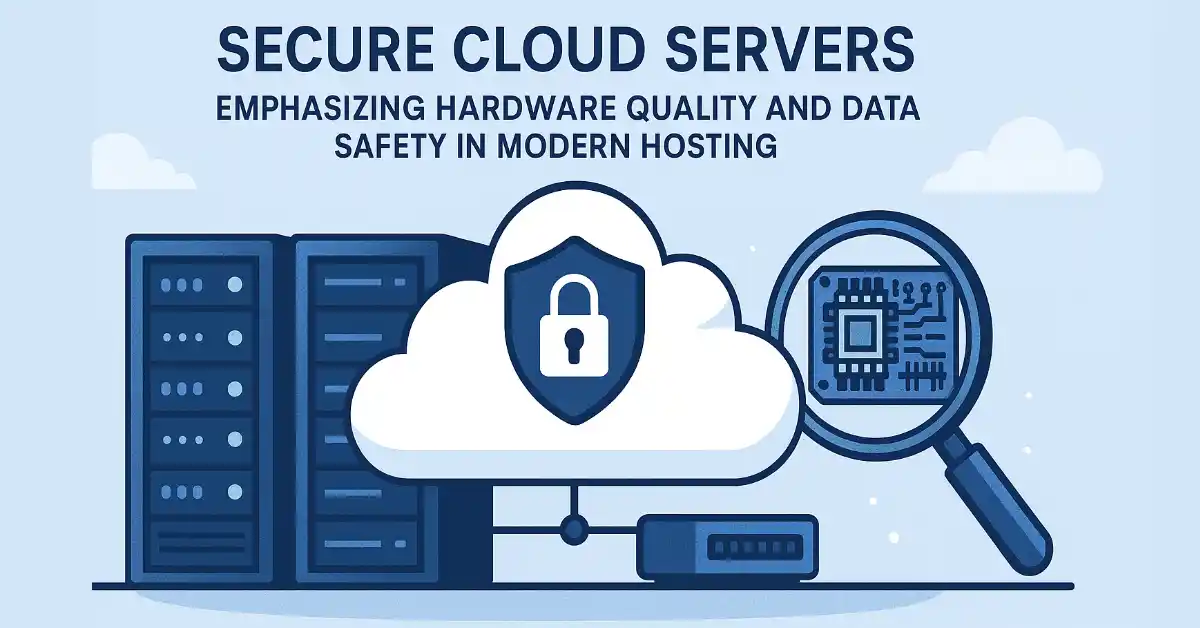
Reliable cloud hosting relies on Premium Enterprise Hardware.
- Durability: These components are built to run 24/7 under heavy load without failure.
- Speed: utilizing exclusively NVMe or high-performance SSDs ensures that database queries and file transfers happen instantly.
- Redundancy: High-quality infrastructure includes fail-safes. If one component struggles, the system is designed to keep running, ensuring maximum uptime for your services.
The Safety Net: Automated Backups and GDPR
Security is a two-fold concept. First, there is legal security. In an era of strict data privacy laws, hosting your data with a provider that is GDPR Ready is essential. It ensures that your customer data is handled with the highest level of privacy compliance, protecting you from legal liabilities.
Second, there is technical security. Data loss can happen to anyone—be it through human error, a malicious update, or a cyberattack. A professional hosting service distinguishes itself by what it offers before the disaster strikes. Features like free automated backups (created multiple times a week) are crucial. They allow you to roll back your server to a safe state in minutes, turning a potential catastrophe into a minor hiccup.
Instant Scalability without Downtime
Business needs change. A project that starts small might suddenly go viral or require more processing power. A rigid hosting environment forces you to migrate servers, causing downtime and headaches.
A modern, high-value Cloud VPS allows for seamless growth. You should be able to upgrade your CPU cores, RAM, or storage space instantly as your requirements evolve. This flexibility allows you to pay for what you need now, with the security of knowing that your infrastructure can grow with you tomorrow, without needing to reinstall your operating system or move data.
The Human Factor: Why Expert Support is Part of the Infrastructure
Even the most robust hardware requires human oversight. In the world of budget hosting, “support” often means an automated chatbot or a technician who merely follows a script. When your service is critical, you need access to engineers who understand the architecture of the cloud.
A provider committed to quality ensures that their support team is physically on-site and available 7 days a week. This means that if a hardware anomaly occurs, it is addressed immediately by staff who have direct access to the server nodes. Having a knowledgeable team that monitors the infrastructure 24/7 is the ultimate fail-safe, bridging the gap between automated technology and real-world problem solving.
Protecting Your Digital Reputation with Clean IPs
Safety isn’t just about preventing hacks; it’s also about maintaining your standing on the web. A major risk with “too good to be true” cheap hosting is that the network often becomes a haven for spammers and malicious actors. If your high-quality project ends up on a “dirty” IP range, your emails might go to spam, and your SEO rankings could suffer due to the “bad neighborhood” effect.
Premium Cloud VPS providers actively monitor their networks and enforce strict abuse policies. By keeping their IP pools clean and reputable, they ensure that your legitimate business traffic isn’t unfairly penalized by third-party blacklists. Paying for a quality host is, in essence, paying for a clean address in a respectable digital district.
FAQ
Why is KVM virtualization considered safer than OpenVZ?
KVM (Kernel-based Virtual Machine) offers full hardware virtualization. This means your Operating System is completely isolated from the host and other clients. You have your own kernel, which provides better security boundaries and prevents other users on the node from accessing or affecting your memory and processes.
What does “GDPR Ready” mean for a VPS provider?
It means the provider has implemented strict protocols to protect personal data according to European Union regulations. This includes secure data processing, limited access control, and clear policies on data residency. For any business handling EU citizen data, this is a mandatory compliance requirement.
Are backups really necessary if the hardware is high quality?
Absolutely. High-quality hardware protects against physical disk failure, but it cannot protect against accidental file deletion, corrupted software updates, or malware (ransomware). Automated backups are your safety net for logical errors that hardware cannot prevent.
How does “Enterprise Hardware” affect my website’s speed?
Enterprise hardware, particularly NVMe drives and server-grade CPUs, is optimized for high Input/Output (I/O) operations. This means your database can read and write data much faster than on standard hardware, resulting in faster page loads and a smoother experience for your users, even under heavy traffic.