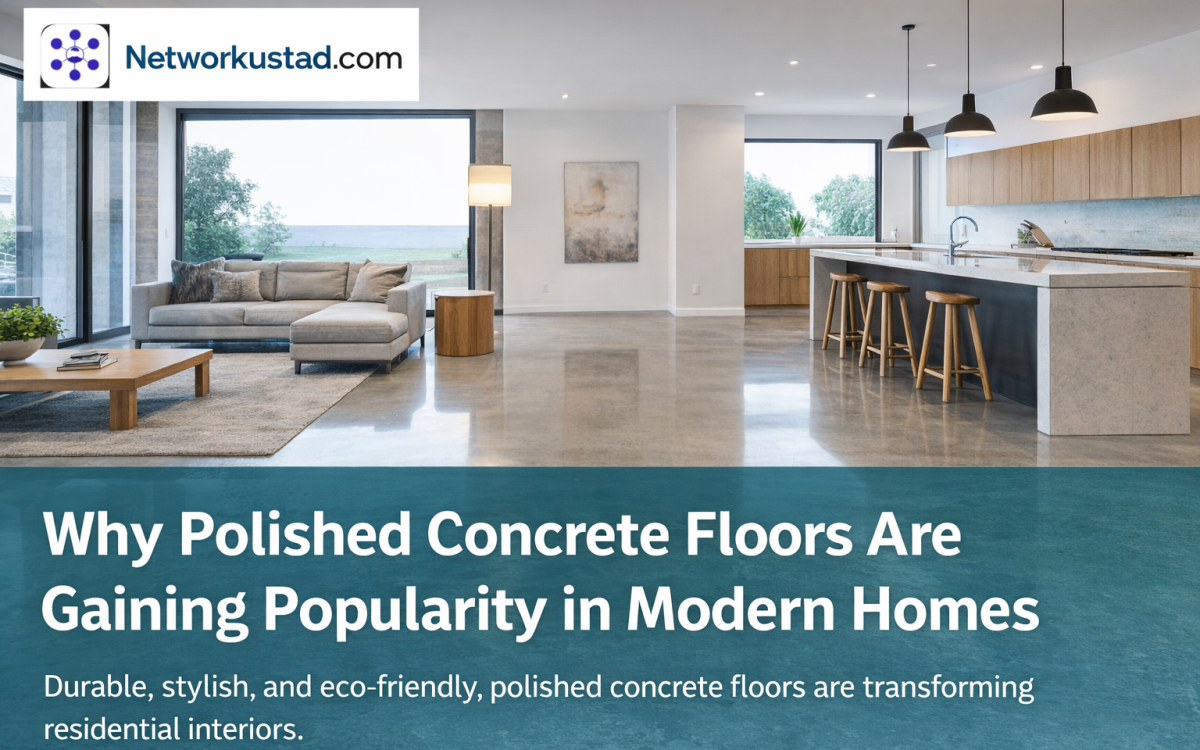
In recent years, homeowners and designers have shown growing interest in using polished concrete as a primary flooring choice. Once considered an industrial material, it now appears in modern homes for its durability, style, and environmental advantages.
Modern Aesthetic Appeal
Many people appreciate the sleek, minimalist look that polished concrete brings to interiors. Its reflective surface enhances light, making spaces feel larger and brighter. The finish options, from matte to high gloss, allow customization that complements a wide range of design preferences.
Color can also be introduced through stains or aggregates, creating unique textures and tones. This versatility makes it suitable for both contemporary and traditional interiors, blending effortlessly with wood, glass, or metal elements.
Durability and Longevity
Unlike many flooring materials that wear over time, polished concrete is extremely resilient. It resists scratches, dents, and heavy foot traffic, maintaining its appearance for decades when properly cared for. This makes it ideal for busy households or open-plan living areas.
The surface is sealed to increase hardness and prevent dusting, which can occur with untreated concrete. Regular cleaning with mild products is generally all that is needed to keep it in excellent condition.
Ease of Maintenance
Maintenance is another reason homeowners choose this flooring. Polished concrete does not trap dirt, allergens, or moisture. Sweeping and occasional damp mopping are typically enough to retain its shine. There is no need for waxes or harsh chemicals, reducing long-term upkeep costs.
- Resistant to stains and spills when sealed correctly
- Low risk of damage from furniture movement
- Minimal need for periodic refinishing
Energy and Environmental Benefits
Concrete floors contribute to energy efficiency by absorbing and releasing heat slowly. This thermal mass helps regulate indoor temperatures, lowering energy consumption for heating and cooling. In warm climates, the reflective qualities of polished concrete can also help keep interiors cooler.
From an environmental perspective, using existing concrete slabs reduces the need for additional materials. This makes it a sustainable option compared with flooring that requires adhesives or synthetic finishes.
Design Flexibility
Homeowners often discover that polished concrete can adapt to nearly any aesthetic goal. Whether aiming for a rustic, industrial, or modern look, the surface can be tailored through different levels of polish, color treatments, and embedded materials. It works equally well in kitchens, living rooms, and even bedrooms.
Designers appreciate that this flooring harmonizes with radiant heating systems, offering both comfort and style. It also transitions smoothly between indoor and outdoor areas, creating visual continuity throughout a home.
Practical Considerations When Choosing Concrete Floors
Before installation, it is important to evaluate factors such as moisture levels, existing substrate condition, and desired finish. Consulting professionals who specialize in concrete solutions can help ensure proper surface preparation and performance results.
Homeowners should also consider the acoustics of large spaces, as polished concrete can reflect sound. Area rugs and soft furnishings can balance this, adding warmth and comfort to the room.
The Growing Appeal of Polished Concrete in Homes
The rise of polished concrete in residential settings reflects a broader shift toward practical luxury. People value materials that are both beautiful and functional, and concrete meets these expectations. Its adaptability, sustainability, and longevity continue to make it a leading choice for modern living spaces.