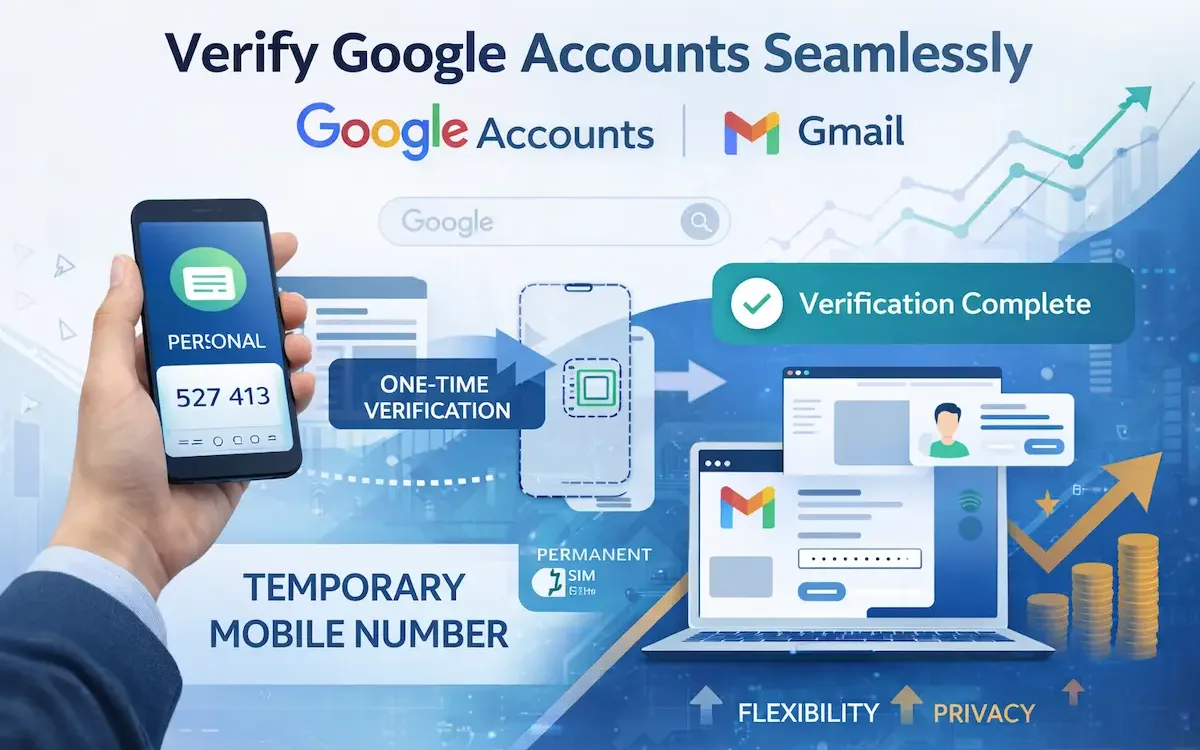
Gmail account creation is usually straightforward. However, in certain cases, Google requires phone verification before allowing full access. This additional step is designed to prevent automated registrations and protect the platform from abuse.
For many users, especially those managing multiple accounts or testing online services, using a personal SIM card for every new account is not practical. That’s where the concept of a temporary mobile number becomes relevant.
When Gmail Requests Phone Verification
Google may ask for a phone number during:
- new account registration
- repeated sign-up attempts
- login from new locations or devices
- recovery configuration
The system uses automated risk signals. If the behavior appears unusual, phone verification becomes mandatory.
Importantly, in most cases, the number is used only to receive a one-time SMS code.
Why Using a Personal SIM Is Not Always Ideal
Modern mobile numbers are closely tied to identity and long-term telecom registration. Using the same number for every online account can create several challenges:
- verification limits per phone number
- privacy exposure across platforms
- potential spam or unwanted contact
- difficulty separating personal and technical accounts
For developers, marketers, students, and digital professionals, keeping accounts structured is often more important than convenience.
What Is a Temporary Mobile Number?
A temporary mobile number is a virtual number capable of receiving SMS messages through an online interface. It does not require a physical SIM card installed in a device.
The process works as follows:
- Gmail requests a phone number
- A temporary number is used
- The SMS verification code is received online
- The code is entered to complete account setup
Once verification is completed, the number is typically no longer required.
Why Temporary Numbers Are Used for Gmail
Users commonly rely on a temporary mobile number for gmail verification when:
- creating secondary Gmail accounts
- testing app registrations
- separating work and personal email
- operating in different regions
- avoiding repeated use of a primary SIM
This approach is not about bypassing security. It simply provides flexibility during account setup.
Telecom Perspective: Why This Makes Sense
From a telecom standpoint, phone numbers have usage and registration constraints. Carriers may limit how many times a number can be used for verification on certain platforms.
Virtual numbers operate differently. They are structured for short-term SMS reception and are commonly used for:
- account activation
- OTP verification
- service testing
- digital onboarding
For users who need verification only once, a temporary channel can be more efficient than using a long-term personal SIM.
Important Considerations
While temporary numbers provide flexibility, users should:
- comply with Google’s terms of service
- avoid automated mass registrations
- use realistic account details
- enable recovery options after setup
Responsible usage reduces the likelihood of account restrictions.
Final Takeaway
Phone verification is part of Gmail’s security framework. However, not every account needs to be permanently tied to a personal mobile number.
For users managing multiple digital identities, a temporary solution offers structure, privacy control, and operational flexibility — especially when verification is required only once during account creation.