Healthcare companies are working with PR teams to drive sales and expand reach. It strengthens the company’s value and positions it at the forefront to ditch its competitors in the market, creating demand and delivering solid messages to the customers. Moreover, they extend their power in communicating with the target audience.
They reach the audiences with new ideas and provoke the companies to execute this idea to provide benefits to the consumers so that they have the urge to visit your company in the future. So if you are trying to work with a healthcare PR agency, see Pearl Lemon PR teams who are well equipped to provide the best professionals to work with your company.
Table of Contents:
- Create a Connection with the Media Before Narrating Any Story on Online Platforms
- Use Metric Tools to See the Progress of PR Over Time
- Narrate the Patient’s Story in the Market to Add Emotional Depth
- Advanced Healthcare PR Strategies for 2026
- Measuring Healthcare PR Success in the Digital Age
- The Future of Healthcare PR: AI and Automation
- Conclusion
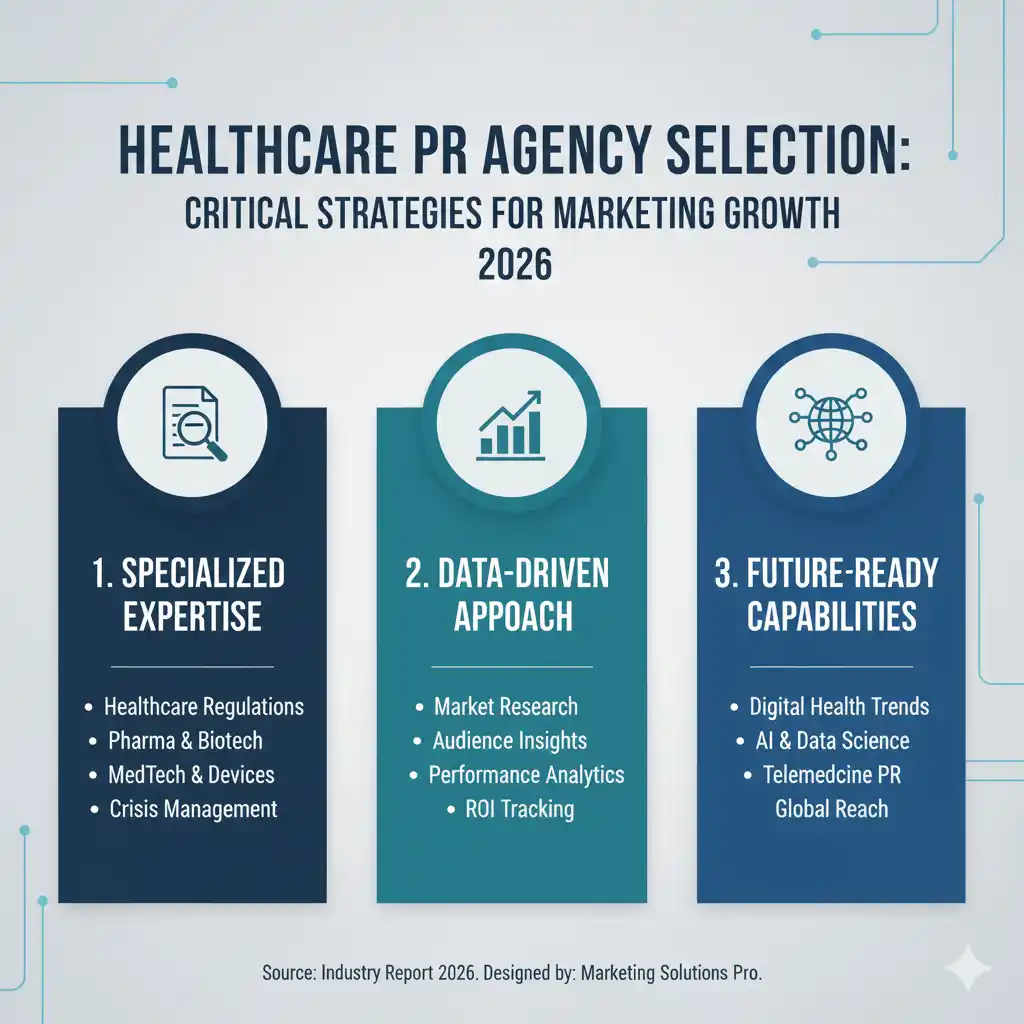
The Evolution of Healthcare PR in 2026
The healthcare public relations landscape has undergone dramatic transformation as we move into 2026. According to recent industry analysis, healthcare and pharma digital ad spending reached $24.77 billion in 2025, marking a 13.3% year-over-year increase. This explosive growth reflects the critical role that strategic communication plays in an increasingly competitive and digitally-driven healthcare market.
Healthcare PR is no longer peripheral—it has become a strategic imperative. In 2026, PR professionals must navigate trust deficits, regulatory intensity, algorithmic mediation of knowledge, and the rapid deployment of AI across health systems. The Edelman Trust Barometer 2024 reveals that while healthcare remains one of the most trusted sectors globally, it is also among the most fragile when credibility is challenged.
Healthcare organizations now operate in an environment where public perception directly influences regulatory scrutiny, patient behavior, investor confidence, and partnership viability. One poorly handled issue—whether a data breach, misleading claim, or delayed response—can undo years of trust-building.
Create a Connection with the Media Before Narrating Any Story on Online Platforms
Before pitching any story about the company, listening to what the media says about your company is necessary. Read, listen and understand the media perspective and try to make comments while appreciating their stories on the social media platforms. It will help you to make connections with the media. It will convince them to hear your story when you put favorable posts on their side. Also, offer them something without asking for any return to make the connection more strong.
Building Media Relationships in the AI Era
In 2026, media relations has evolved beyond traditional pitching. With generative search engines now synthesizing information from authoritative sources and presenting it as single responses, healthcare PR teams must optimize content not just for ranking but for inclusion in AI-generated answers. Approximately 60% of health queries are now conversational, requiring healthcare communicators to create content that answers real patient questions in natural language.
Social listening tools like Brandwatch and Meltwater have become essential for detecting shifts in patient sentiment before they escalate into crises. By monitoring keywords, hashtags, and trending concerns, PR teams can respond to issues while they’re still manageable. During recent public health events, organizations using these tools were able to detect rising anxiety and respond with targeted content that provided answers and calmed fears before media attention peaked.
The Power of Thought Leadership
Healthcare PR professionals should focus on white papers, expert bylines, patient education content, and original research summaries rather than purely promotional announcements. Publishing original data, research insights, and educational resources helps push credible narratives higher while reducing the visibility of misleading or harmful content. In fact, 69% of healthcare marketers now rank generative AI as a critical technology trend, up 10% from previous surveys.
Use Metric Tools to See the Progress of PR Over Time
Capturing the attention of the public is not an easy task. It requires firm strategies which are held by PR teams. When practicing PR in the healthcare sector, you must use specific tools or metrics to measure PR consistently. It helps measure the sheer voice, reach, and exposure to tracking the healthcare PR’s progress over time. It works rigorously when confronted with decision-makers and influencers in a purchase.
Advanced Analytics and ROI Measurement in 2026
The misconception that storytelling is difficult to measure is no longer valid. The real value of healthcare PR narratives shows up in patient retention, satisfaction scores, and long-term engagement. Just as modern business IT management has transformed into a strategic powerhouse driving innovation and efficiency, healthcare PR analytics have evolved into critical decision-making tools. Healthcare organizations should track:
HCAHPS Scores: Patient experience surveys influenced by how well patients feel they were heard and understood. Organizations with strong PR narratives consistently score higher on these metrics.
Patient Acquisition Cost (PAC): According to recent healthcare marketing statistics, over 90% of patients consult reviews when searching for a doctor. Strategic PR that manages online reputation can significantly reduce acquisition costs.
Appointment Booking Rates: A/B testing shows that story-driven content consistently outperforms traditional feature-list approaches. In one case, a telehealth provider’s story-based onboarding email achieved substantially higher click-through and appointment booking rates than standard promotional content.
Media Coverage Quality: Rather than counting clips, measure the quality and reach of coverage. Organizations should track mentions in high-value outlets and the sentiment of coverage over time.
AI Search Visibility: In 2026, ranking highly in AI-generated search results is as important as traditional SEO. Healthcare PR teams must ensure their content is cited within AI-generated answers, not just ranking on search pages.
Essential PR Measurement Tools for 2026
Healthcare organizations should allocate a fixed percentage of their PR budget to analytics infrastructure. Current industry data shows that 88% of health leaders trust AI technologies, and 64% of healthcare executives expect AI to reduce costs by standardizing and automating workflows. PR measurement tools should include:
- Predictive Analytics: AI-powered systems that anticipate patient needs and customize communications based on search behavior, appointment patterns, and past interactions
- Sentiment Analysis Platforms: Real-time monitoring of brand perception across digital channels
- Attribution Models: Privacy-compliant tracking that produces reliable data for decision-making while respecting HIPAA requirements
- Patient Engagement Metrics: Tracking how educational content and PR initiatives impact patient behavior and clinical outcomes
Narrate the Patient’s Story in the Market to Add Emotional Depth
Practicing Healthcare PR needs to offer a clever approach in front of the audience. So be good at pitching content after leveraging stories from the patient to create an emotional ambiance and eventually drive traffic. This is because when a company decides to launch a product, the task of PR will be to notify the people about the product and how it will serve them for their betterment. It is the sole purpose of healthcare work.
The Strategic Imperative of Patient Storytelling
Patient storytelling has emerged as one of the most powerful tools in healthcare communication. Research published in the Journal of Medical Internet Research finds that online patient reviews significantly influence healthcare provider choice and public perception, making active reputation management essential.
However, effective patient storytelling in 2026 requires more than collecting testimonials. It demands a strategic, ethically grounded approach that balances HIPAA compliance with authentic narrative power.
Best Practices for Patient Storytelling in 2026
Obtain Proper Consent and Anonymization: HIPAA compliance doesn’t have to be a barrier to storytelling. With proper consent and anonymization protocols, organizations can share powerful stories without compromising privacy. Legal and compliance teams should be involved early in the process, not brought in at the end.
Focus on Outcomes, Not Features: When launching a new service or technology, don’t lead with specifications. Lead with how it changed a patient’s life. A press release about a new AI diagnostic tool might get buried, but one starting with a real patient whose life was transformed by that tool stands out to journalists and resonates with audiences.
Create Multi-Format Content: Patient stories should be adapted across formats:
- Short-form videos for social media (TikTok and social video platforms saw 28% year-over-year growth, with 46% of marketers calling them critical)
- Long-form articles for thought leadership
- Podcast episodes for in-depth conversations
- Infographics highlighting key statistics
Healthcare providers like those specializing in dental implant procedures effectively demonstrate patient education through multi-format content that guides patients through recovery phases and sets realistic expectations.
Emphasize Authenticity: Content that feels natural and organic consistently outperforms highly produced material. Videos featuring nurses and physicians are particularly influential because patients generally trust information delivered by these experts. Articles discussing precision manufacturing in dental implant success rates exemplify how technical healthcare topics can be communicated authentically while maintaining patient trust and demonstrating quality standards.
Include Clear Calls to Action: Patient stories should outline clear ways health professionals can facilitate positive change in research or care delivery. The most effective narratives inspire both emotional connection and practical action.
The Storytelling Investment Model
Too often, organizations spend heavily on distribution—media buys, ad placements—without investing in the actual narrative. A better model allocates a fixed percentage of the PR budget to story development. That means hiring writers who understand healthcare, commissioning real patient interviews, and producing content that moves people, not just informs them.
Advanced Healthcare PR Strategies for 2026
Combating Healthcare Misinformation
Healthcare misinformation is no longer limited to fringe platforms. Deepfakes, AI-generated content, and manipulated research claims increasingly target medical brands and institutions. The World Economic Forum has flagged health-related misinformation as a significant global risk due to its impact on patient behavior and public safety.
Healthcare PR teams must implement proactive strategies:
Rapid Response Protocols: Organizations need crisis communication plans specifically designed for misinformation. The first 48 hours after a data breach or false claim can save or sink a reputation.
Expert Networks: Maintain relationships with credible medical experts and key opinion leaders (KOLs) who can quickly validate or correct information circulating online.
Educational Content Pipelines: Consistent publication of evidence-based content helps establish organizations as authoritative sources that AI systems and patients alike can trust.
Partnership Strategies: Strategic collaborations between healthcare providers, KOLs, and technology companies play a crucial role in improving patient experiences. These partnerships should be highlighted in PR strategies to demonstrate innovation and commitment to quality care.
Privacy-First Healthcare Marketing
The healthcare marketing landscape continues to be shaped by stricter privacy rules and regulatory guidance that limit the use of common tracking tools. Any analytics platform that could capture health-related user behavior without proper safeguards is a compliance risk. Understanding email security and end-to-end encryption has become essential for healthcare PR teams managing sensitive patient communications.
Healthcare PR and marketing teams must shift to:
- HIPAA-compliant analytics vendors
- Consent-based data collection
- Privacy-safe attribution models
Though this increases costs initially, clean, compliant tracking produces more reliable data for decision-making and improves return on spend. In 2026, 100% of healthcare marketing campaigns should prioritize privacy-first approaches.
Crisis Management in the Digital Age
The EY-KLAS US Healthcare Cyber Resilience Survey found that 72% of health executives experienced moderate to severe financial impacts from cyber incidents. Healthcare PR professionals must view cybersecurity not as a cost center but as a strategic enabler of trust. As highlighted in comprehensive guides on cybersecurity management for e-commerce businesses, the same principles of proactive security and transparent communication apply to healthcare organizations handling sensitive patient data.
Crisis communication should be integrated with:
- Incident Response Teams: PR professionals should have seats at the table during cybersecurity planning
- Stakeholder Mapping: Identify all audiences (patients, staff, regulators, media) and prepare tailored messages for each
- Transparent Communication: In an age of instant information, delayed or evasive responses amplify crises
Measuring Healthcare PR Success in the Digital Age
Key Performance Indicators for 2026
Modern healthcare PR success extends beyond vanity metrics. Organizations should track:
Patient Sentiment Scores: Using AI-powered sentiment analysis to gauge how patients feel about the organization across digital channels
Share of Voice: Measuring mentions relative to competitors in key media outlets and AI search results
Healthcare Professional (HCP) Engagement: Tracking how physicians, nurses, and other medical professionals interact with and share organizational content
Referral Patterns: Analyzing whether PR initiatives translate into increased physician referrals and patient appointments
Regulatory Compliance Metrics: Ensuring all communications meet current standards while measuring the efficiency of approval processes
Budget Allocation Best Practices
Healthcare marketing professionals in the US earn an average of $33.10 per hour as of October 2025, with wages ranging from $19.71 to $54.09 per hour. Organizations should budget accordingly for skilled PR talent while allocating resources across:
- Content Creation (30%): Original storytelling, patient narratives, expert bylines
- Distribution (25%): Paid media, social promotion, partnership amplification
- Technology (20%): Analytics platforms, social listening tools, AI optimization
- Media Relations (15%): Journalist outreach, press event coordination
- Crisis Preparedness (10%): Training, protocol development, rapid response capacity
The Future of Healthcare PR: AI and Automation
AI Integration in Healthcare Communications
US healthcare sector organizations outpace the broader economy in adoption rates of AI applications. Health systems show a particularly high adoption rate at 27%, with acceleration since September 2023 growing at approximately three times the rate of the broader economy.
Healthcare PR teams should leverage AI for:
Content Optimization: Using natural language processing to ensure content answers patient questions in the way people actually search
Predictive Patient Engagement: AI-driven insights that anticipate follow-ups, screenings, and preventive care needs, allowing proactive communication
Automated Workflow Management: Streamlining routine tasks like media monitoring, report generation, and initial response drafting
Personalization at Scale: Creating customized communication pathways for different patient segments without sacrificing the human touch
Preparing for Generative Search Dominance
Google AI Overviews, AI platforms, and large language models are beginning to shape the patient journey just as significantly as the original invention of Google. Healthcare PR teams must:
- Optimize for Featured Snippets: Structure content to appear in AI-generated summaries
- Build Authority Signals: Establish expertise through consistent publication of high-quality, evidence-based content
- Create Conversational Content: Write in natural language that matches how patients actually ask health questions
- Maintain Freshness: Regularly update content to ensure AI systems pull the most current information
The Human Element in an AI World
Despite technological advances, the human element remains irreplaceable in healthcare PR. Patients engage when communication feels timely, relevant, and tailored to their specific needs rather than generic or one-size-fits-all. The National Institutes of Health emphasizes that personalization dramatically improves patient engagement rates.
Healthcare PR professionals should:
- Use AI to handle routine tasks, freeing time for strategic thinking and relationship building
- Ensure all AI-generated content is reviewed by subject matter experts
- Maintain authentic human connections with media, influencers, and stakeholders
- Remember that empathy, nuance, and ethical judgment remain distinctly human capabilities
Conclusion
Talking about the healthcare sector is an important sector to the public. However, it is challenging to get recognized by a set of people in the healthcare world because it needs trust, worthiness, and liability, which many companies fail to provide. So, by including PR teams for this purpose, your company can be recognized by influential publications and associations by incorporating strategies in the run.
As we navigate 2026, healthcare PR has evolved from a support function to a strategic imperative. The confluence of technological advancement, policy upheaval, and heightened patient expectations has made communication inseparable from core operations. Success requires healthcare organizations to:
Embrace AI While Maintaining Authenticity: Leverage technology for efficiency and personalization, but never lose the human touch that builds trust in healthcare relationships.
Prioritize Proactive Credibility Management: In an era of misinformation and algorithmic mediation, organizations must actively manage their reputations through consistent, evidence-based communication rather than reactive damage control.
Invest in Storytelling Infrastructure: Allocate meaningful resources to narrative development, not just distribution. The most powerful stories require skilled writers, proper patient consent processes, and authentic engagement with the communities being served.
Measure What Matters: Move beyond vanity metrics to track outcomes that reflect true organizational impact—patient satisfaction, health outcomes, community trust, and long-term loyalty.
Build Strategic Partnerships: Collaborate with media, KOLs, technology companies, and community organizations to amplify reach and enhance credibility.
The practices growing in 2026 aren’t drowning in “more marketing”—they’re tightening the fundamentals: showing up clearly in AI, answering real patient questions, matching campaigns to actual capacity, and making it effortless for patients to engage. Healthcare organizations that master these principles while maintaining unwavering commitment to patient wellbeing will define the future of healthcare communication.
In this transformative era, healthcare PR professionals serve as the critical bridge between scientific advancement and public understanding, between organizational goals and patient needs, between data and empathy. Those who excel at this balance will not only drive business success but contribute meaningfully to better health outcomes and stronger, more resilient healthcare systems.
Frequently Asked Questions (FAQs)
What makes healthcare PR different from traditional PR in 2026?
Healthcare PR now requires AI optimization, HIPAA compliance, and strategies for combating medical misinformation while maintaining trust in a highly regulated environment.
How can healthcare organizations measure PR success effectively?
Track patient sentiment scores, share of voice in AI search results, HCAHPS scores, appointment booking rates, and media coverage quality rather than vanity metrics.
Why is patient storytelling critical in healthcare marketing?
Patient stories create emotional connections and build trust more effectively than data alone, with 90%+ of patients consulting reviews when choosing providers.
How should healthcare PR teams prepare for AI-driven search?
Optimize content for conversational queries, build authority through consistent evidence-based publishing, and ensure visibility in AI-generated answer summaries.
What role does privacy compliance play in healthcare PR?
HIPAA-compliant tracking and consent-based data collection are essential, producing reliable insights while protecting patient privacy and maintaining regulatory compliance.
Disclaimer: This article provides general information about healthcare public relations strategies for educational purposes only and does not constitute professional medical, legal, or business advice. Healthcare organizations should consult qualified PR professionals, legal counsel, and compliance experts before implementing any strategies discussed herein. All statistics are based on publicly available information current as of January 2026. Healthcare regulations, including HIPAA compliance requirements, vary by jurisdiction. Organizations must ensure their PR practices comply with applicable laws. Mention of specific companies or tools does not constitute endorsement. Patient privacy must always be protected according to HIPAA regulations.