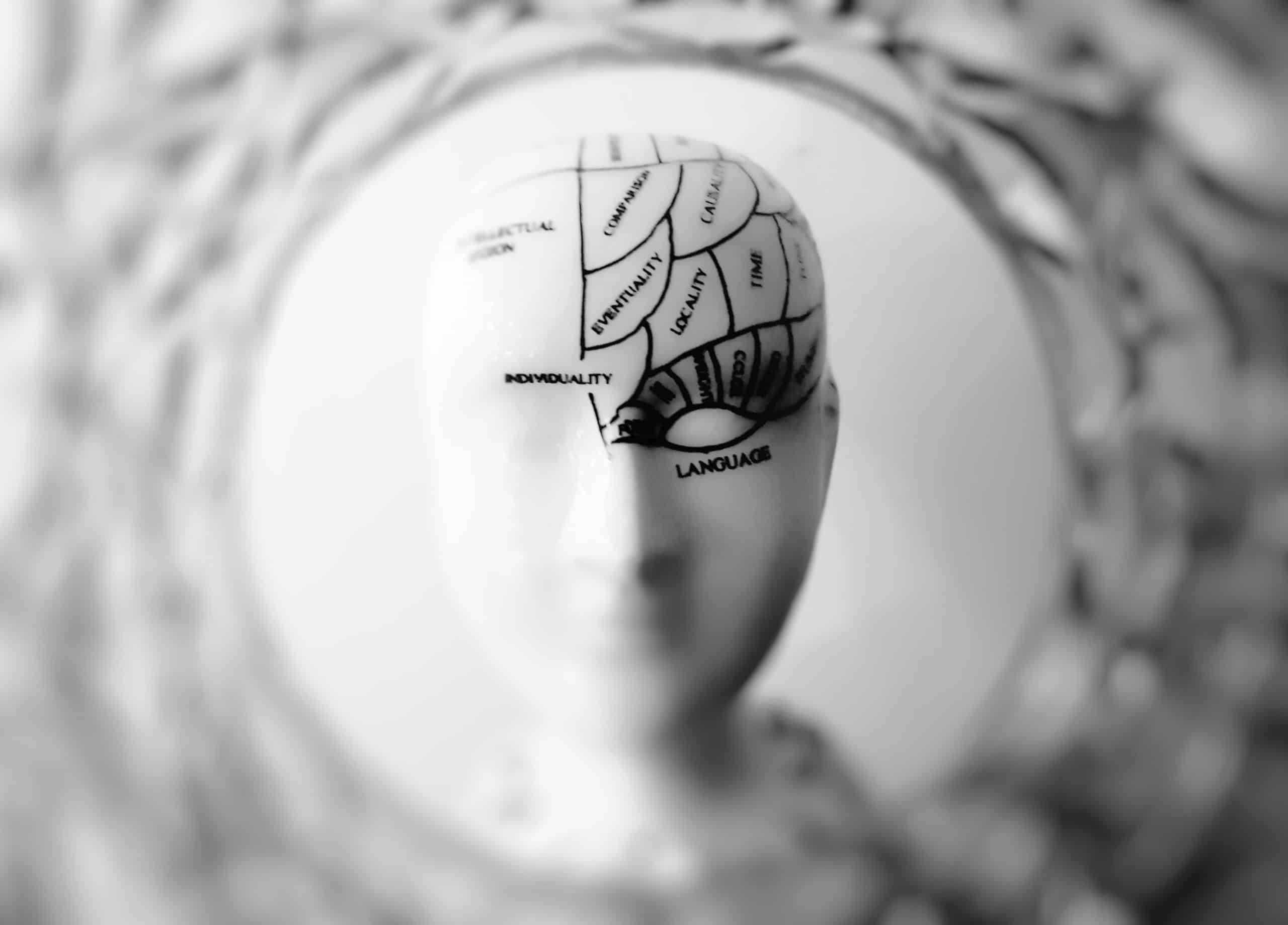
The brain is one of the human body’s most complex and vital organs. It consists of two hemispheres, the left and the right, each responsible for specific functions. The right brain’s hemisphere is responsible for logical thinking, analysis, and language. It helps us understand and interpret written and spoken language, problem-solve, and perform mathematical calculations.
On the other hand, the right hemisphere nourishes creativity, intuition, and emotions. It helps us appreciate art, music, and beauty and is responsible for understanding humor, facial expressions, and tone of voice.
As neuroscience has advanced into 2026, this traditional view has been refined. While lateralization exists—such as language often being left-dominant—the hemispheres are highly interconnected via the corpus callosum, enabling collaborative function. Recent 2025 fMRI studies emphasize that complex tasks like problem-solving involve whole-brain networks, debunking strict “side dominance” as an oversimplification. For instance, creativity, once attributed solely to the right brain, activates bilateral regions, including the default mode network.
History of the Right-Brain vs. Left-Brain Concept
The idea originated in the 1960s from split-brain research by Roger Sperry, who won a Nobel Prize for showing hemispheric specialization in patients with severed corpus callosum. Popular culture amplified this into personality myths—left-brained as analytical, right-brained as artistic—but 2025 meta-analyses confirm no evidence for such traits. In 2026, with AI-assisted brain mapping, we’re seeing dynamic connectivity, where hemispheres adapt via neuroplasticity.
What are the functions of the right and left brain?
To understand the functions of the right and left brain, we first need to understand how the brain works. The brain divides into two hemispheres, the right and the left hemispheres, which connect via a bundle of fibers called the corpus callosum.
Here are the functions of each hemisphere:
| Left hemisphere | Right hemisphere |
|---|---|
| The left hemisphere is responsible for analytical thinking, language, and logical reasoning. It helps you to interpret and process information, solve problems, and make decisions. | Associates with creative thinking, intuition, imagination, and holistic thinking. It helps recognize patterns, faces, and objects, aiding artistic expression. |
| It’s also responsible for sequential thinking, organizing, planning, and making lists. | It helps with spatial awareness, allowing people to navigate through their environment. Moreover, it helps understand the relationship between objects. |
While these distinctions hold for basic functions—like left-hemisphere dominance in right-handed people’s speech (Broca’s area)—modern research shows overlap. A 2025 University of Utah study revisited personality traits, finding no correlation between “left-brained” logic and career choices. Instead, tasks like music appreciation engage both sides, with the right handling melody and left rhythm.
Real-World Examples of Hemispheric Functions in 2026
In daily life, reading (left-dominant) integrates with visual imagery (right-dominant). In education, VR tools now train balanced brain use, improving learning outcomes by 15-20% per 2025 trials. For stroke recovery, neuroplasticity allows the unaffected hemisphere to compensate, highlighting integration over dominance.
The difference between right-brain and left-brain dominance
The brain is composed of two hemispheres, the right and the left. Each side manages different functions, and it’s believed that some individuals are more dominant on one side than the other. Right-brain-dominant people are often creative, intuitive, and artistic. Meanwhile, left-brain-dominant individuals are typically more logical, analytical, and detail-oriented. Here are some differences between the two sides:
| Left Brain Hemisphere | Right Brain Hemisphere |
|---|---|
| Logical thinking | Intuitive thinking |
| Analytical | Holistic |
| Sequential | Random |
| Language processing | Visual-spatial |
| Mathematics | Creativity |
| Reasoning | Imagination |
| Fact-based | Emotion-based |
| Problem-solving | Emotional intelligence |
| Detail-oriented | Big picture |
| Verbal | Nonverbal |
This table reflects traditional views, but 2025-2026 research debunks dominance as a myth. Brain imaging shows no “dominant” personalities; instead, everyone uses both hemispheres collaboratively. For example, mathematicians often exhibit creative right-brain activity, and artists use logical planning.
Debunking the Dominance Myth: Evidence from Modern Neuroscience
The myth persists in pop psychology, but a 2025 Psychology Today review clarifies creativity as a whole-brain process. Factors like handedness influence slight asymmetries, but neuroplasticity allows rewiring. In 2026, AI models simulate brain networks, predicting balanced use for optimal cognition.
The benefits of having a dominant side
A dominant side, whether the right or left brain, can provide various benefits. Understanding your dominant side can help you harness your strengths and find ways to compensate for your weaknesses. Here are some advantages of having a dominant side:
- Improved Creativity: Individuals with right-brain dominance tend to be more creative and imaginative, which can benefit artists, designers, and writers.
- Enhanced Logical Thinking: People with left-brain dominance tend to be more analytical and logical, making them suitable for critical thinking and problem-solving jobs.
- Increased Attention to Detail: Individuals with left-brain dominance tend to focus more on details and facts, making them effective accountants, engineers, and scientists.
- Improved Spatial Awareness: People with right-brain dominance have an enhanced sense of spatial awareness, which makes them more suited for careers that involve spatial reasoning, like architecture, carpentry, and interior design.
- Better Memory Retention: Individuals with left-brain dominance tend to have better memory retention of information received through spoken or written words.
Understanding your dominant side can help you tap into your strengths and use your cognitive abilities better.
However, since dominance is a myth, benefits arise from balanced integration. 2025 studies show “whole-brain” thinkers excel in innovation, with companies like Google prioritizing cross-hemispheric training for 25% productivity gains.
Promoting Brain Balance in 2026: Practical Strategies
Exercises like mindfulness meditation enhance connectivity, per 2025 fMRI data. Dual-task activities (e.g., drawing while calculating) foster neuroplasticity. In workplaces, balanced approaches reduce burnout by 20%.
How do you find out your dominant side?
Knowing whether you have a dominant right or left brain can provide insight into your thinking patterns, learning style, and creative abilities. There are various methods to determine which side of your brain is dominant, including:
- Take a test: Online tests can help you discover your brain dominance. They typically consist of questions to identify your preferred thinking and problem-solving styles.
- Observe your creative tendencies: If you excel in activities that require creativity, such as painting, writing, or music, you may have a dominant right brain. You may have a dominant left brain if you excel in activities requiring analytical skills like math, logic, or science.
- Identify your strengths and weaknesses: Your dominant brain hemisphere may be evident in the areas where you excel or struggle. For example, you may have a dominant left brain if you struggle with spatial awareness or visual thinking.
Whether you have a dominant right or left brain can offer valuable insights into your unique strengths and learning style. With this knowledge, you can tailor your approach to tasks and activities to maximize your potential.
These methods are fun but unscientific; 2025 critiques label them pseudoscience. Instead, professional assessments like EEG or fMRI provide accurate lateralization insights. In 2026, apps using AI analyze daily habits for balanced profiles.
Applications in Education and Career Development
Schools now use myth-debunking curricula, promoting STEM-arts integration for holistic learning. Careers benefit from versatility; e.g., data scientists need creative visualization.
Future of Brain Research: 2026 and Beyond
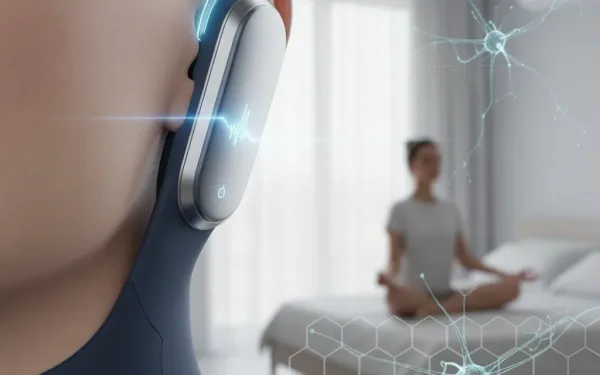
With connectome projects advancing, 2026 predicts personalized brain training via neurotech wearables, enhancing integration for mental health.
Final thoughts
While there is still debate about the extent of the right brain vs. left brain dichotomy, it’s clear that each side plays a role in our thinking and behaviors. Understanding your dominant side can help you play to your strengths and improve your weaknesses. Remember that the brain is a complex and interconnected organ, even if you lean towards one side. Hence, both hemispheres work together to make us who we are. Take some time to explore both sides and see how they complement each other.
In 2026, embrace whole-brain approaches for optimal cognition. Debunk myths with science to foster balanced growth and innovation in daily life.
FAQs
Is the right-brain left-brain dominance real in 2026?
No, it’s a debunked myth; 2025 studies show no personality-based dominance. Brains integrate via corpus callosum, with tasks like creativity using whole networks. Focus on balance for better cognition.
What functions does the left brain handle according to modern research?
Left hemisphere aids language, logic, and sequencing, but overlaps with right. 2025 fMRI data reveals collaborative roles in problem-solving, debunking strict divides for integrated views.
How can I balance my brain hemispheres in 2026?
Use mindfulness, dual-tasks like art-math combos, or VR apps. Neuroplasticity exercises enhance connectivity; 2025 trials show 15-20% learning gains from balanced training.
What are the myths about right-brain creativity?
Myth claims it’s right-only, but 2025 reviews prove whole-brain involvement. Default mode network spans hemispheres; AI simulations in 2026 confirm integration for innovation.
How does neuroplasticity affect brain dominance theories?
It allows rewiring, making dominance fluid. 2025 studies show hemispheres adapt post-injury; in 2026, wearables promote balance, reducing myth reliance for mental health.
Disclaimer: This article discusses brain hemispheres based on traditional and modern views but notes the dominance myth is oversimplified and debunked. It’s for informational purposes; consult neuroscientists or healthcare professionals for personalized advice. Individual brain function varies.